

There’s nothing more British than a plain cold cheese sandwich, and here I’ll show you the best way to make it!
Were you raised on these simple sandwiches too? If you haven’t tried a classic cheese sandwich, it really is exactly what it sounds like: bread, cheese and not much else. That said, I love breaking down a basic sarnie to make it as good as possible without overcomplicating things.

The Cheese
Although “cheese sandwich” sounds flexible, there are a few solid rules if you want an authentic result.
What kind of cheese to use?
The traditional choice is Cheddar—mature or mild depending on how punchy you like it. I also like to mix in some Red Leicester for colour and a slightly different flavour. If you want to experiment beyond those two, stick to British hard cheeses in a similar flavour family (Double Gloucester, White Cheshire, Shropshire Red are good options).
Grated or sliced?
I recommend neither. Sliced cheese often leads to awkward, uneven layers and grated cheese can spill out unless it’s held together by another filling. Instead, shave the cheese with a vegetable or potato peeler. It’s fast, creates delicate layers and gives the sandwich a lovely texture without crushing the bread.

The Bread
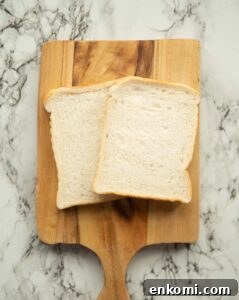
Cheese sarnies were made for school lunches, quick meals and picnics—no need for artisanal loaves. Put the sourdough away and reach for soft, white sandwich bread. It should be thick-sliced and unseeded so the bread complements, rather than competes with, the cheese.
Making a Cheese Sandwich
I won’t belabour the obvious, but a couple of pointers will help you get the best texture and flavour.
Let there be butter!
This sandwich is inherently dry, so be generous with real butter on both slices. Proper butter (slightly salted if you like) adds moisture and richness that lift the whole thing.
Rectangles or triangles?
I prefer rectangles because the corners of a triangle can let the filling fall out. Either shape works, but rectangles tend to keep the cheese tucked in better.
Serving a Cheese Sandwich
What else could I add to a cheese sandwich?
One addition I’ll always defend: crisps inside the sandwich. They add crunch and seasoning—salt & vinegar crisps are my go-to. Beyond that, if you want a variation there are plenty of classic pairings, but the essential cheese sandwich remains simple.
Classic combinations include:
- Cheese and Pickle
- Cheese and Onion
- Ham and Cheese
- Cheese and Marmite
Ready for the full recipe?

How to make a Cheese Sandwich (Full Recipe & Video)

Classic Cheese Sandwich
Equipment
- Chopping board & bread knife
- Potato/vegetable peeler
- Butter knife
Ingredients
- 2 thick slices of soft white sandwich bread
- 3.5oz / 100g cheese, shaved with a potato peeler
- Butter, as needed
- 1 packet of crisps (optional)
Instructions
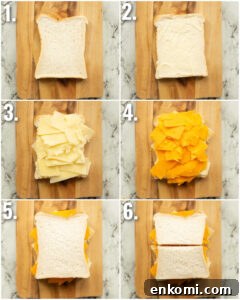
- Liberally butter one side of each slice of bread.
- Top one slice (butter-side-up) with the shaved cheese. Add crisps if using.
- Place the second slice butter-side-down on top, press gently to secure the filling, slice in half and enjoy.
Quick Demo
Notes
a) Cheese – Cheddar is the classic choice. A 50/50 mix of Cheddar and Red Leicester gives colour and depth. If you want to vary, choose a British hard cheese in the same flavour family.
b) Turn it into a toastie? – Yes. Butter the outside of the bread and fry both sides in a non-stick pan over medium heat until golden and the cheese has melted. For a toastie, a firmer loaf works better than the soft sandwich bread.
c) Other variations – You can add fillings like pickle, onion, ham or Marmite if you want to switch things up.
d) Calories – Nutritional values assume 1 tablespoon salted butter and no crisps.
Nutrition:
For more similar sandwiches check out these beauties:
Simple British Sandwiches
- Bacon Sandwich
- Chip Butty
- Crisp Sandwich
- Pot Noodle Sandwich
- Jam Sandwiches
- All British Sandwiches
If you loved this Cheese Sandwich Recipe be sure to Pin it for later! Already made it or got a burning question? Give me a shout in the comments below!