
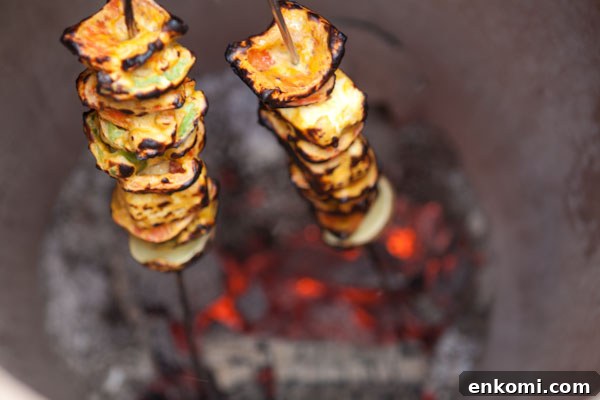
A few years ago I received a surprising phone call from my father offering me a tandoor oven. He’d spotted a lot at a local auction containing four clay-lined, fully functional tandoors that had likely been used by a now-closed catering business. The guide price was just £30–50 each — an incredible bargain compared with the several-hundred-pound cost of a new unit.
A week later one arrived on our drive and my education in tandoor cooking began. Tandoors are unlike conventional ovens and can be challenging to master at first. We had several failed attempts before we started getting consistently good results. This guide summarises what we learned, including the mistakes we made so you can avoid them.
What is a Tandoor Oven
A tandoor is a cylindrical clay oven that originated on the Indian subcontinent and has been used for centuries to cook breads and meats at very high temperatures. Traditional tandoors are buried in the ground up to their rim and fired with wood or charcoal. The clay walls absorb and radiate intense heat — often reaching 450–500°C at full temperature — producing the characteristic charred exterior and smoky flavour of tandoori dishes.
Cooking in a tandoor relies on three sources of heat: radiant heat from the glowing clay walls, convective heat from the circulating hot air, and direct heat from embers at the base. Skewered food is lowered vertically into the oven while breads such as naan are slapped directly onto the hot clay walls. The sealed clay environment and high heat create results that a conventional oven cannot easily replicate.
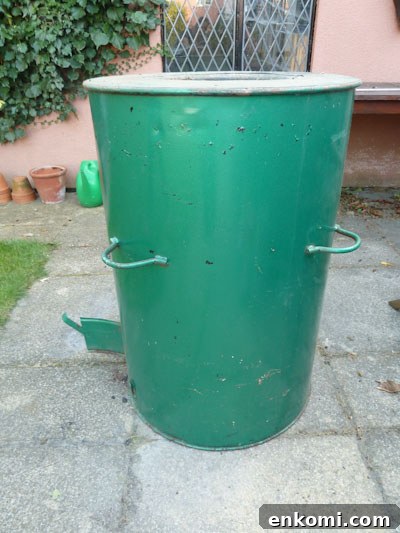
Home tandoors, whether purchased or built from salvaged materials, operate on the same principle but sit above ground. They lose more heat through the top and therefore require more fuel than a buried tandoor. Ours was made from an old oil drum lined with concrete and clay, with a bottom hatch to manage airflow. It performs very well when used correctly.
How to Make a Tandoor Oven
We were fortunate to pick up a ready-made unit at auction, so I didn’t build ours from scratch. If you want to build a tandoor, there are many DIY methods available, from using terracotta pots to lining an oil drum with refractory clay and concrete. The oil-drum approach yields a robust, medium-sized tandoor with a practical hatch for ash removal and airflow control.
A good home-built tandoor needs a thick insulating clay layer and a stable outer shell. The hatch at the bottom is important: it allows you to clear ash, regulate the draft and feed oxygen to the fire. Proper insulation and an adjustable air inlet are key to achieving and maintaining the high cooking temperatures required for authentic tandoori results.
Cooking With a Tandoor Oven – Practical Tips
Cooking in a tandoor is not the same as using a domestic oven. It took several attempts to overcome early challenges. The most important lesson: heat. Like a good pizza oven, a tandoor must be very hot — typically around 450°C — before you begin cooking. At full temperature, food cooks quickly from the intense radiant heat of the walls and the embers at the base.
Our first attempts used ordinary barbecue charcoal alone. While it did heat the oven, the temperature dropped quickly and breads such as naan took far too long to cook, often up to 15 minutes, losing the blistered texture and smoky char that a properly heated tandoor produces.
We also found soot residue on the clay interior from incomplete combustion during early low-temperature firings. That black residue stuck to naans and tasted unpleasant. Once the oven reached the correct high temperature the soot burned off cleanly and the walls lightened in colour.
Getting a Tandoor Up to Temperature
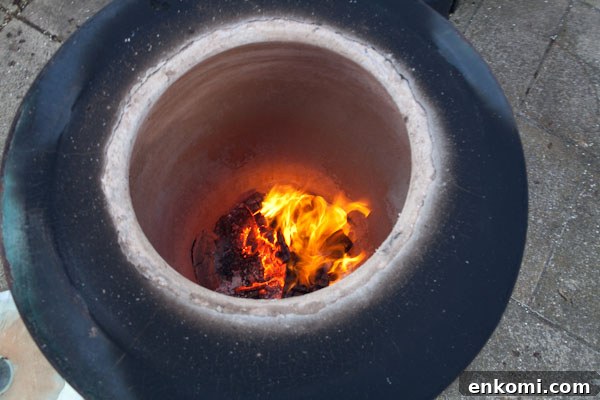
After experimentation, our preferred method is a combination of oak kindling and lump charcoal. Start with crumpled newspaper and quality hardwood kindling to build a strong flame, feed the wood while the oven heats, then add a generous amount of lump charcoal as you near cooking time. Wait for the charcoal to reduce to glowing embers before starting.
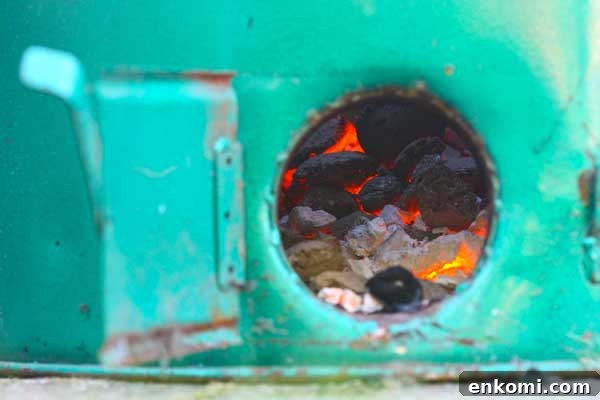
Use the bottom hatch to increase airflow while the fire builds. Opening the hatch wider draws in more oxygen and strengthens the burn. I usually leave it fully open during the initial heating phase and gradually close it as the oven nears cooking temperature.
Allow at least an hour from a cold start — longer in cold or windy conditions. Because traditional buried tandoors retain heat better, above-ground home units need more fuel and time to reach and sustain the required temperatures.
What Can You Cook in a Tandoor Oven?
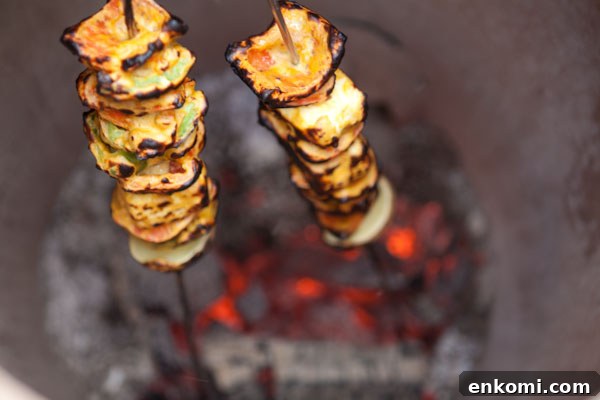
A tandoor can cook far more than many expect. The intense heat and smoky clay environment are ideal for breads, skewered meats, paneer and robust vegetables.
Naan Bread
Naan is the classic tandoor bread. Domestic ovens rarely match the high heat a tandoor provides: at 240°C in a conventional oven naan takes several minutes and becomes bready. In a properly heated tandoor at around 450°C naan cooks in under two minutes, puffing and blistering with a slight char and superior texture.
Roll the dough thin, brush one side with water to help it stick, then slap it firmly against the hot clay wall using a cloth or pad. At the correct temperature the dough adheres and puffs within seconds. Watch carefully to avoid burning and use a long skewer to remove the bread promptly.
Tandoori Chicken
Tandoori chicken is a signature tandoor dish. Marinate bone-in pieces — thighs and drumsticks retain moisture best — for several hours or overnight. Thread the pieces onto long flat skewers and lower them vertically into the oven. At full temperature, chicken cooks quickly, developing a smoky char while remaining juicy inside. Including gram flour in the marinade helps the coating adhere and char without turning bitter.
Seekh Kebabs, Lamb Chops and Paneer
Minced meat seekh kebabs, marinated lamb chops and paneer tikka all excel in a tandoor. Seekh kebabs char on the outside while staying juicy within; lamb benefits from high-heat searing that seals in moisture; paneer and robust vegetables take on a fragrant smoky char. Delicate fish can be challenging because it cooks very quickly and may fall apart on the skewer, though oilier fish fares better.
The Importance of Marinade
Marinades are central to successful tandoor cooking. They add flavor, tenderize proteins and, when some marinade drips onto the embers, contribute that distinctive smoky aroma. Adding gram flour (atta) to marinades binds the coating to the ingredient and chars attractively without leaving a raw flour taste.
Safety and Practical Tips
Treat the tandoor with respect. The oven becomes extremely hot. Use long skewers (60cm or more), heavy-duty gloves, and keep children and pets at a safe distance. The outer metal of an oil-drum tandoor gets hot to the touch — avoid contact.
Never use a tandoor indoors. Charcoal emits carbon monoxide; always operate the tandoor outdoors in a well-ventilated area.
Allow for slow cooling. The clay walls retain heat for hours after use and can cause serious burns. Don’t assume the tandoor is safe to touch simply because the flames are out.
Place the tandoor carefully. Set it on a hard, level, non-combustible surface such as concrete or paving stones, clear of fences, wooden structures and low-hanging branches. Position it so smoke can disperse freely to avoid neighbour disputes.
Manage ash. Clear ash from the bottom hatch once the tandoor is cool; regular ash removal maintains airflow and cooking efficiency.
Cleaning and Maintenance
A tandoor largely self-cleans at high temperature: firing the oven to full heat for 30 minutes burns off most food residue and soot. Keep the tandoor covered between uses to prevent rainwater from soaking the clay, which can cause cracking when heated rapidly. If the tandoor has been rained on, heat it very slowly with a small fire first and build temperature gradually.
In colder months or during long periods of non-use, store the tandoor under a waterproof cover or in a dry location to protect the clay lining and prolong its life.
Frequently Asked Questions
How long does it take to heat a tandoor?
Allow at least an hour from cold start — 90 minutes in cold weather. The clay needs time to absorb and store heat, not just warm the air inside the oven.
What fuel should I use in a tandoor?
A combination of hardwood kindling to start and lump charcoal for sustained heat works best. Avoid briquettes if possible; lump charcoal burns hotter and cleaner with less ash.
How do I know when the tandoor is hot enough?
The clay walls should lighten in colour as soot burns off. Holding your hand 30cm above the opening — if you can’t hold it there for two seconds, the oven is approaching cooking temperature. An infrared thermometer gives the most accurate reading; aim for 400°C minimum, 450°C+ for optimal results.
Can I use a tandoor in the rain?
It’s not ideal. Rain hitting hot clay risks thermal shock and cracking. If rain starts while cooking, cover the tandoor after use and allow it to cool under cover. Don’t fire a saturated tandoor quickly without a slow preheat.
How do I get naan to stick to the tandoor wall?
The wall must be hot enough. Brush one side of the dough with water immediately before applying and slap it firmly against the wall; at the right temperature it will adhere instantly and puff within seconds.
Can I cook in a tandoor on a patio?
Yes, provided it sits on a hard, non-combustible surface and is kept clear of flammable materials. Be mindful of smoke and keep neighbours informed if necessary.
Related Recipes for Your Tandoor
Tandoori Marinade Recipe — a versatile marinade for chicken, lamb, paneer and vegetables; gram flour addition helps the coating stick and char well.
Scotch Bonnet Sauce — a spicy dipping sauce that complements tandoori chicken.
Habanero Hot Sauce — fruity heat that pairs well with smoky tandoor meats.
Lime Pickle Recipe — a classic tangy accompaniment for a tandoori meal.
Indian Rasam Recipe — a light South Indian soup that works well as a starter before a tandoori feast.
Enjoy exploring tandoor cooking: with the right heat, good marinades and careful technique, a home tandoor delivers authentic, smoky-flavoured breads and grilled dishes that are hard to replicate any other way.