
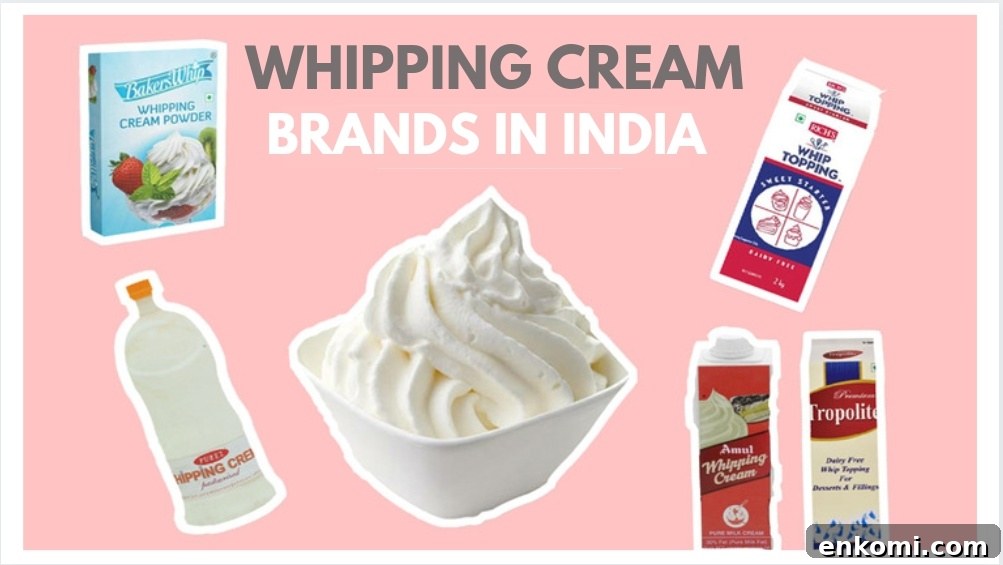
I know many people struggle to find whipping cream in local markets or are unsure which brands to choose. This guide will help you understand the common types of whipping cream available in India, the main brands, how to use them, and the best ways to store them.
Whipping cream generally comes in three categories: non-dairy, dairy, and powdered. In India, non-dairy whipping cream is the most widely available. Below I explain the differences, advantages, and typical brands for each category.
Non-dairy whipping cream
Non-dairy whipping creams are the most common choice in India because they are formulated to remain stable in warm climates. These products are typically made from soy or hydrogenated vegetable fat and contain stabilizers that help maintain texture and shelf life even at higher temperatures.
Two of the most popular non-dairy brands are Rich and Tropolite. Both are widely sold and frequently used in home and professional kitchens.
Rich non-dairy whipping cream
Rich (also marketed as Rich’s) is popular for its wide availability and range of products. The brand offers several variants—examples include Rich Gold, Rich Whip Topping, Rich Excel Whip, and Rich Silver Whip—along with flavored options such as chocolate. Different variants target different needs: some prioritize extreme stability, others focus on taste or ease of use.
In local stores, the most commonly found Rich products are Rich’s Whip Topping and Rich’s New Star Whip. Packaging sizes vary, with 2L packs being most common; 1L packs are also produced but less frequently stocked. Prices depend on type and pack size.
Tropolite whipping cream
Tropolite is available in a single standard type and flavor. Some users prefer its mouthfeel and taste compared to other non-dairy options, though this is subjective. Tropolite is commonly sold in 1L packs, which many find convenient for storage and household use. It is widely stocked in supermarkets and online marketplaces. The whipping process for Tropolite is the same as other non-dairy creams: use a chilled bowl and electric whisk, and because most non-dairy products are already sweetened, additional sugar is typically unnecessary.
Dairy whipping cream
Dairy whipping creams are made from milk and do not contain stabilizers. They offer a more authentic dairy flavor and texture but are less stable in warm conditions and have a shorter shelf life. Popular dairy brands in India include Amul, Purez, and Malai Magic.
Because dairy creams lack stabilizers, they require more care when whipping and storing. Keep the following tips in mind when using dairy whipping cream:
- Choose cream with at least 30% fat content. Higher fat helps the cream whip up and hold its structure.
- Always refrigerate the cream. Cold cream whips more reliably and faster than warm cream.
- Use chilled equipment. Cold bowls and beaters improve whipping performance. In hot weather, place a mixing bowl over a larger bowl filled with ice while whipping.
Note that dairy whipping cream is usually unsweetened, so you will need to add sugar when whipping if you want a sweet topping. Amul offers smaller packs (for example, 200 g) which are convenient for occasional use. Other dairy options are available online and in larger stores, but availability can vary regionally.
Powdered whipping cream
Powdered whipping cream is sold as a dry mix from brands such as Weikfield, BakersWhip, Blue Bird, and others. These mixes typically include hydrogenated oils, glucose syrup, and stabilizers. The primary advantage of powdered cream is its long shelf life—unopened packs can often be stored for many months.
To prepare powdered whipping cream, mix the dry powder with cold milk according to package instructions, allow it to chill briefly, then whip until it reaches the desired consistency. Many powdered mixes are stable after whipping and can be prepared ahead of time; they generally keep well in the refrigerator.
Some brands offer flavored powdered mixes (for example, chocolate, strawberry, or fruit flavors). Prices and packet sizes vary by brand and retailer.
Storing different whipping creams
Non-dairy
Non-dairy creams are forgiving when it comes to storage. Freezing is a practical option for longer-term storage; defrost before use as needed. In colder months, keeping non-dairy cream in the refrigerator can also extend usable life and save thawing time.
Dairy
Dairy creams have a shorter shelf life and should always be kept refrigerated. Depending on the product and packaging, their shelf life varies; check the label for best-before information and use promptly once opened.
Powdered form
Powdered whipping cream has the longest shelf life among the three types. Unopened packets can typically be stored at room temperature for several months. After opening, reseal the packet tightly and keep it in a cool, dry place to preserve freshness.
I hope this guide makes it easier to choose the right whipping cream for your needs. With these basic differences and storage tips in mind, you’ll be better equipped to pick the appropriate product for baking, decorating, or everyday use.