
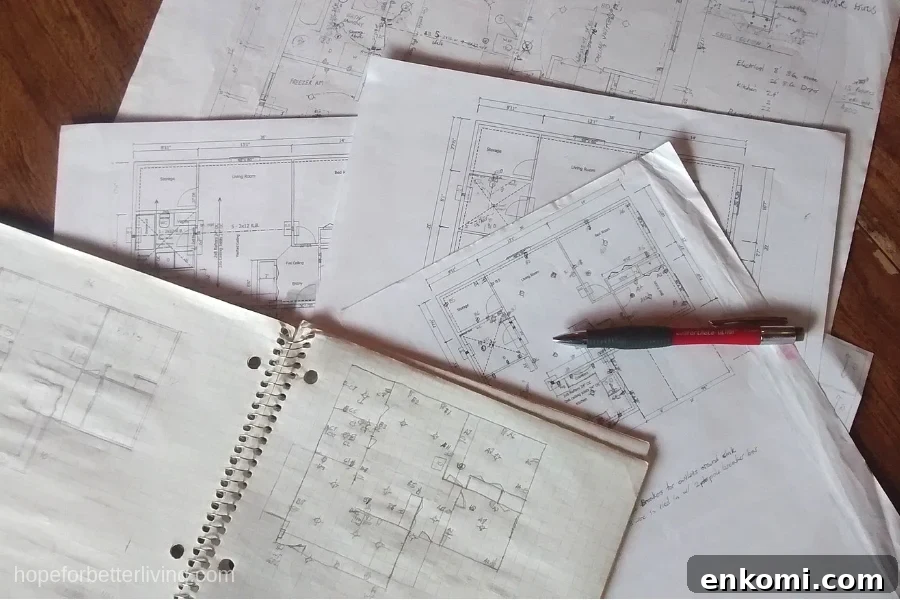
In the quiet of our second winter in the south, we decided to build our own home. It felt like the only reliable way to ensure a mold-free dwelling. After many conversations, sketches, and idea exchanges, we settled on a simple, one-story cottage. We didn’t need anything ornate—just a clean, practical home that would fit with our plans for raising and preserving food.
Designing Our Cottage
That winter a straightforward cottage design took shape. Fortunately, my partner was completing a finishing carpentry program at the time, so building codes and practical construction knowledge were fresh in his mind. By spring we had a plan that we were both happy with.
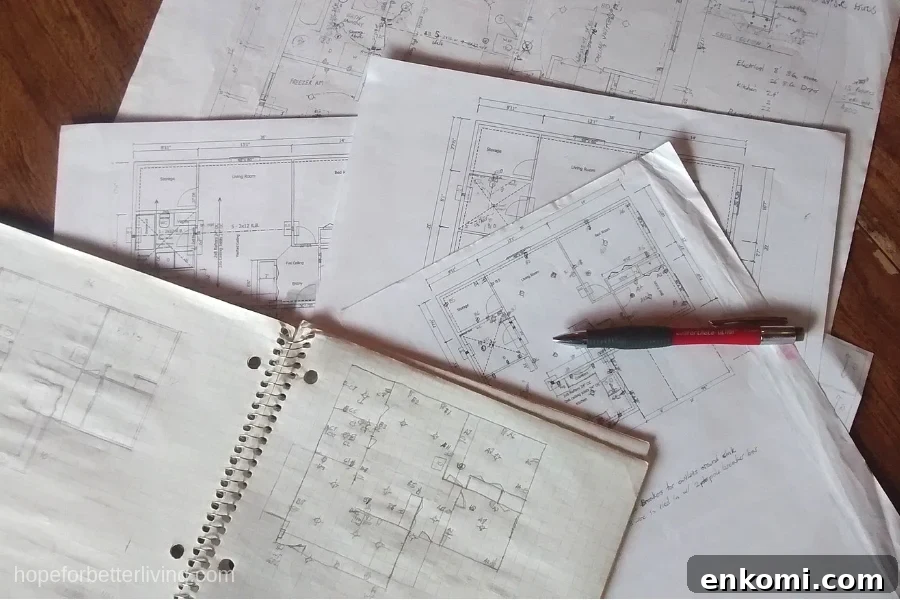
People warned us that planning a house might strain our marriage. It didn’t. Working together toward a shared goal strengthened our relationship. Perhaps it was easier because we knew our finances were limited, or because the house was a means to an end rather than the end itself. Our focus was beyond the structure—we viewed the house as a necessary step before starting a family.
With our cottage design settled, we began the search for land.
The Beginning of Our Land Search
Early that spring we visited the bank. As first-time homebuyers we wanted financing that would cover both land and construction. The loan officer explained that to avoid mortgage insurance, we needed a sizable down payment—25% of the total mortgage. That raised the bar considerably. Land in southwestern Canada wasn’t cheap, but we were determined to make it happen.
We added our names to a local realtor’s list and kept a close eye on the market. Our savings weren’t where we wanted them to be, but we stayed vigilant for a good opportunity. Each evening when he came home from work, my partner checked new listings while I finished preparing supper. We often used Google Earth to study properties from above and sometimes drove past promising sites after dinner. Those months were full of excitement and anticipation.
We were looking for 2–3 acres of raw land—enough for a small cottage, several gardens, an orchard, poultry, and a few small dairy and meat-producing animals.
Hunting for Private Land Sales
We didn’t rely solely on the realtor; we preferred the idea of a private land sale to avoid realtor fees. Often after church on Sundays we would drive around, looking for “For Sale by Owner” signs. One afternoon we discovered a property tucked up a side valley, hidden in a stand of trees. From the road it looked to be about an acre.
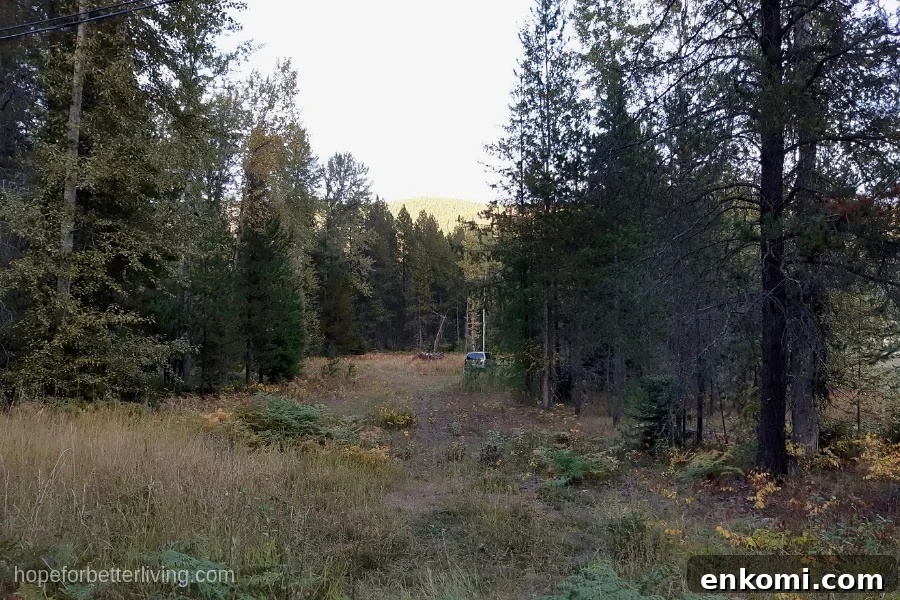
Our interest was cautious. From our research we knew the area had a shorter growing season, more snow, colder winters, and rocky, mountainous soil. Still, options were limited and we recorded the owner’s phone number.
Pursuing the Option
After some consideration we called the owner. Contrary to initial impressions, the parcel was 2.84 acres, with the back half forested. The asking price was slightly beyond our reach, but close enough that we asked for a walk-through.
The land was flat and usable, but clearly rocky. Fallen pines exposed large stones tangled in their roots. Beyond a few inches of topsoil, the subsoil was sand, gravel, and rock. We recognized that productive farm ground starts with good soil. Transforming those acres into fertile land would require enormous effort, time, and expense.
We thanked the owner and put the property on the back burner while continuing our search.
At Summer’s End
Summer passed, and by late season we still hadn’t found anything we loved. We revisited the mountainous parcel and made a pros-and-cons list. It fit our needs in many ways—except for the soil.
Since moving to the valley I had been learning everything I could about building healthy, nutrient-rich soil. I knew it was possible to rehabilitate rocky land, but it would be a challenge. We sought a trusted couple’s opinion after walking the property with them and decided to seriously consider the option.
The Test of Silence
We’re cautious people, and when facing big decisions we use what we call the “test of silence.” For a week we don’t discuss the matter; instead we spend that time praying and reflecting alone. After seven days we share our conclusions.
That week felt long, but by the end each of us had a clear sense of what we believed. We wondered whether our thoughts would align. To find out what we decided next, continue the story in part 6.