

Whoop recovery scores can be confusing. Are you wondering how to increase your Whoop recovery score, or whether you should train on a low-recovery day? This article explains what Whoop measures, what the recovery scores mean, and practical ways to improve recovery.
If you own a Whoop recovery tracker or are simply curious about improving recovery, read on for useful, evidence-informed suggestions.

What is Whoop?
Whoop is a wearable roughly the size of a wristwatch that continuously collects physiological data such as heart rate variability (HRV), resting heart rate (RHR), respiratory rate, activity, and sleep patterns. Using that data, Whoop applies an algorithm to produce a daily recovery score and provide insights on cardiovascular strain, sleep quality, and overall readiness.
Because Whoop learns your personal baseline over time, it can highlight patterns and trends that show how behaviors and lifestyle choices influence recovery. Many athletes use it to make more informed decisions about training intensity, rest, and sleep.
One common question among athletes and coaches is: “My recovery is low—should I train today?” To answer that, let’s first clarify what the recovery score means.

What do the Whoop Recovery Scores Mean?
Whoop displays a recovery score each morning on a scale from 0–100%. The score is grouped into three color-coded ranges that indicate readiness to train.
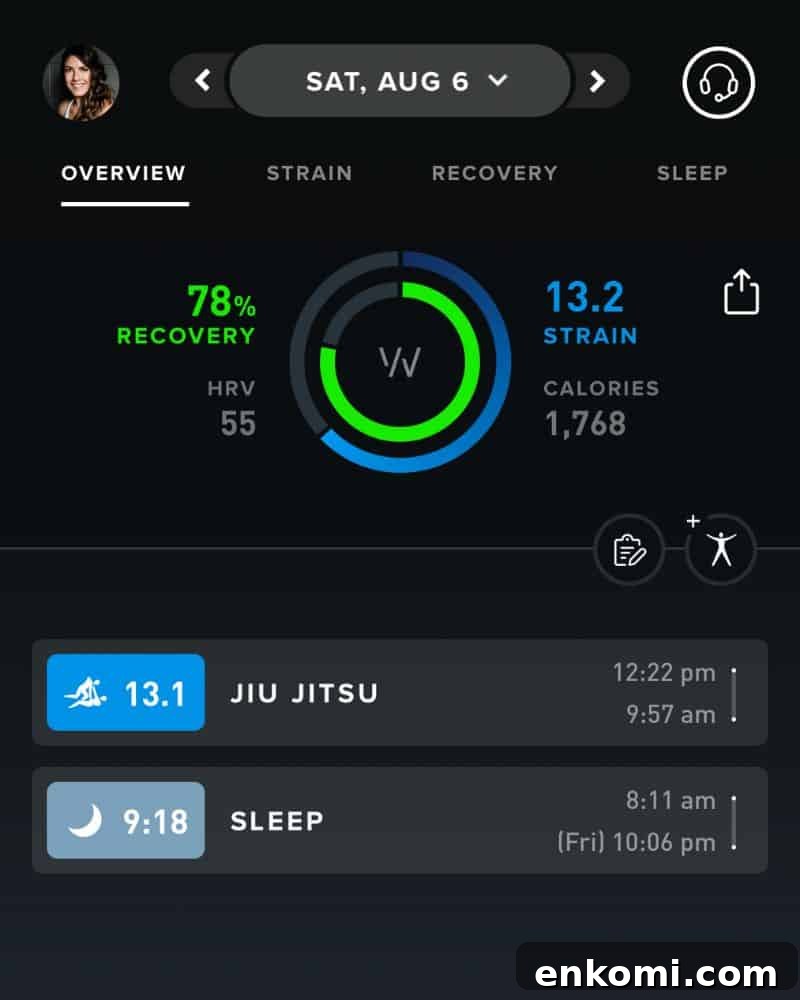
Green = 67%–100%
A green score suggests you’re well recovered and ready for challenging or high-intensity training. This is a day when you can safely target higher effort sessions, assuming other factors (sleep, nutrition, stress) are in order.
Yellow = 34%–66%
A yellow score indicates moderate readiness. You can train, but consider reducing intensity or volume. This range is appropriate for steady-state cardiovascular work, skill practice, or moderate strength sessions rather than maximal lifts or high-volume overload.
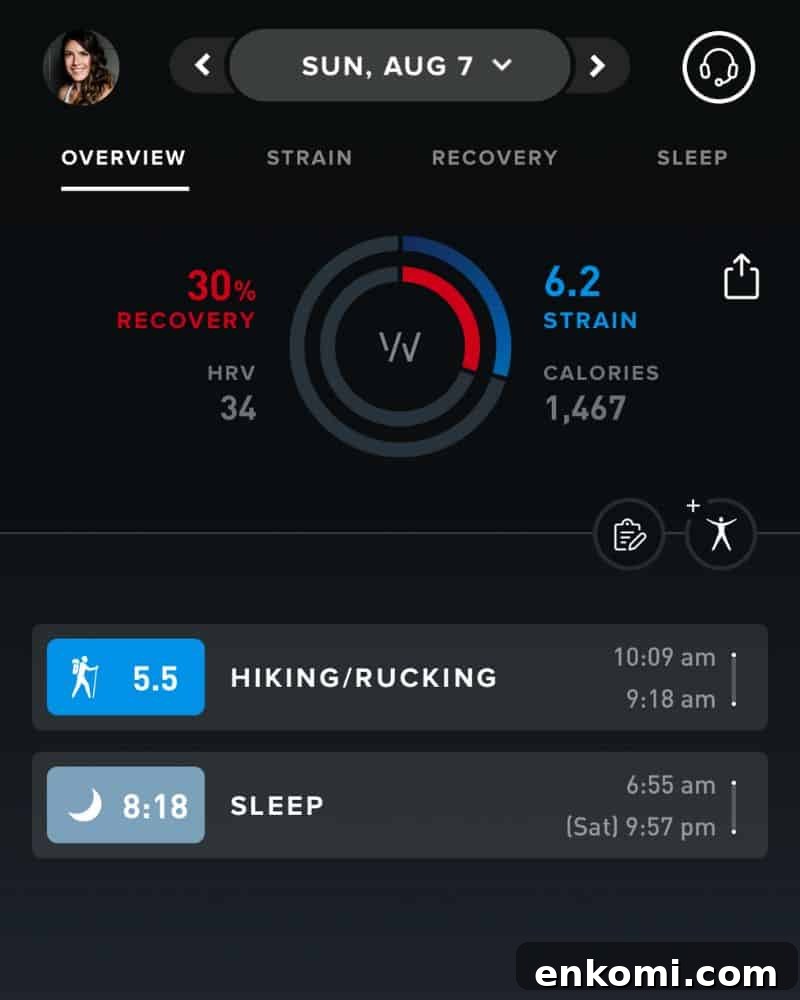
Red = 0%–33%
A red score signals reduced recovery and typically warrants rest or active recovery. Avoid intense training when HRV, RHR, sleep, or respiratory rate deviate from your baseline, since pushing hard on those days can increase injury or illness risk and hinder long-term progress.
Other recovery tracking systems use similar frameworks: good recovery → higher intensity; poor recovery → rest or active recovery. Though details vary, the core concept is consistent across platforms.
Pay Attention to How Your Body Feels
Data is valuable, but it’s most useful when paired with subjective feedback. Pay attention to how your body feels each day—energy levels, soreness, coordination, and breathing control—alongside the recovery score. I teach auto-regulation strategies that combine subjective cues with objective data to guide daily training decisions.
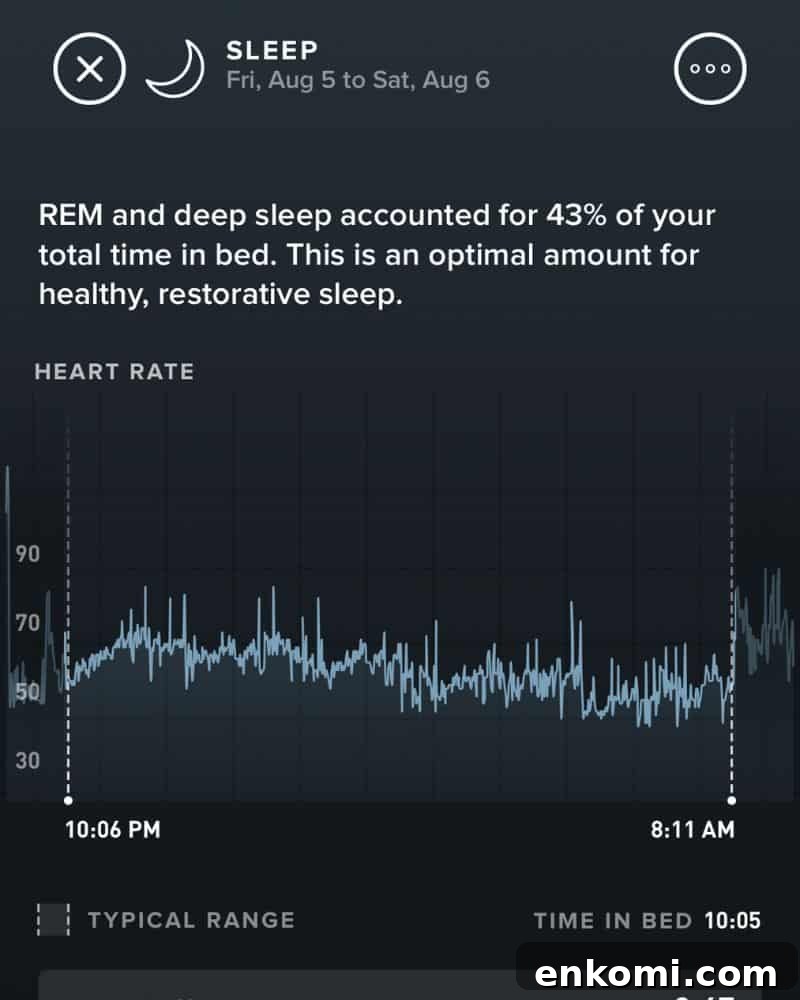
Muscle soreness (DOMS) is a good example of why you should consider both data and sensation. DOMS reflects microscopic muscle damage and soreness from unfamiliar or high-volume training. Because Whoop emphasizes cardiovascular and autonomic signals, it’s possible to have a high recovery score while still feeling very sore. Conversely, low cardiovascular readiness might not always match perceived muscular fatigue.
Consider these subjective signs when deciding what to do on a given day:
- How heavy the weights feel
- Speed and explosiveness in movements
- Coordination and stability
- Whether usual rest periods feel sufficient
- Capacity for higher-skill movements
- Ability to regulate breathing during effort
Training is only one of several factors that affects recovery. Keep reading for the main levers you can adjust to improve scores over time.
How to Improve Your Whoop Recovery Scores
Improving recovery matters for all athletes—from strength and power athletes to endurance competitors and CrossFitters. A better recovery profile supports training quality, adaptation, and long-term progress.
Key factors that commonly influence recovery include:
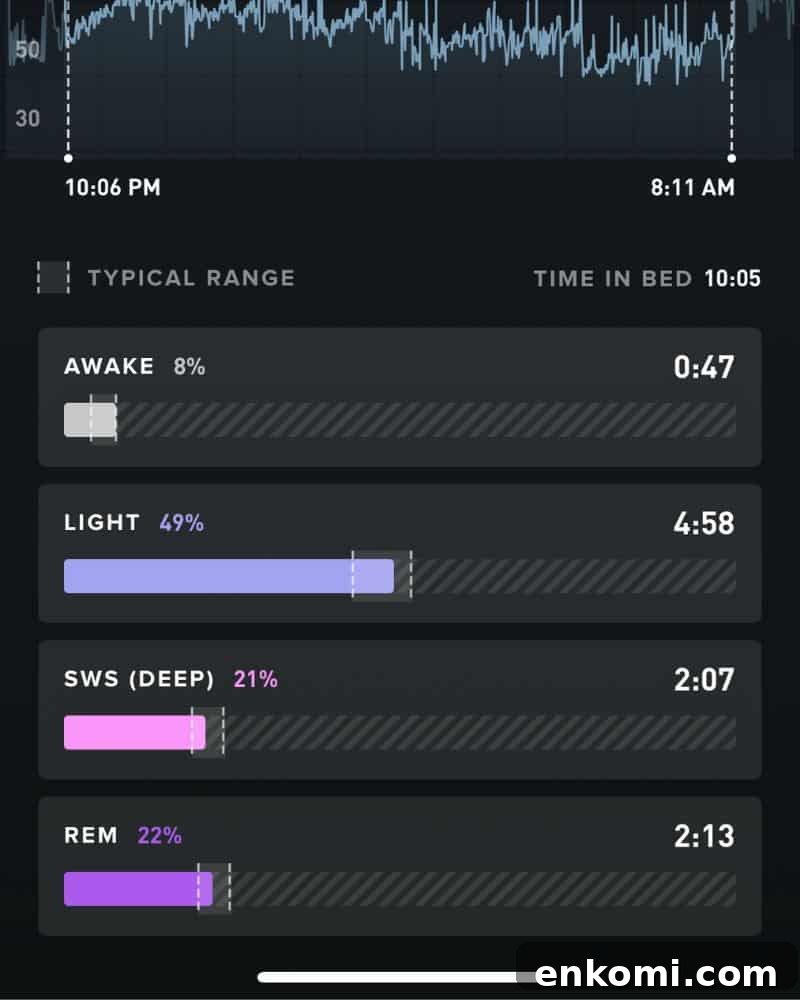
- Consistent, sufficient sleep and regular sleep–wake times
- Proper hydration
- Adequate nutrition—enough total calories and sufficient protein and carbohydrates to fuel training and recovery
- Reduced or moderated alcohol intake
- Short naps when appropriate
- Meditation or other stress-management practices
- Adjusting workout intensity and volume to align with recovery status
- Incorporating active recovery days or lower-intensity sessions
Individual needs vary, so tailoring interventions to your situation is important. Many athletes benefit from one-on-one coaching or structured group programs to dial in sleep, nutrition, and training balance.
For many of my clients, the biggest gains come from improving sleep consistency, eating enough to support training demands, and setting clearer boundaries to reduce chronic stress.
My Personal Experience with Whoop
I’ve used Whoop for recovery tracking since April 2021. I prefer its form factor because I can wear it on my upper arm as well as my wrist, which suits activities like Brazilian jiu-jitsu and heavy lifting.
After years of tracking training with other devices, I stopped tracking for a long time and later returned to using a recovery tracker intentionally. Whether to use a device is a personal decision—there are pros and cons depending on personality and goals. For people who tend to overtrain or struggle to take rest days, objective recovery data can be a helpful tool that supports smarter, evidence-based decisions.
Final Thoughts
Whoop recovery scores are a useful metric for daily readiness, but they’re most effective when used alongside subjective awareness of how you feel. Use recovery ranges as a guide—green for higher intensity, yellow for moderating effort, and red for rest or active recovery—and address lifestyle factors like sleep, nutrition, hydration, and stress to improve scores over time.
This post contains affiliate links. All content, opinions, and words are my own, and I only ever share products I believe in 100%.