
What began as a slow, uncertain morning turned into one of those unexpectedly perfect days for yard sale hunting. We set out early and by 1 p.m. had visited eight sales. Since we’ve sold through most of our inventory at Brimfield, we need to start picking items for the September show, and yesterday’s finds were a great start.
We changed our usual approach and decided not to stay in our familiar suburban loop. Instead, we headed to more rural areas, ending up in Rehoboth, MA. The change in location brought a noticeably different range of items for sale—more vintage and unusual pieces than we typically find closer to home.
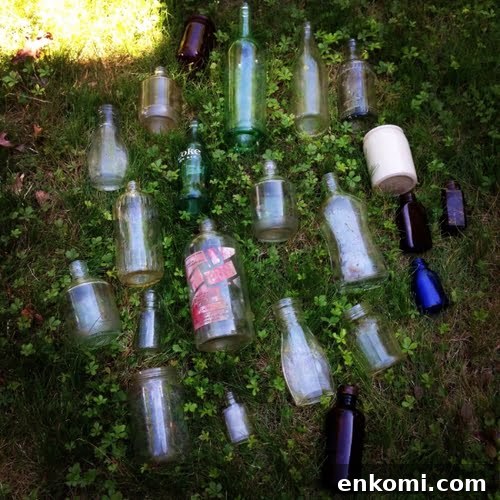
The highlight of the day was an incredible discovery: 106 glass bottles that a homeowner had uncovered buried in his backyard. Many of these bottles appeared to date back to the early 20th century, with some likely originating from the 1920s or earlier. Finding that many intact bottles in one place felt like stumbling on a small time capsule.
In total, I brought home 118 glass bottles. While I love vintage glass, I know I need to balance my inventory; otherwise our booth could easily become nothing but bottles. Over the next few months I’ll be conscientious about diversifying purchases so the September show offers a broader selection of goods.
Because these bottles had been buried for decades, they were in need of serious cleaning. What I expected to be an hour-long task turned into the bulk of the afternoon. Each bottle had its own condition and required different attention: thick dirt and mineral deposits needed soaking, while some surfaces required gentle scrubbing to avoid damaging labels or embossing.
Some bottles responded quickly to initial cleaning, while others clearly need longer soaks. My plan is to leave several of them in the sun for a few days with a mixture of water and vinegar to help loosen stubborn residue. For more fragile or labeled pieces, I’ll continue with careful hand cleaning to preserve any markings that add historical and monetary value.
Now the investigative and curatorial work begins. Researching these bottles—identifying makers, approximate production dates, and potential rarity—will guide how I price and present them. This process is one of my favorite parts of collecting: uncovering stories behind everyday objects and determining their place in the market and in history.
Below are a few of the standouts from the haul. If you recognize any of these bottles or have information about makers, marks, or dates, I’d love to hear from you. Your insights can help refine identifications and ensure accurate descriptions when these pieces are offered for sale.
Cleaning, researching, and cataloging this collection will be a satisfying project over the coming weeks. Whether the bottles end up in the booth, in restoration, or saved for personal interest, each piece carries a bit of everyday history. I’ll share updates as I learn more about specific bottles and their origins.