
Last Updated April 4th, 2024 at 01:27 pm by Lisa
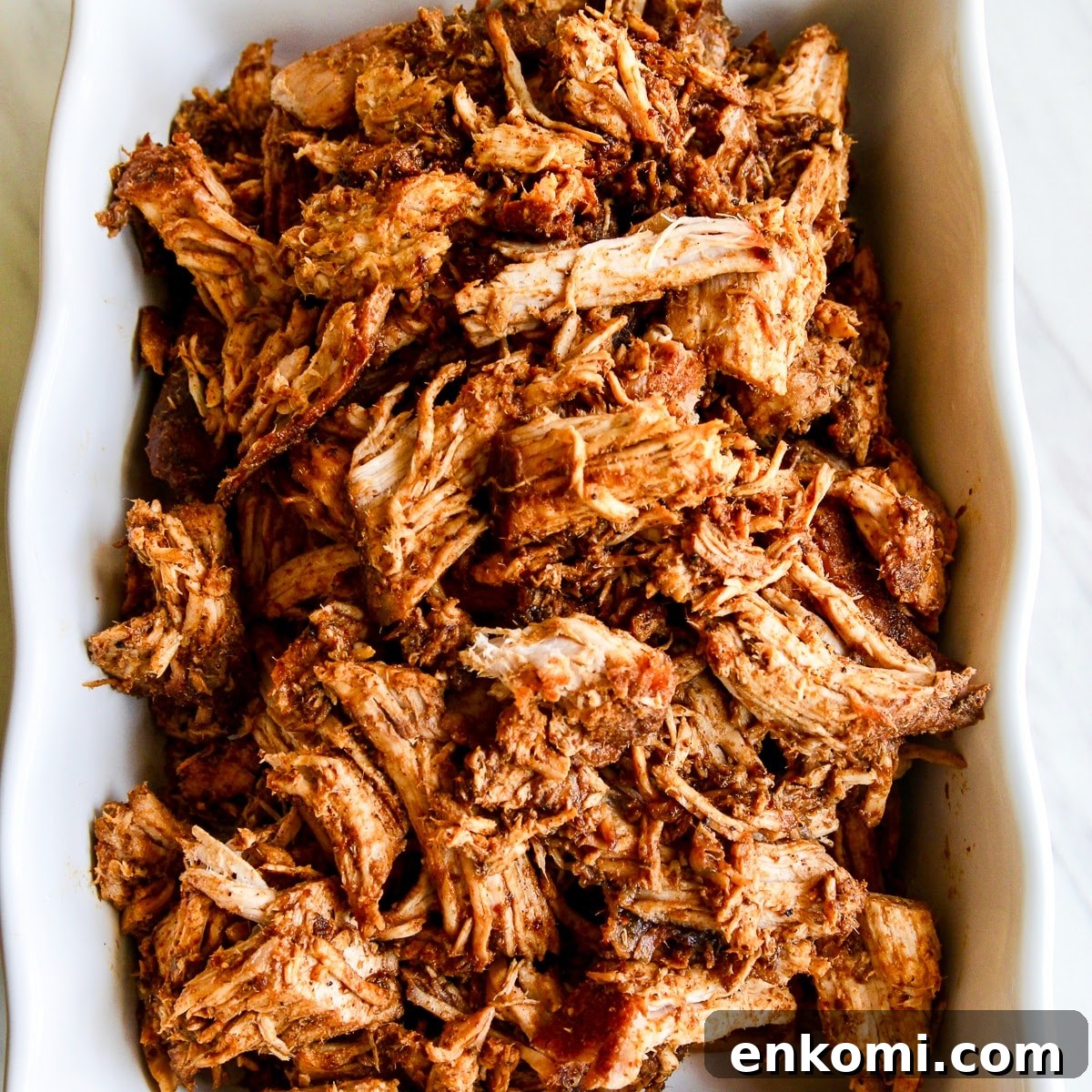
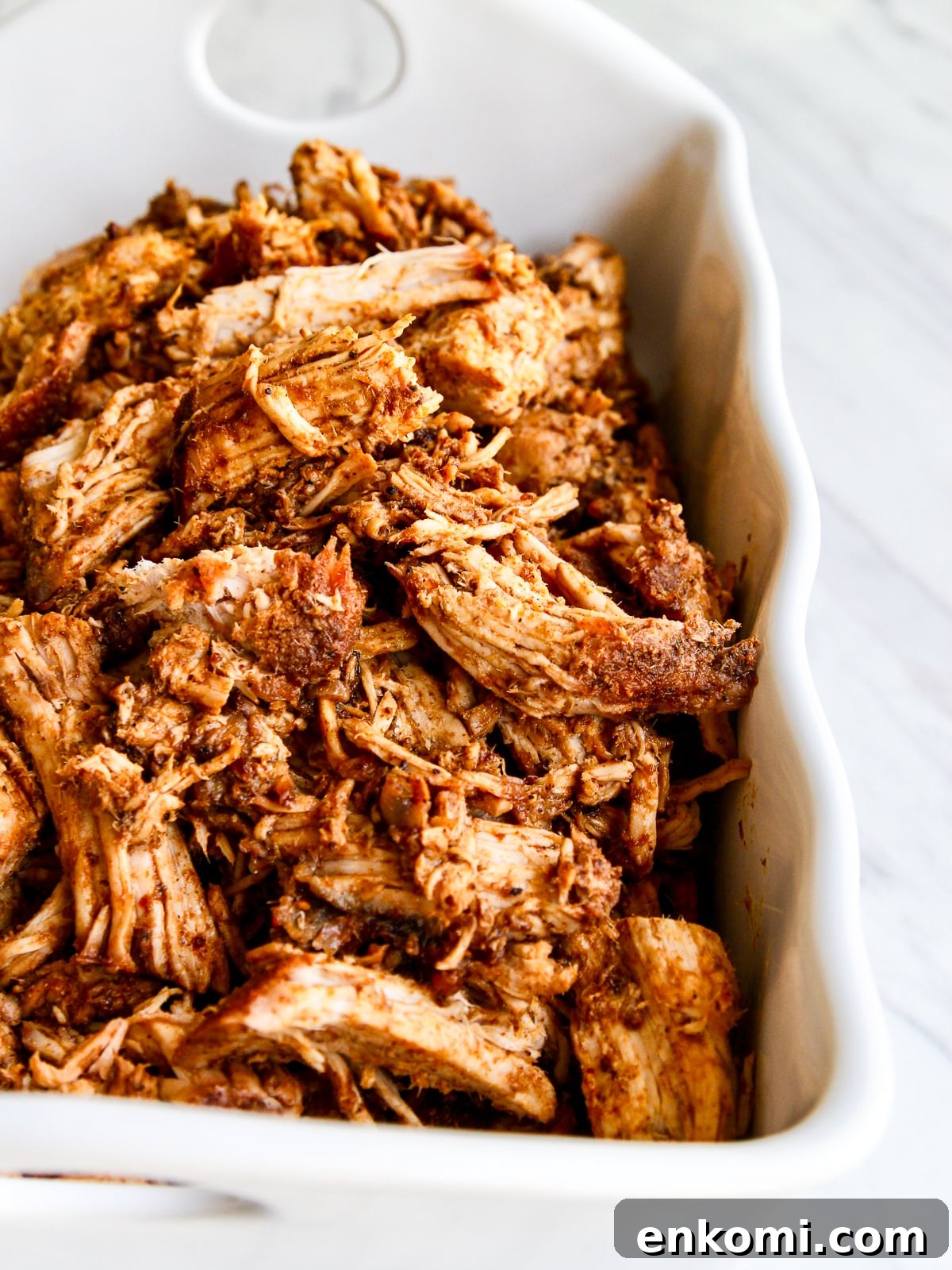
Oven-roasted pulled pork is moist, deeply savory, and easy to prepare at home. A homemade dry rub and a long, slow roast produce tender, shreddable meat with slightly caramelized edges and rich flavor.
This guide shows how to make pulled pork in a low-temperature oven rather than in a slow cooker or smoker, and explains why a pork loin is an excellent choice for this method.
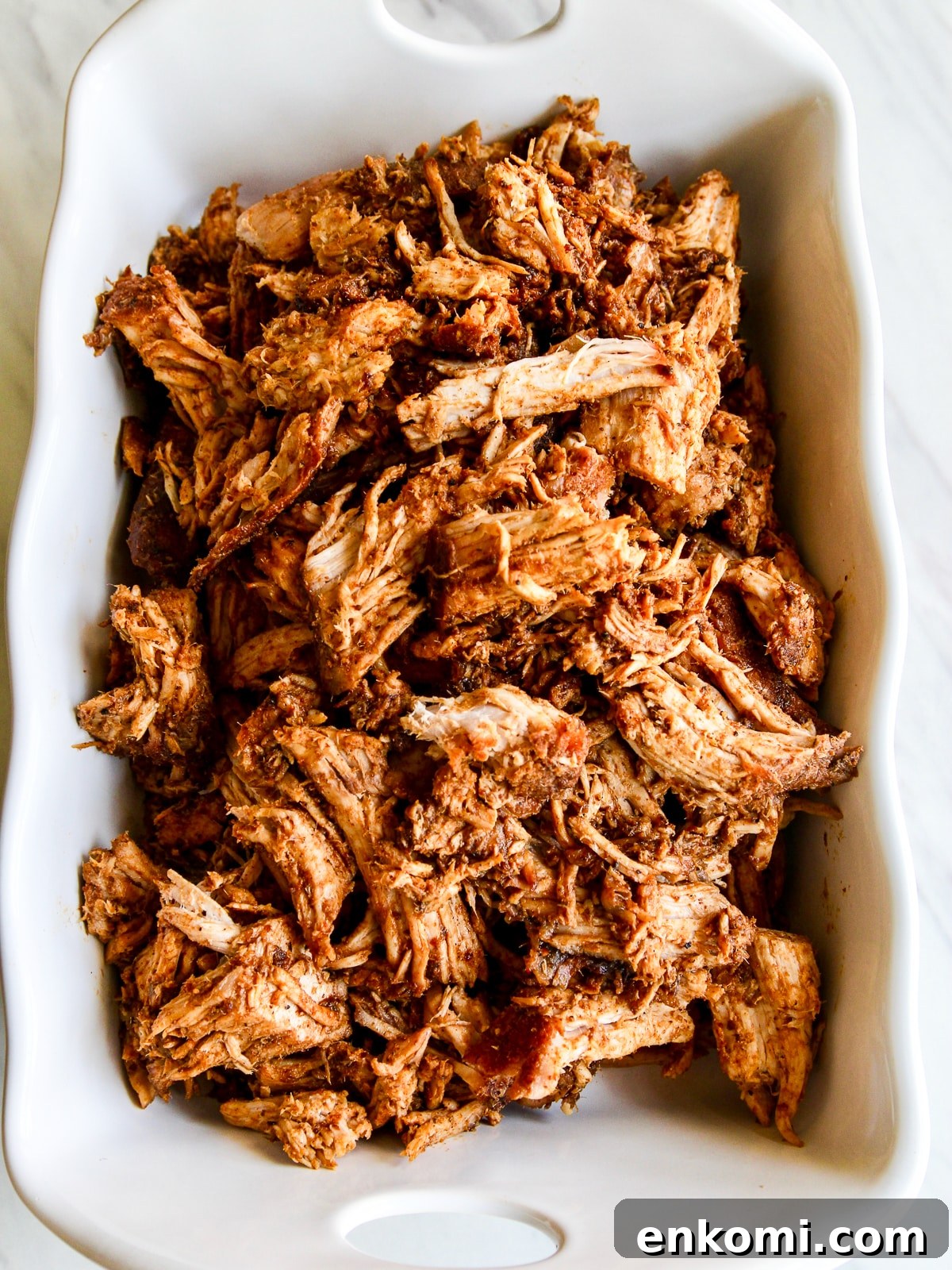
Across many cuisines, tougher cuts of pork are transformed by long, slow cooking into tender meat that can be shredded or “pulled.” While smoking gives a classic barbecue flavor, a low-and-slow oven roast yields excellent results for home cooks who don’t have a smoker.
Slow roasting at low heat breaks down connective tissue over several hours, producing juicy, tender meat that shreds easily. You can achieve the same tender texture using a slow cooker, pressure cooker, Instant Pot, or a domestic oven; this recipe focuses on oven roasting.
How To Make Pulled Pork
For the best pulled pork, use a low-and-slow approach: keep the temperature low, protect moisture, and build a flavorful crust with a dry rub. The long roast time gives the loin a tender, shreddable texture and a nicely browned exterior.
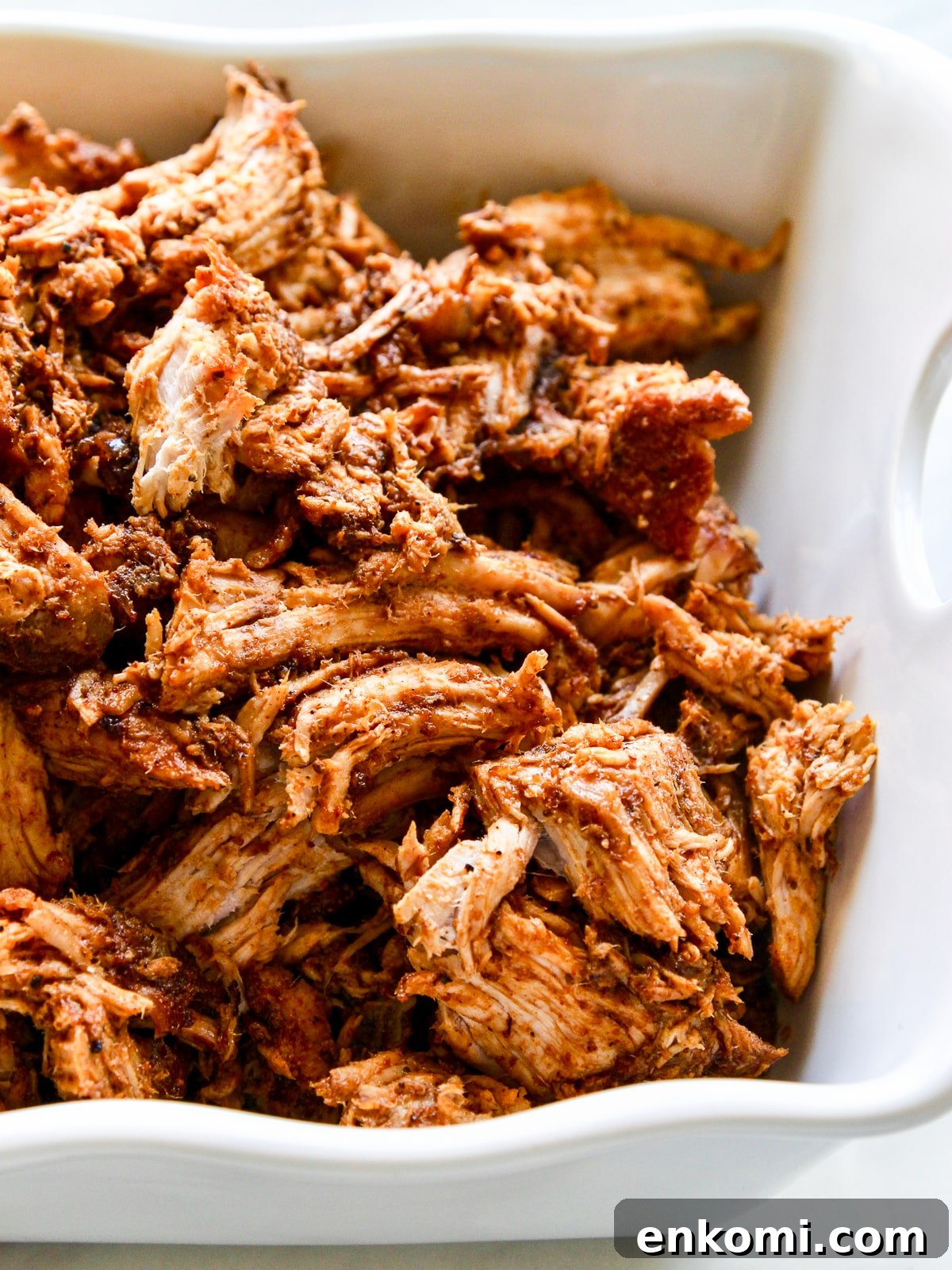
In warm months you may prefer an outdoor smoker for authentic smoky flavor, but oven roasting is a terrific indoor alternative that still delivers crowd-pleasing results.
Pulled Pork Recipe — Oven Roasted Ingredients
This method is designed for a PORK LOIN (NOT pork tenderloin). Loin roasts are larger and hold up well to long cooking; tenderloin is much smaller and will overcook using this technique.
Gas or Electric Oven?
PRO TIP: This recipe was tested in a gas oven. If you have an electric oven, roast uncovered at 225°F for 5 hours, then cover and cook an additional hour with a small amount of water or apple juice added to the pan bottom to maintain moisture.
10-Pound Pork Loin
A whole pork loin is leaner than some other cuts and is often economical. For this recipe choose a loin roast (not a tenderloin) that’s large enough for the slow roast—around 10 pounds yields plenty for a crowd.
Homemade Rub Seasoning (about ½ cup)
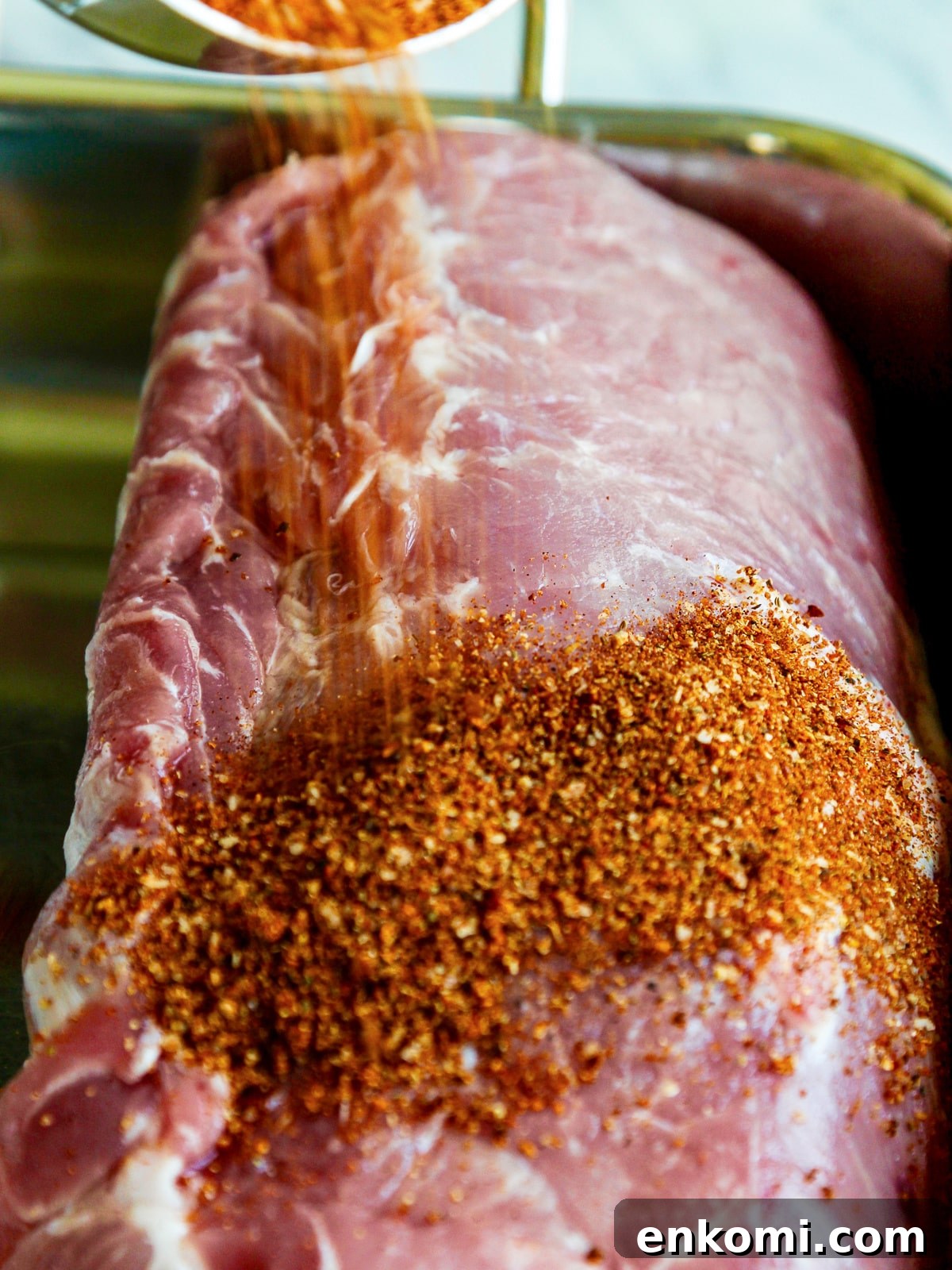
You’ll need roughly ½ cup of dry rub for a 10 lb loin. Making your own rub is simple, economical, and preservative-free.
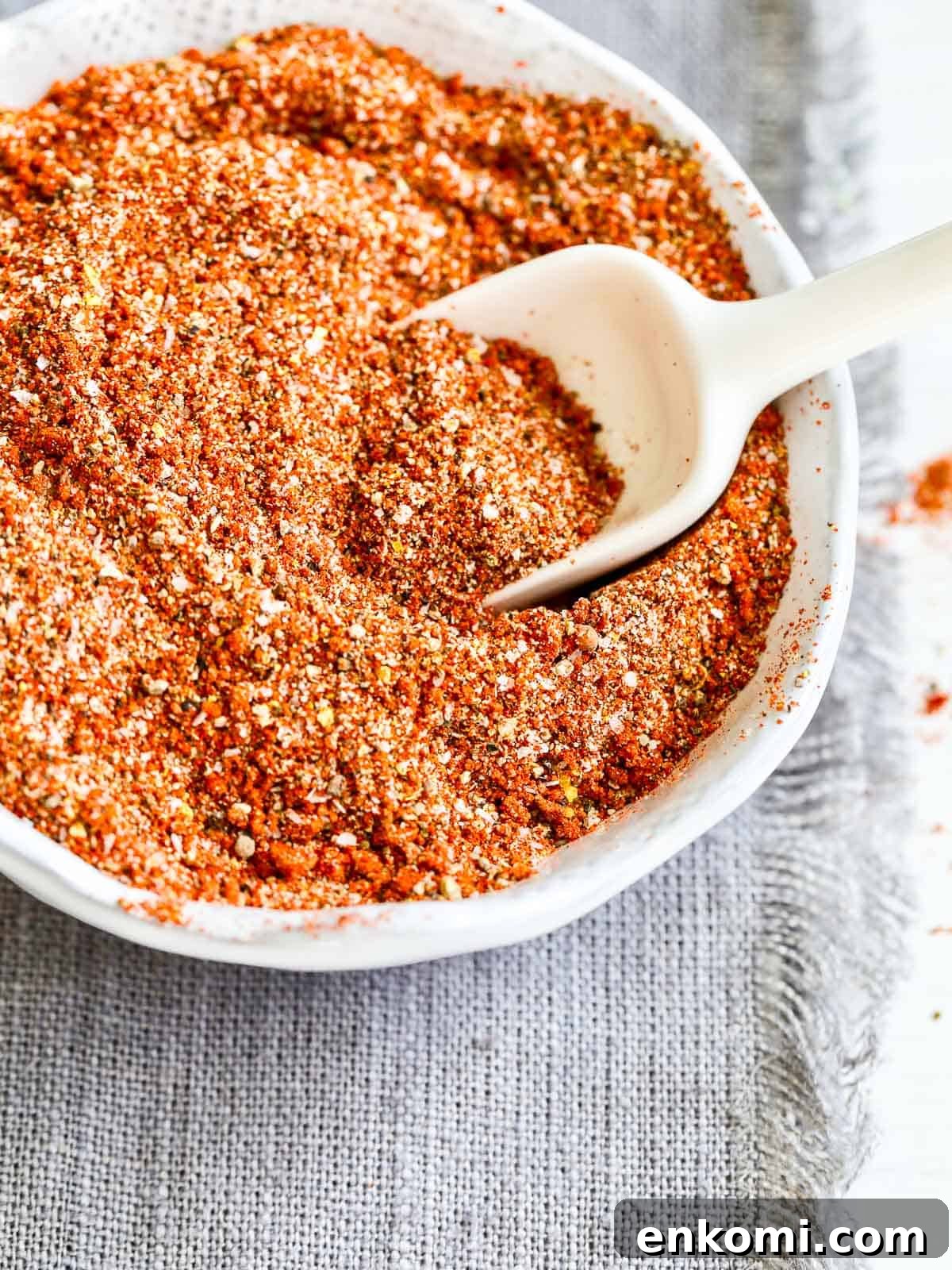
Mix the Rub
Combine the dry ingredients in a bowl and whisk until evenly blended. This rub works well on pork and can be used on chicken, steaks, ribs, and burgers too.
Suggested rub: ¼ cup brown sugar, ¼ cup paprika, 3 tablespoons cracked black pepper, 3 tablespoons kosher or sea salt (use only 1 tablespoon if substituting table salt), 2 tablespoons lemon pepper, 2 teaspoons chili powder, 2 tablespoons garlic powder, 2 tablespoons onion powder, 2 teaspoons celery seeds, and 1 teaspoon cayenne pepper.
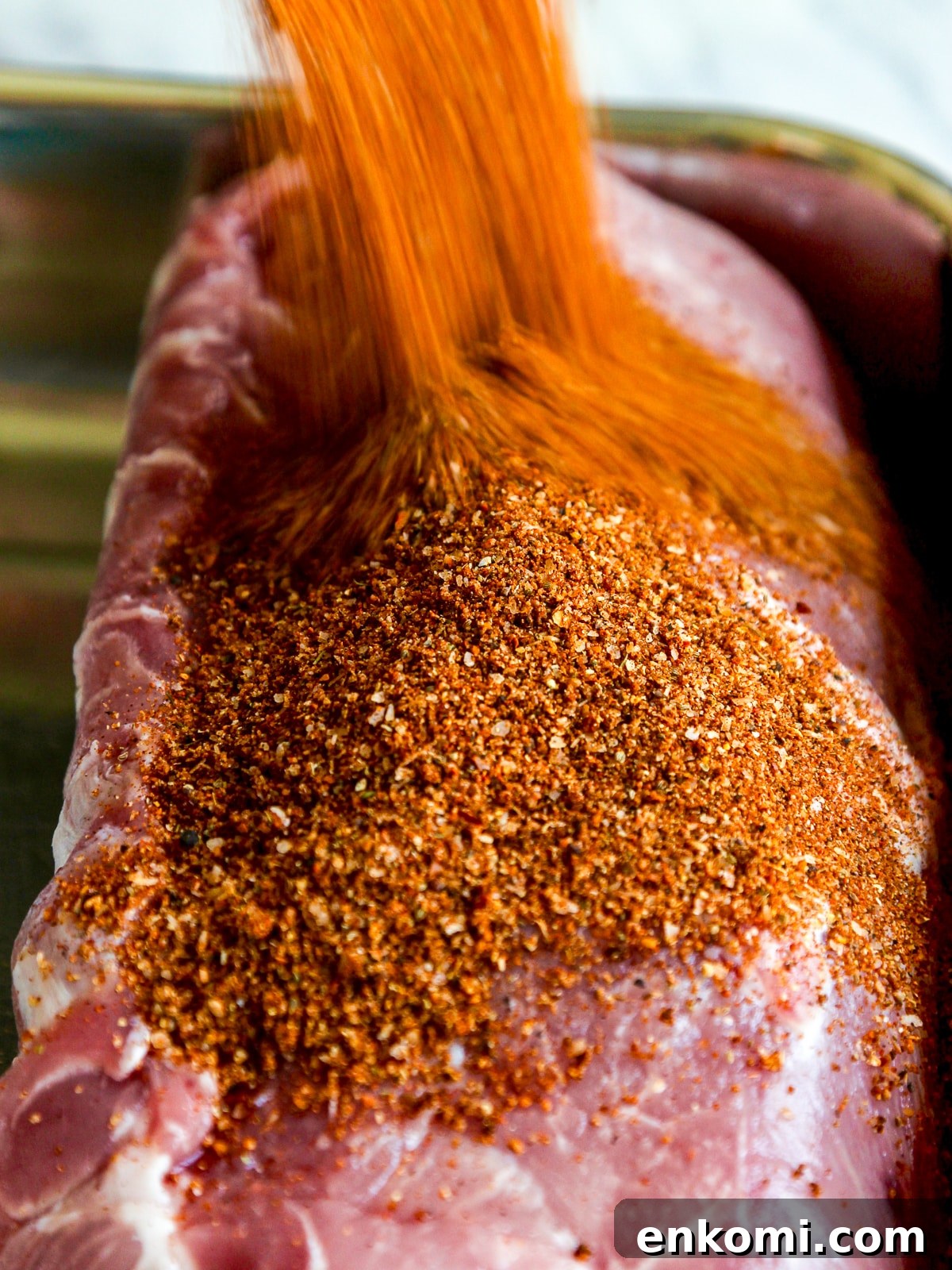
Storage tip: Keep leftover rub in an airtight jar away from light and heat. It will keep for several months.
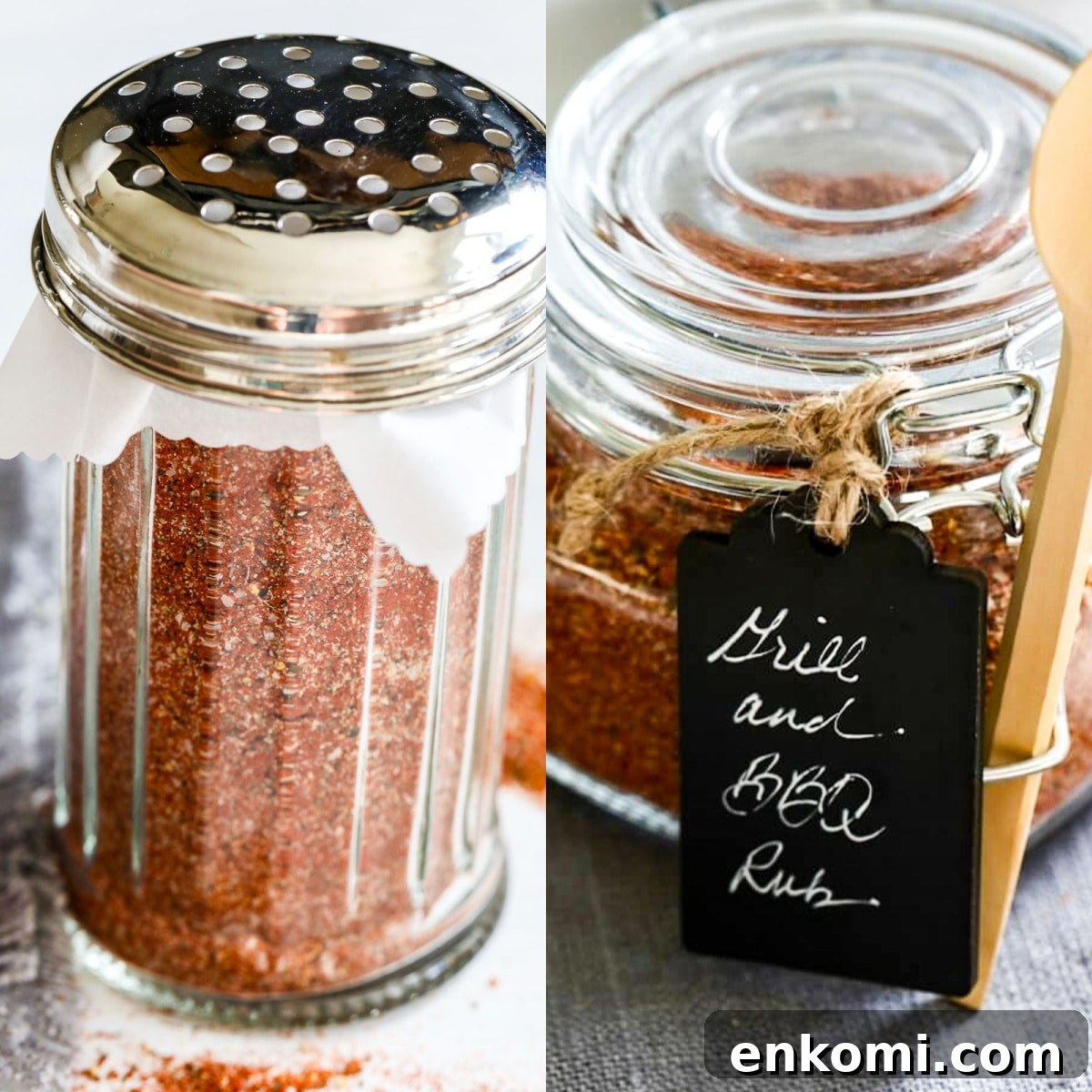
Prepare the Meat
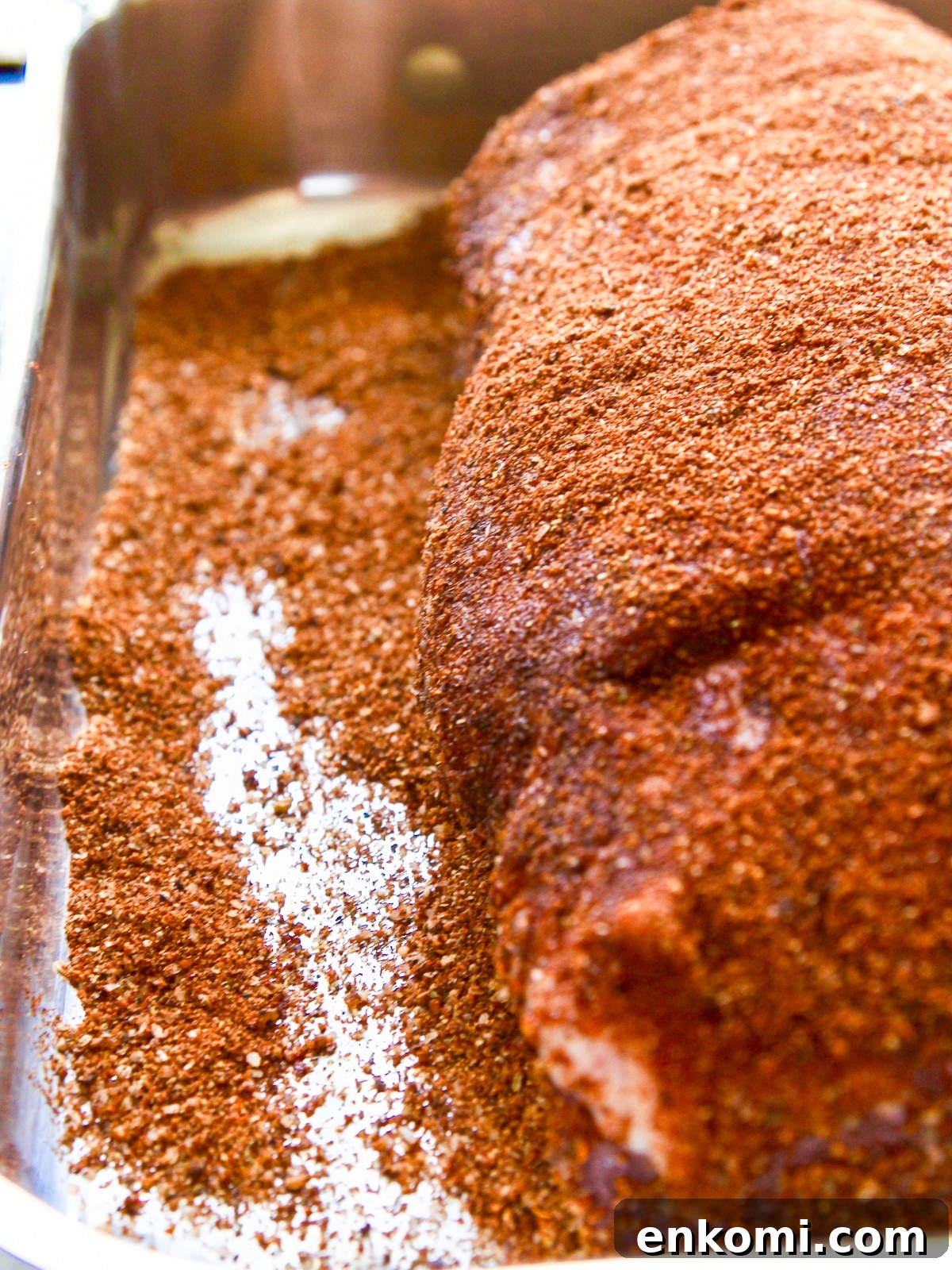
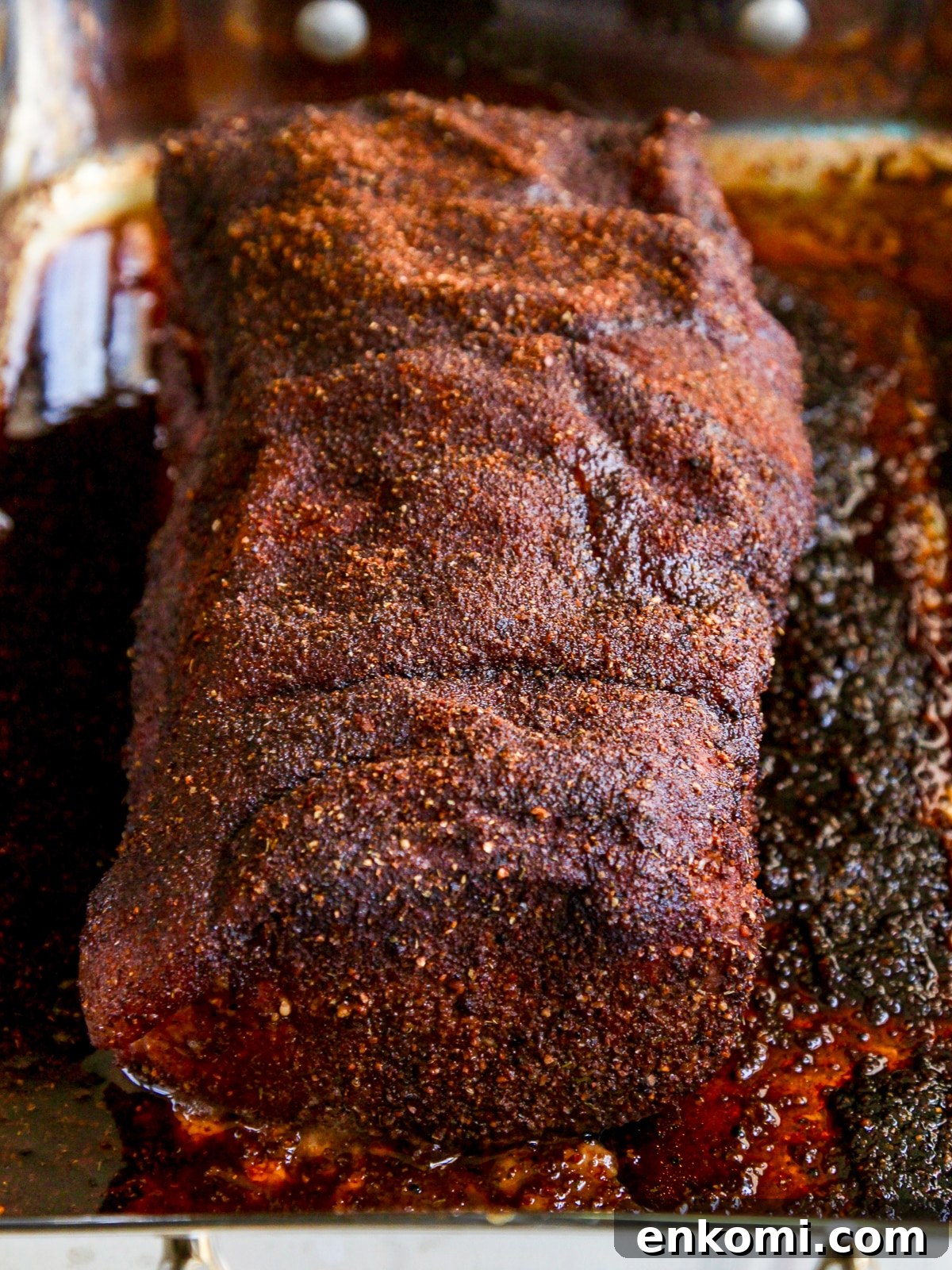
Use a large roasting pan. Position the loin fat-side up so the fat renders over the meat during the long roast. Evenly coat the entire surface and the ends of the roast with the dry rub.
Nutrition note: A pork loin roast is relatively lean. It can be comparable in calories to skinless chicken breast and is often lower in fat than other pork cuts.
Roast Time
Preheat the oven to 225°F (107°C).
Cook Time: A 10 lb pork loin will take about 5 hours at 225°F.
Insert an oven-safe thermometer into the thickest part of the roast and monitor the internal temperature throughout cooking. Roasting is a dry-heat method that cooks uncovered with hot air circulating around the meat, which helps create a crust while the inside becomes tender.
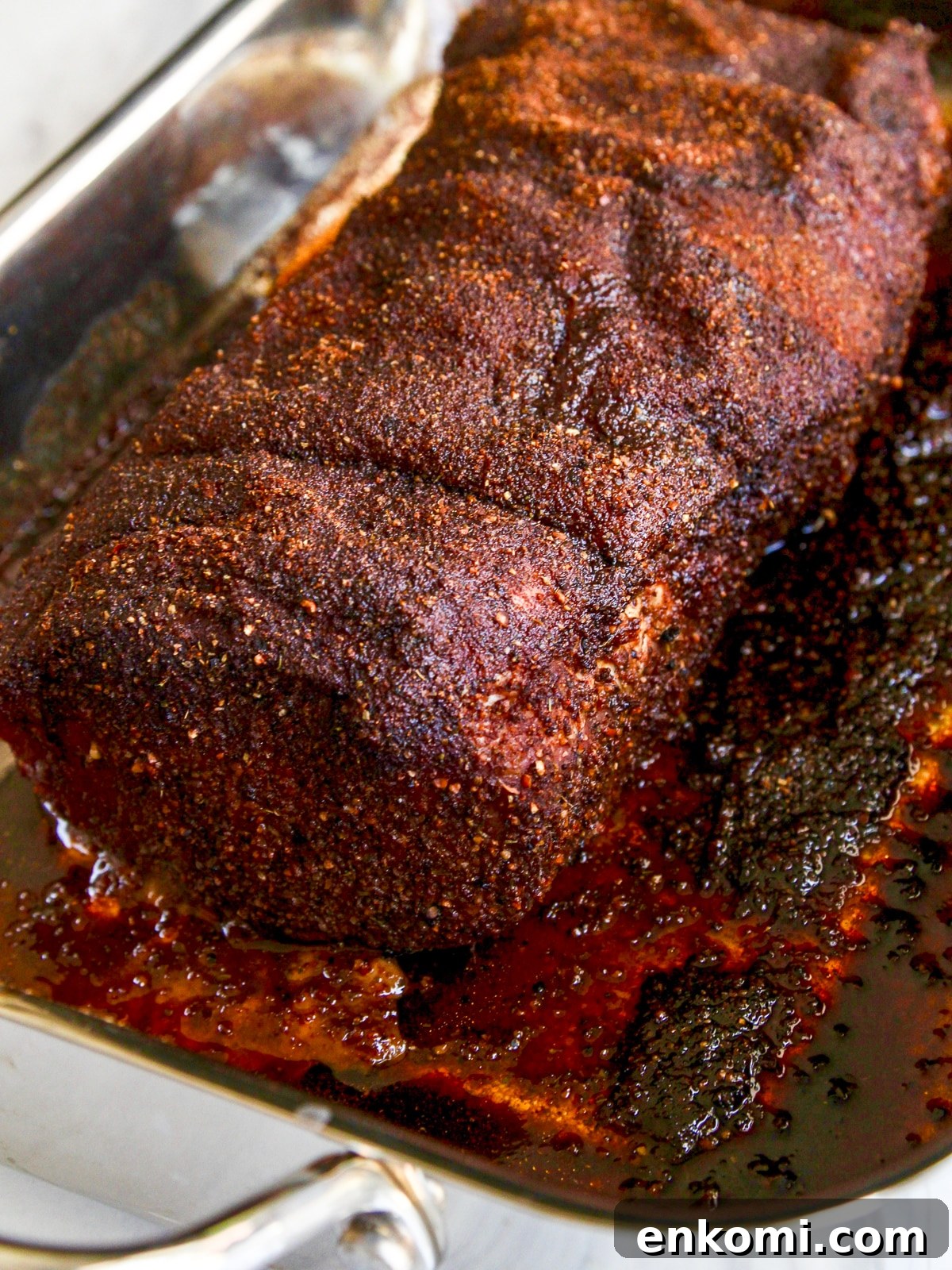
Safe Pork Loin Temperature
For pulled pork texture, continue roasting until the internal temperature reaches around 200°F (93°C). At that point the connective tissue will have broken down and the roast will be easy to shred. After removing the roast, let it rest in the turned-off oven or tented loosely for about an hour before shredding.
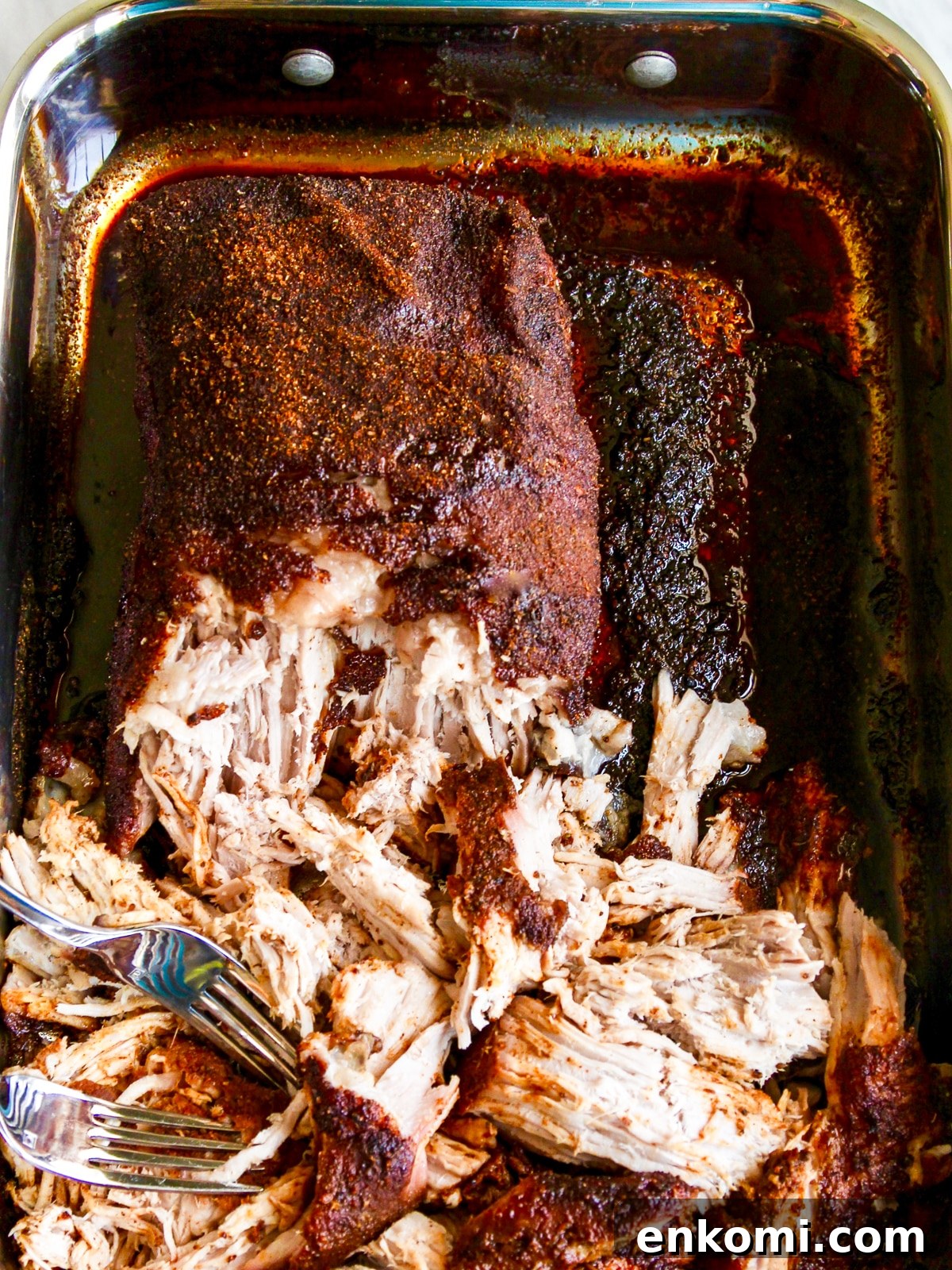
Shredding the Meat
Transfer the roast to the roasting pan if it isn’t already there. Use two forks to pull the meat apart, working in opposite directions. Mix the shredded pork with the pan juices to capture that concentrated flavor. Optionally toss with your favorite barbecue sauce or a vinegar-based sauce.
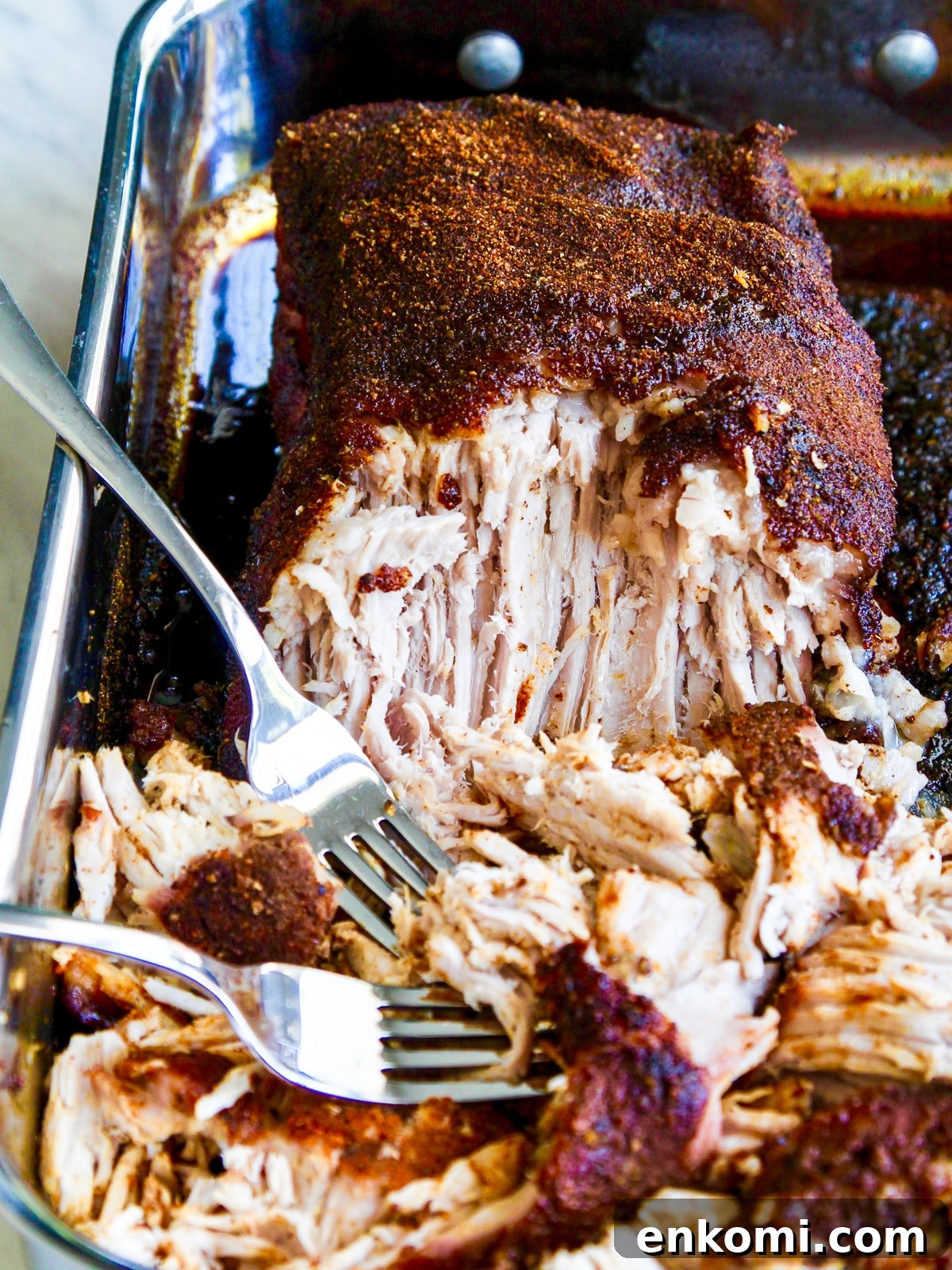
Serving and Storage
Serve pulled pork on sandwich buns with coleslaw, in tacos, tamales, quesadillas, or over rice. Leftovers refrigerate for 3–4 days when covered and chilled, or freeze for 4–6 months in airtight packaging for easy future meals.
- Cuban pulled pork sliders
- Pulled pork fried rice
- BBQ pulled pork sandwiches with slaw
- Pulled pork Philly sandwiches
- Pulled pork tamales
- Pork tacos and quesadillas
- Tater tot nachos with pulled pork
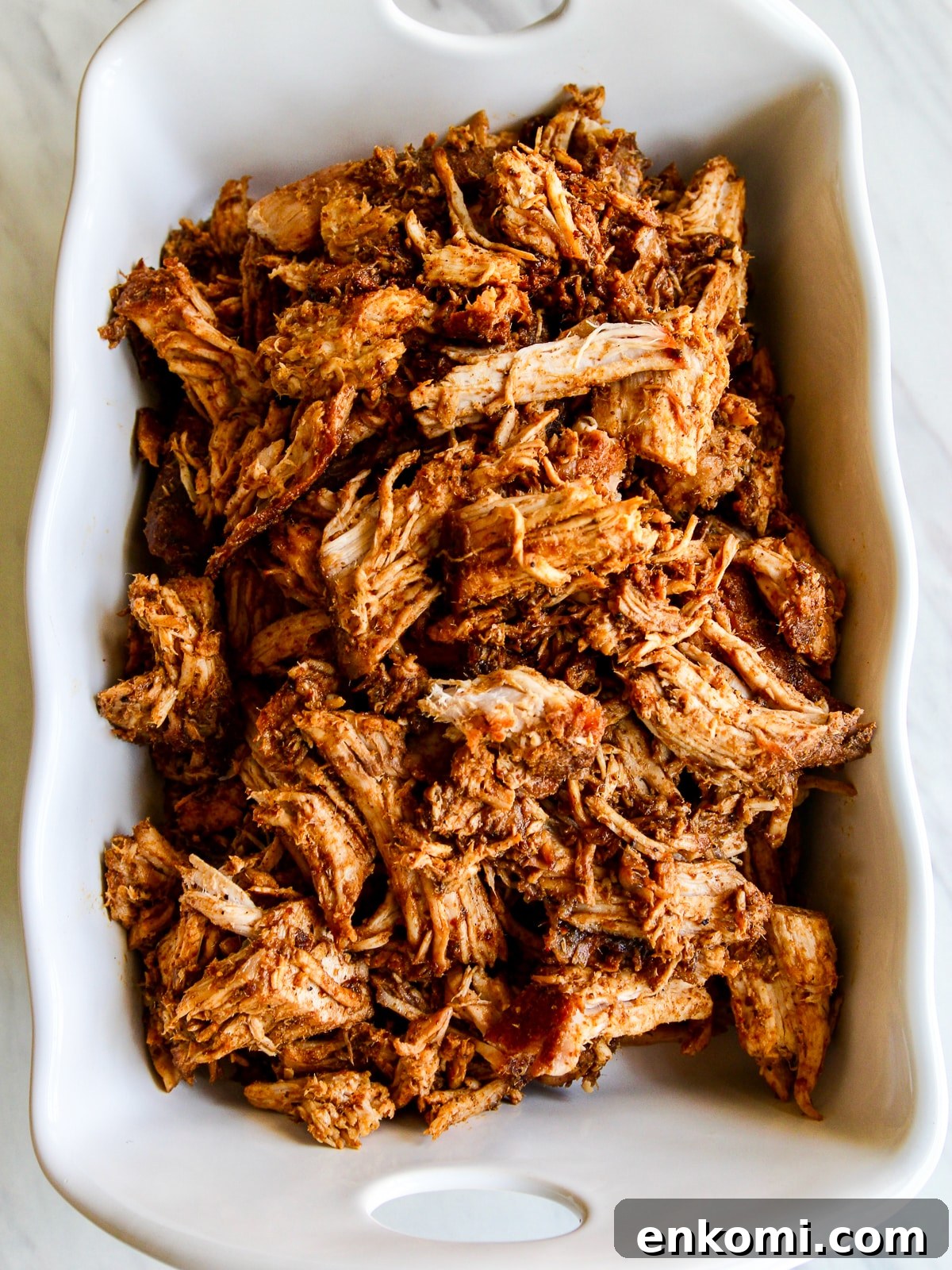
Best Cut of Pork
Many cooks use pork shoulder or Boston butt for pulled pork because they are fattier and full of connective tissue that renders during long cooking. A shoulder roast is popular for smoking and braising. However, a pork loin offers a leaner alternative that still becomes tender and shredable when cooked low and slow, and avoids excess fat.
Pork FAQ
For pulled pork, cook until the internal temperature reaches about 200°F so the meat breaks down and shreds easily. For safety, whole pork roasts should reach at least 145°F; pulled pork texture requires higher temperatures to break down connective tissue.
Store leftovers covered in the refrigerator for 3–4 days. Freeze for 4–6 months if well wrapped.
More Pork Recipes and Sides
Classic sides for pulled pork include potato salad, macaroni salad, pasta salad, coleslaw, baked beans, and refreshing lemonade or margaritas for a party spread. Pulled pork also pairs well with sliders, tater tot nachos, and roasted pork loin variations like cherry balsamic pork roast.
Oven Roasted Pulled Pork Recipe (Pork Loin)
Ingredients
- 10 lb pork loin (not pork tenderloin)
Homemade Pork Rub (about ½ cup)
- ¼ cup brown sugar
- ¼ cup paprika
- 3 tablespoons cracked black pepper
- 3 tablespoons sea salt or kosher salt (use less if using table salt)
- 2 tablespoons lemon pepper
- 2 teaspoons chili powder
- 2 tablespoons garlic powder
- 2 tablespoons onion powder
- 2 teaspoons celery seeds
- 1 teaspoon cayenne pepper
Optional: ½ cup BBQ sauce for tossing after shredding.
Equipment
- Large roasting pan
- Oven-safe thermometer or instant-read thermometer
- Mixing bowl and whisk for the rub
Instructions
- Mix the rub: Whisk all dry rub ingredients together in a large bowl until evenly combined.
- Preheat the oven to 225°F (107°C).
- Optional: Trim excess fat from the loin if desired. Place the roast fat-side up in a large roasting pan.
- Cover the entire surface and ends of the pork loin generously with the dry rub, pressing it into the meat.
- If you have an electric oven, follow the electric-oven note above: roast uncovered at 225°F for 5 hours, then cover and cook an additional hour with a small amount of water on the pan bottom.
- Insert an oven-safe thermometer into the thickest part of the loin and monitor the internal temperature as it cooks.
- Cook until the internal temperature reaches about 200°F and the meat is tender enough to pull apart, approximately 5 hours for a 10 lb loin (timing will vary with roast size and oven).
- Turn off the oven and let the roast rest for about an hour before removing it.
- Shred: Use two forks to pull the meat apart in opposite directions. Mix shredded meat with pan juices and add BBQ sauce if desired.
Notes
This recipe is tested with pork loin (not pork tenderloin). You will need about ½ cup of rub for a 10 lb loin; add more if you like a heavier coating. Store leftover rub in an airtight jar in a cool, dark place.
Enjoy your oven-roasted pulled pork—perfect for sandwiches, tacos, sliders, and party platters. Cooking low and slow in the oven is a reliable way to get tender, flavorful pulled pork at home without a smoker.