
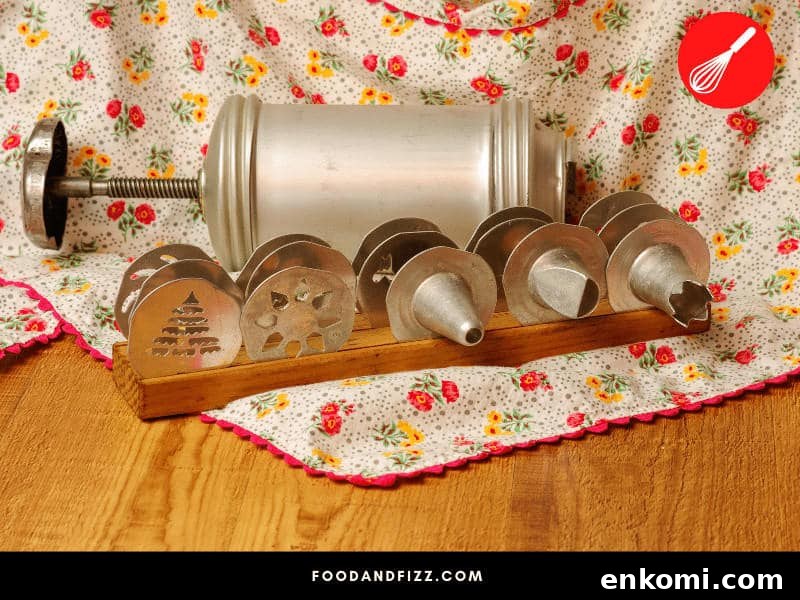
A cookie press is a useful kitchen tool that lets you produce attractive cookies quickly and consistently. While it simplifies the baking process for many bakers, it’s not foolproof. At times, the press may fail to release dough cleanly, preventing you from forming the shapes you expected. Why does this happen, and how can you fix it?
Keep reading to learn the common reasons a cookie press won’t release dough and practical fixes to get it working again.
Table of Contents
Cookie Press Not Releasing Dough
If your cookie press won’t release dough, common causes include dough that’s too cold or too stiff, dough with chunky mix-ins, a warm baking sheet, or using a greased or non-stick-lined pan. The usual fixes are to use the right recipe, bring the dough to the proper temperature and consistency, and bake on an ungreased, unlined light metal sheet.

What is a Cookie Press?
A cookie press is a cylindrical tube with a plunger on one end and interchangeable discs or tips on the other that form the cookie shape. Some models are manual and others are electric. By swapping discs or tips, you can create a variety of shapes and designs without reworking the dough by hand. It’s a convenient tool for making uniform, decorative cookies efficiently.
Cookie Press Not Releasing Dough – 5 Reasons
When your cookie press won’t release dough, it’s usually one of five issues. Identifying the cause helps you correct it quickly so you can continue baking.
1. Cookie Dough is Too Cold
Dough straight from the refrigerator or freezer can be too firm to pass through the press and may strain the mechanism. Let chilled dough warm to room temperature so it becomes pliable before loading it into the press.
2. Cookie Dough is Too Stiff
The dough should be soft and slightly tacky—pliable but not wet. If it’s too dry or dense, it won’t flow and shape correctly. Adjust texture gradually: add a teaspoon of liquid (milk or water) if too dry, or a little flour if too wet. Using a recipe designed for cookie presses—such as traditional spritz cookie recipes—reduces the need for adjustments.
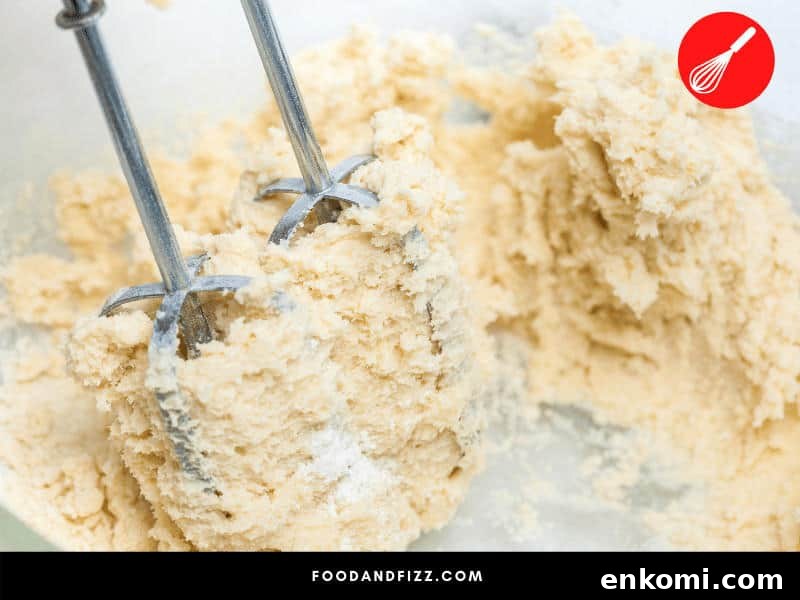
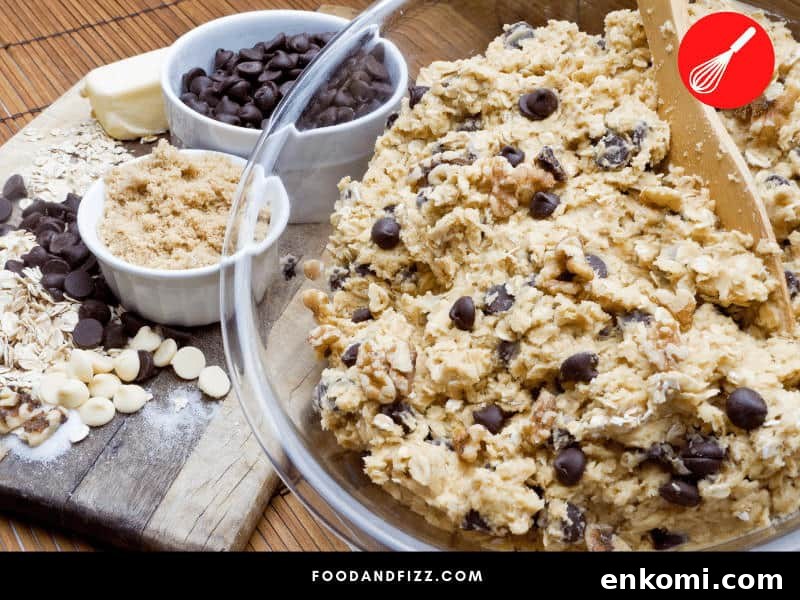
3. Cookie Dough Has Chunky Bits and Add-ons
Dough with nuts, chocolate chips, dried fruit, or other chunky mix-ins won’t pass cleanly through the press and can clog or damage the discs. These add-ins also prevent the cookie from holding the intended shape. For best results, use a smooth dough without large inclusions.
4. Your Pan is Too Warm
Cookies formed by a press need the dough to stick immediately to the baking sheet. If the pan is warm, the dough may slide instead of adhering. Chill the pan briefly so it’s cold when you press the dough onto it.
5. The Pan is Greased or Lined with Non-stick Parchment Paper
Grease and non-stick parchment prevent the dough from gripping the pan surface, causing shapes to flatten or slip. For press cookies, use an ungreased, unlined light metal pan so the dough adheres and preserves the shape.
Cookie Press Not Releasing Dough – 5 Remedies
Here are practical steps to resolve dough-release problems and get consistent results from your cookie press.
1. Use the Right Cookie Recipe
Choose a recipe formulated for cookie presses—typically a spritz-style dough made with flour, butter, sugar, and eggs. If your dough is off, adjust it slowly: a little flour if it’s too soft, a small amount of milk or water if it’s too stiff. Make small adjustments and test until the dough extrudes smoothly.
2. Follow the Manufacturer’s Operating Instructions
Reference your cookie press manual for correct assembly, loading, and operation. Proper technique protects the tool and helps the dough feed and release consistently.
3. Make Sure the Dough is at the Right Temperature
Aim for room-temperature dough that’s pliable but not sticky. If the dough gets too soft while working, chill it briefly. If it’s too firm, let it warm up before pressing.
4. Make Sure your Pan is Cold
Keep your baking sheet cool between batches. If it warms up, place it in the refrigerator or freezer for 10–15 minutes to restore a surface that helps the dough adhere.
5. Use an Ungreased, Light Metal Pan
For press cookies, avoid greasing or lining the pan. Use a light-weight metal baking sheet that is ungreased and unlined so shapes hold and cookies bake with crisp edges.

Conclusion to Cookie Dough Not Releasing – 5 Reasons and Remedies
Understanding the dough consistency, temperature, and the right baking surface solves most cookie press problems. Use a smooth spritz-style dough at room temperature, avoid chunky mix-ins, and press onto a cold, ungreased light metal pan. With those steps and the manufacturer’s guidance, your cookie press should release dough reliably and produce attractive, uniform cookies.

Frequently Asked Questions on Cookie Press Not Releasing Dough – 5 Reasons and Remedies
Can I Use Any Cookie Dough For the Cookie Press?
Use dough designed for presses—typically spritz-style recipes of flour, butter, sugar, and egg. Dough with nuts, chips, or fruit won’t form correctly and can clog the press.
Should I Grease My Cookie Pan or Use Non-stick Parchment Paper?
Don’t grease or line the pan for press cookies. A light metal, ungreased sheet helps the dough stick and keeps shapes from spreading.
How Do You Decorate Cookies Made With A Cookie Press?
Decorate pressed cookies with royal icing, glaze, sprinkles, melted chocolate, or edible pens. Simple decorations highlight the shapes and add color or texture.