
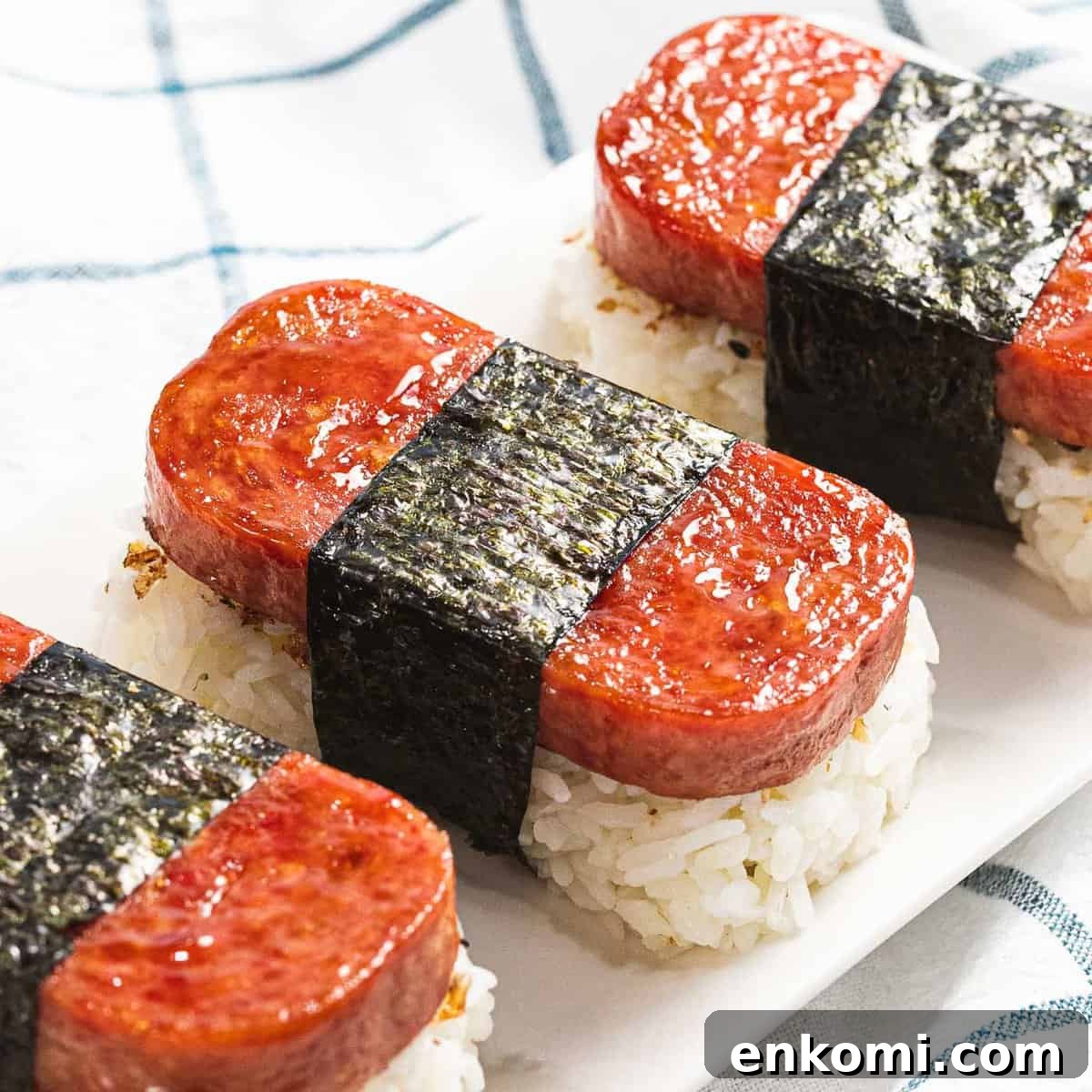
Spam musubi is a simple, satisfying snack or lunch of rice topped with pan-fried Spam and wrapped in nori seaweed. Elevate it with a sweet-savory teriyaki glaze, a sprinkle of furikake, or a slice of tamagoyaki (Japanese rolled omelet) for a classic Hawaiian treat.
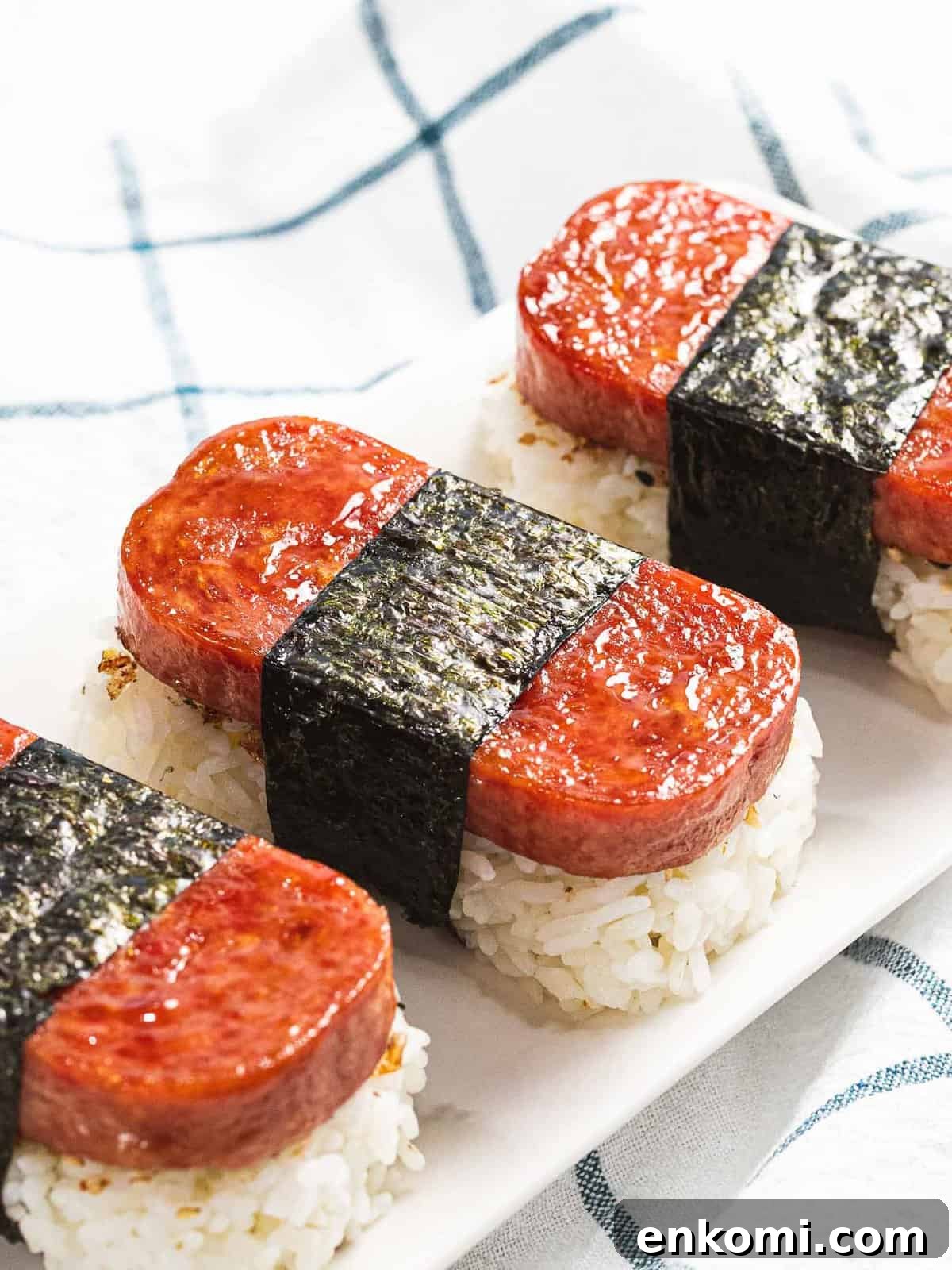
Spam musubi delivers salty, umami flavor in a compact, portable package. It’s an ideal way to use day-old rice and takes only minutes to assemble. With just a few ingredients—Spam, cooked rice, and nori—you can make a snack that’s perfect for lunchboxes, picnics, or a quick bite on the go.
In Hawaii, spam musubi is everywhere—from convenience stores to beachside vendors—and it’s beloved for its convenience and satisfying taste. If you enjoy rice-based handhelds, consider trying onigiri, yaki onigiri, or Korean jumeokbap for more rice ball ideas.
What is spam musubi?
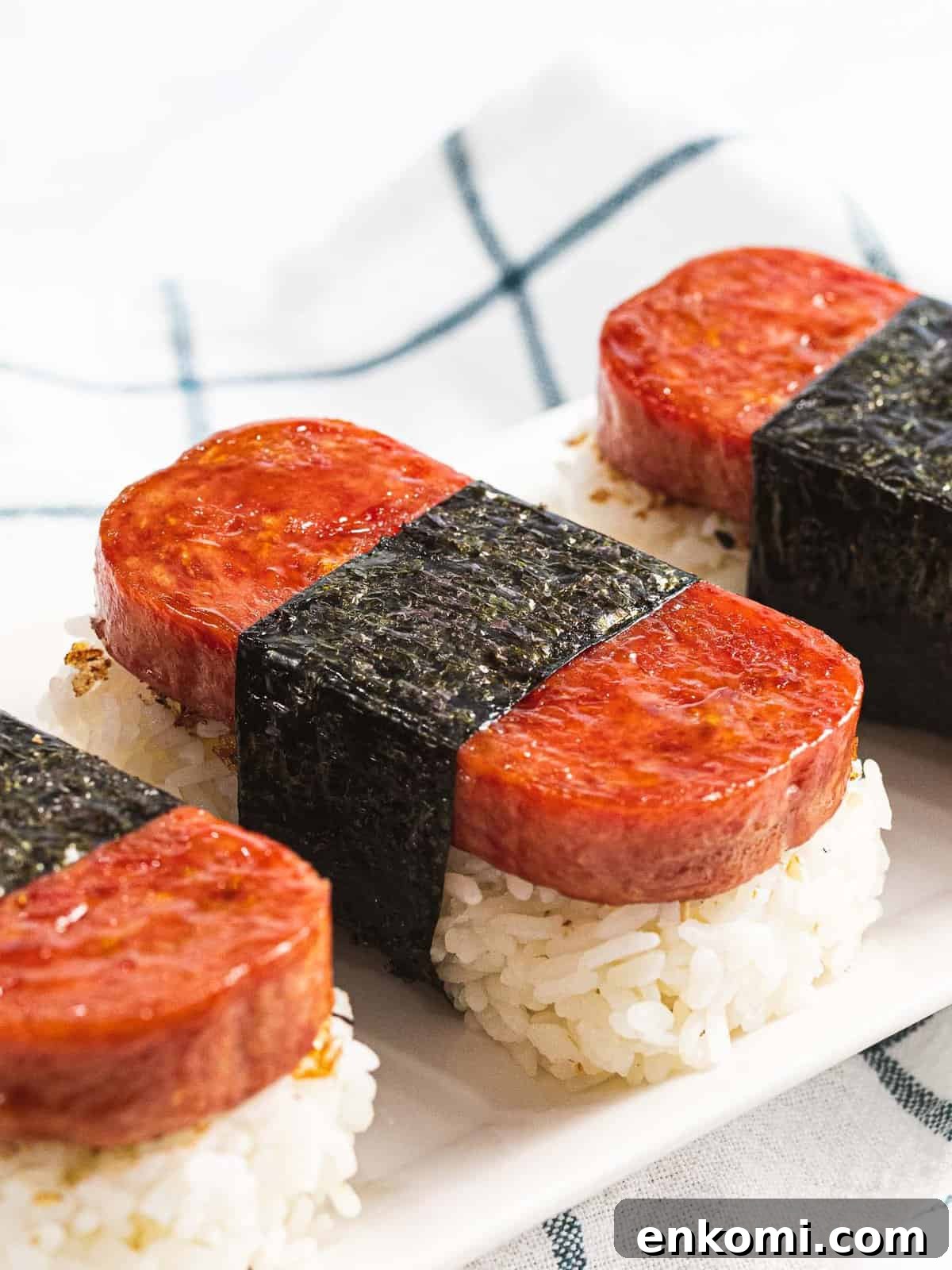
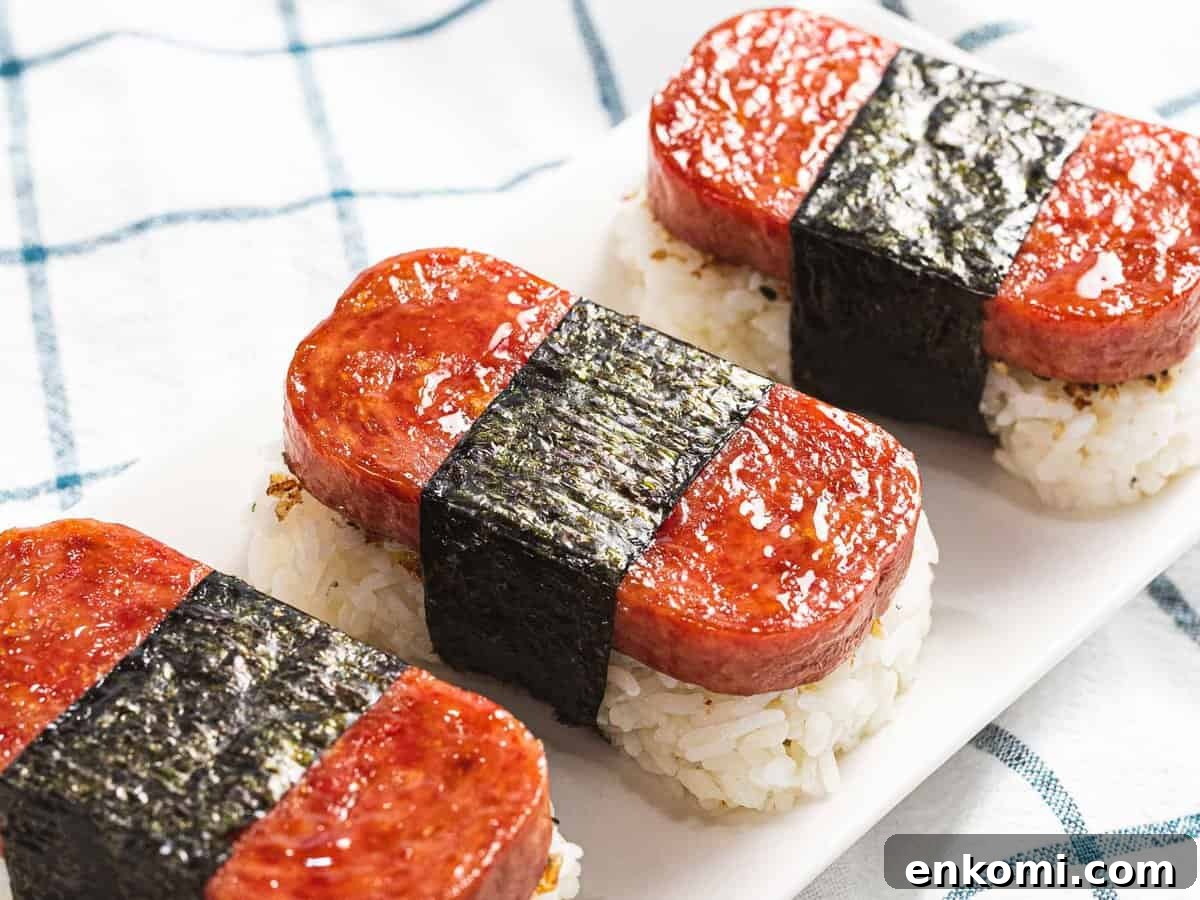
Spam musubi consists of a rectangular or oval block of warm, slightly sticky rice topped with a slice of pan-fried Spam and wrapped with a strip of nori to hold everything together. Simple, portable, and deeply flavorful, it’s a staple snack in Hawaiian cuisine that grew out of post–World War II food culture.
Ingredients
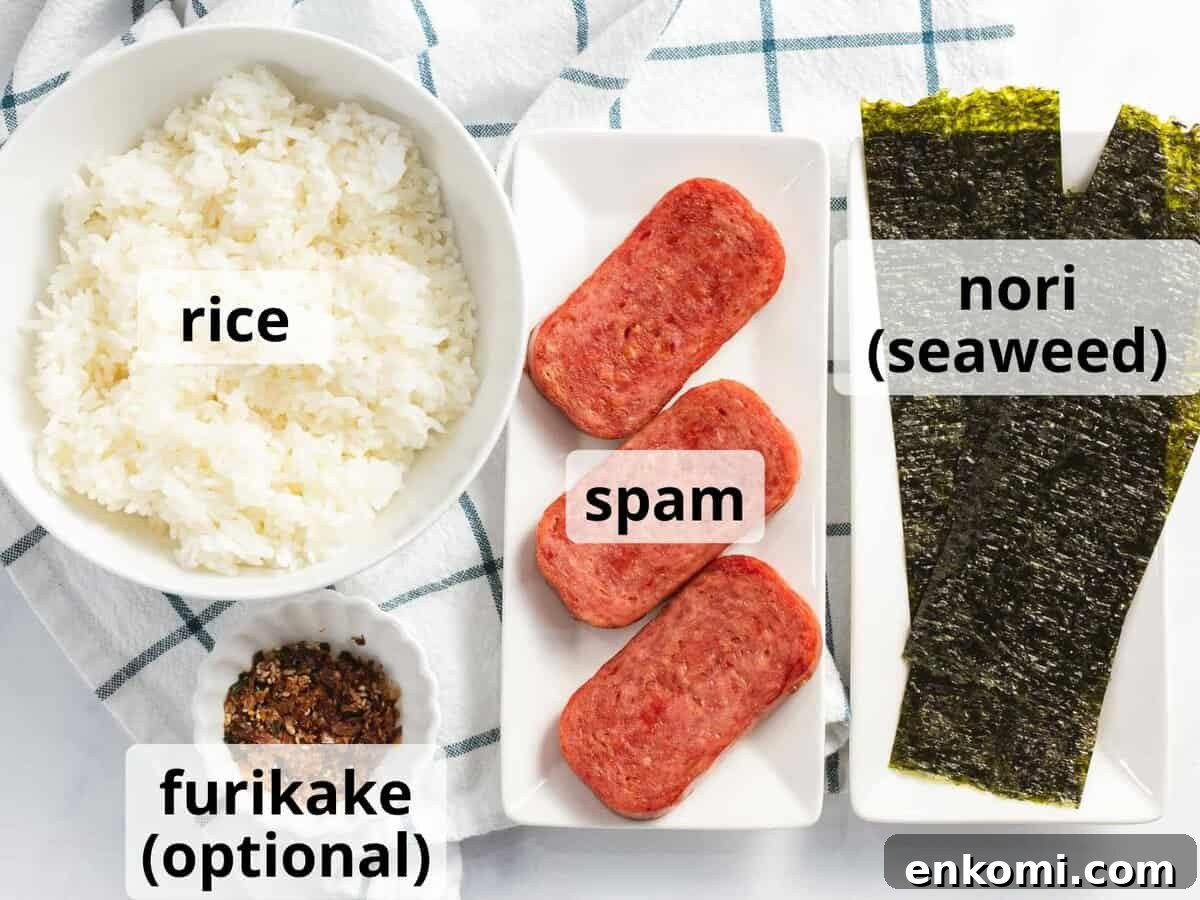
- Spam – Any variety works. Low-sodium or lite versions reduce salt and fat. Slice Spam about 1/3 to 1/2 inch thick.
- Cooked rice – Use short- or medium-grain rice (sushi rice recommended) so the musubi holds its shape. Long-grain rice is too loose and may fall apart.
- Nori – Dried seaweed sheets cut into 2–3 inch strips to wrap the musubi.
- Furikake (optional) – A Japanese rice seasoning of sesame seeds, seaweed, and seasoning that adds extra flavor.
How to make Spam musubi
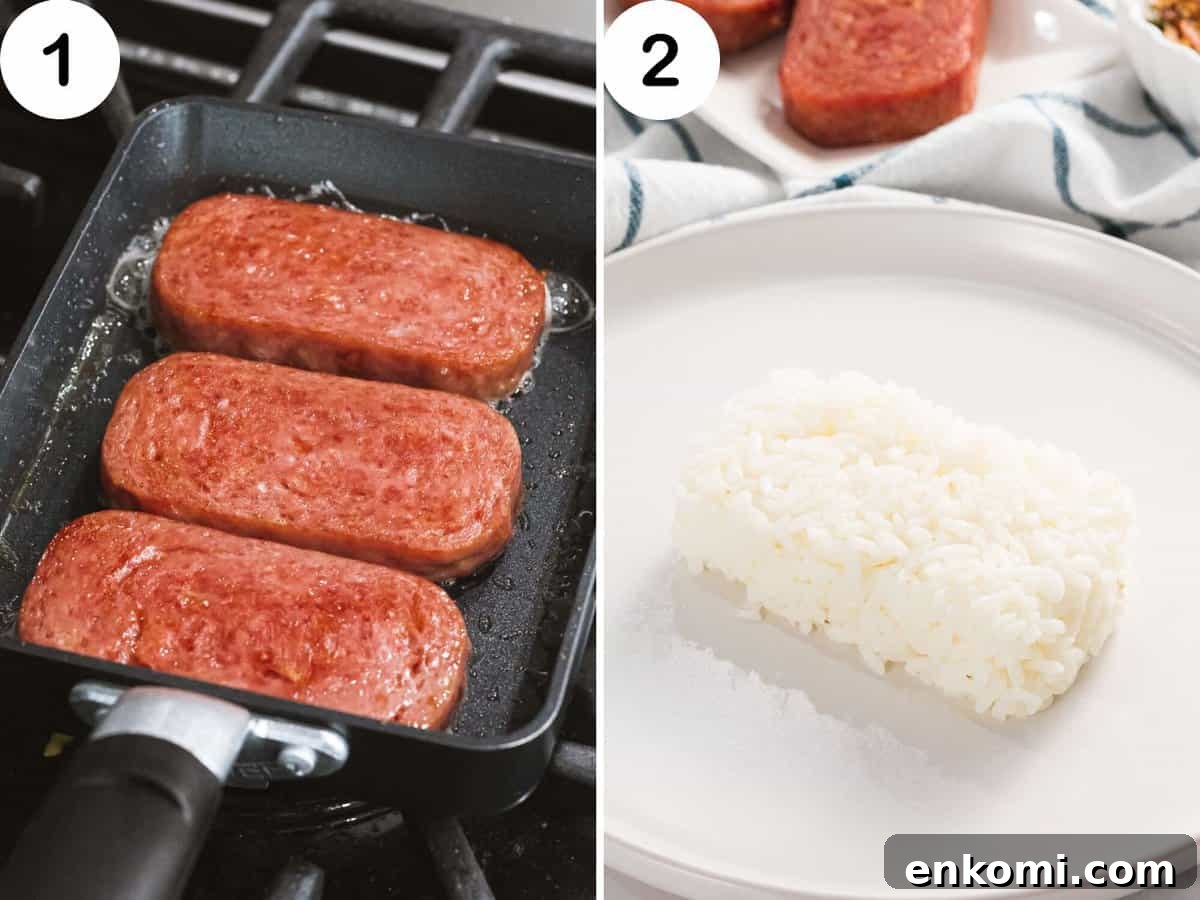
- Pan-fry the Spam: Heat a small amount of oil in a skillet over medium-high heat. Fry slices until lightly browned and edges are crisp. For a glaze, add equal parts soy sauce, sugar, and mirin during the last 1–2 minutes and let the liquid reduce to a glaze that coats the Spam.
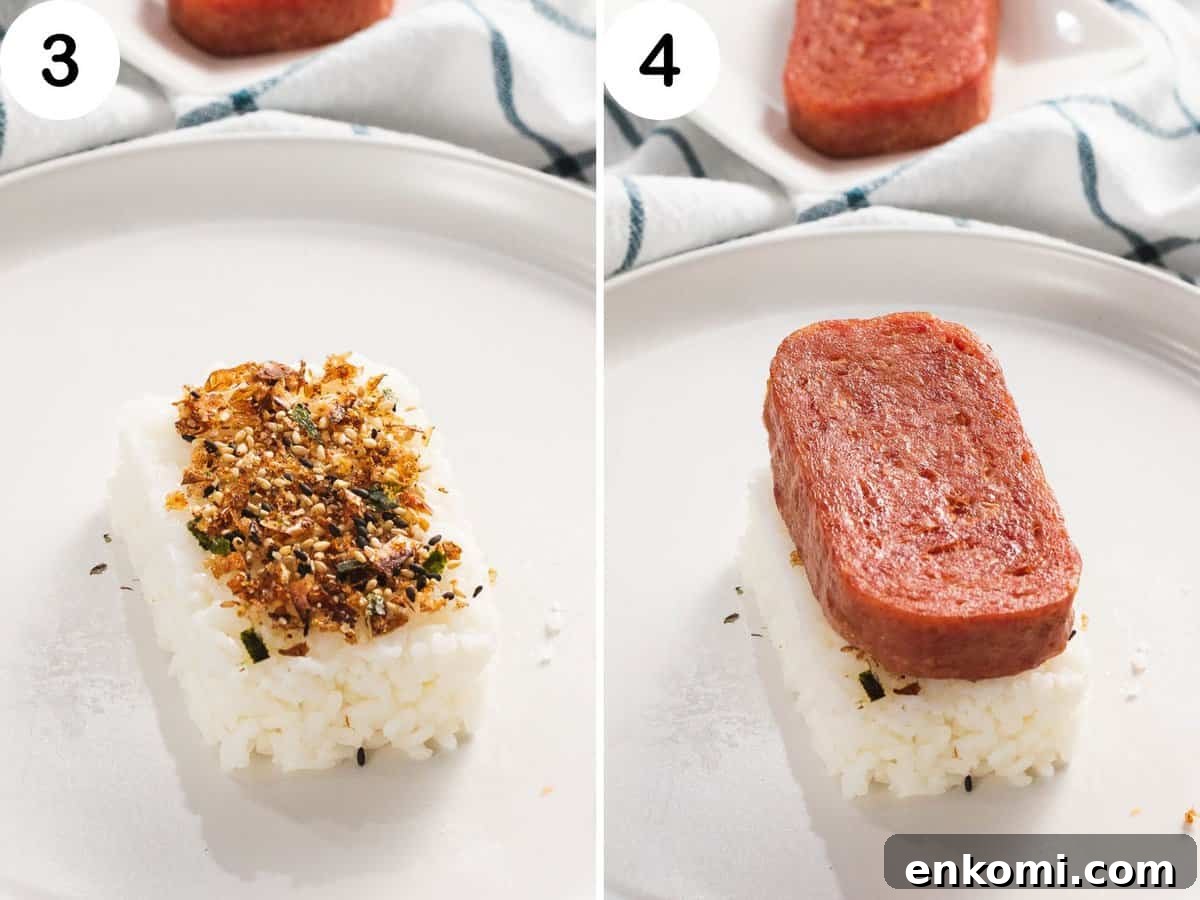
- Mold the rice: Using a musubi mold or a cleaned Spam can lined with plastic wrap, pack 1/2 cup cooked rice into the container and press firmly to form a compact rectangle about 1 2/3 inches tall. You can adjust rice amount to taste.
- Add seasoning: If desired, sprinkle furikake over the rice before topping.
- Assemble and wrap: Place a fried Spam slice on each rice block. Wrap with a strip of nori, seam side down, to secure the Spam to the rice. If you made sauce, brush any remaining glaze onto the Spam and serve immediately.
Variations
- Spam and egg musubi – Add a slice of tamagoyaki or a thin fried egg between the rice and Spam for extra richness.
- Cheese or avocado – Layer a slice of cheese or thin avocado between Spam and rice for a creamy contrast.
- Sesame or extra furikake – Sprinkle toasted sesame seeds or additional furikake for crunch and flavor depth.
More Hawaiian and Spam recipe ideas
- Loco Moco – A classic Hawaiian plate with rice, a hamburger patty, fried egg, and gravy.
- Hawaiian pineapple fried rice – Sweet, savory fried rice with pineapple and ham.
- Spam fried rice or kimchi fried rice with Spam – Great ways to use leftover Spam and rice.
Recipe (Makes 3 musubi)
Ingredients
- 3 slices Spam, about 1/3 inch thick
- 3 pieces nori, cut 2 to 3 inches wide
- 1 1/2 cups cooked short- or medium-grain rice, packed
- 1 tablespoon furikake (optional)
Teriyaki musubi sauce (optional)
- 2 teaspoons soy sauce
- 2 teaspoons sugar
- 2 teaspoons mirin (or sake or white wine)
Instructions
- Pan-fry Spam: Heat oil in a skillet and fry Spam until golden. For a glaze, add soy sauce, sugar, and mirin in the final 1–2 minutes and allow it to reduce and coat the Spam.
- Form rice: Place 1/2 cup cooked rice in a musubi mold or lined Spam can. Press firmly to form a compact block about 1 2/3 inches tall. Sprinkle furikake if using.
- Assemble: Top rice with a slice of Spam and wrap with a nori strip, seam side down. Brush with leftover sauce if desired and serve warm.
Notes
- Spam: Low-sodium Spam reduces overall saltiness and works well if you prefer a milder flavor.
- Leftovers: Store musubi in an airtight container in the refrigerator for up to 3 days.
- Reheating: Microwave 20 seconds at a time until warmed through.
Nutrition (approx. per musubi)
Calories: 215 kcal; Carbohydrates: 28 g; Protein: 7 g; Fat: 8 g; Sodium: 673 mg. Nutrition info is an approximation.
Musubi and onigiri both refer to rice balls. The terms are often used interchangeably; regional preferences determine which term is more common. Musubi in Hawaii typically describes rice topped with a protein and wrapped with nori, while onigiri in Japan often refers to shaped rice balls filled or seasoned in various ways.