
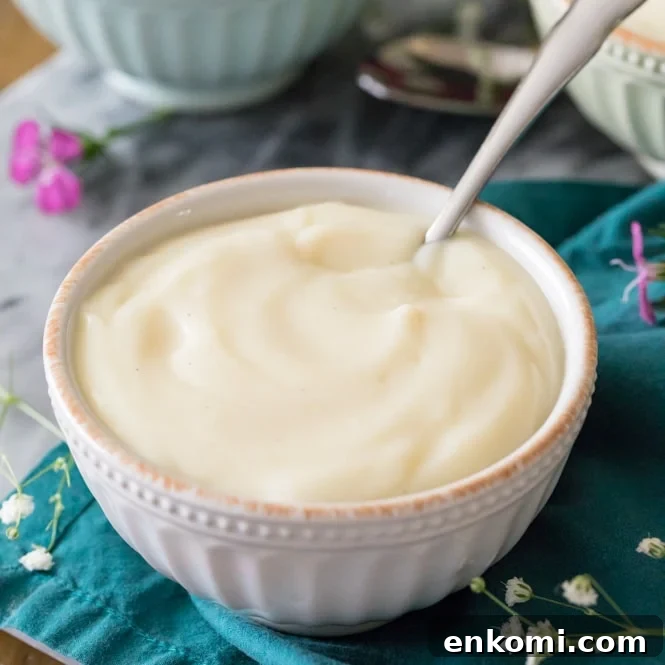
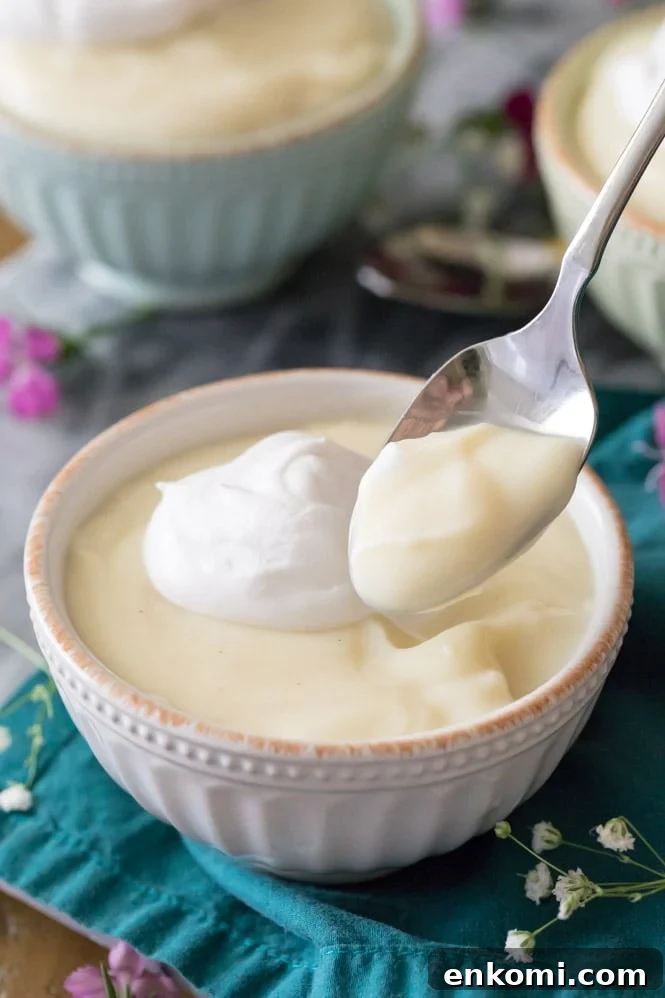
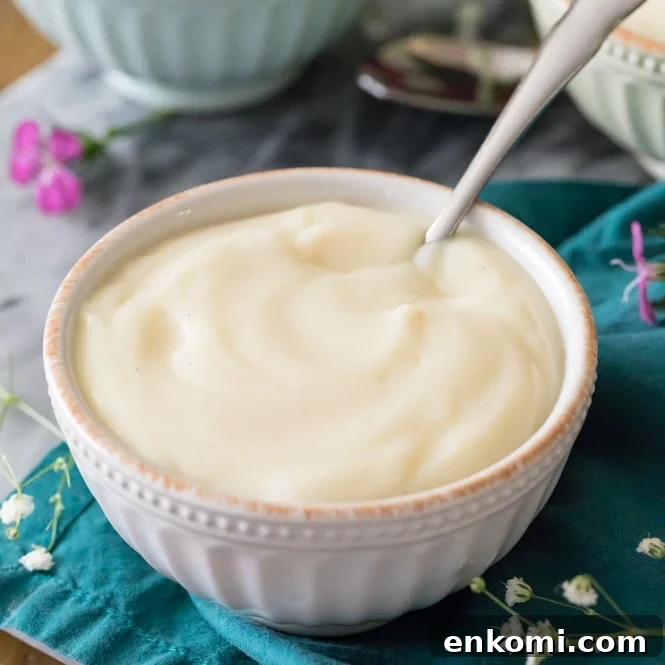
A sweet and simple recipe for Homemade Vanilla Pudding. Silky smooth and richly flavored with vanilla bean—vanilla extract works fine too if you don’t have a bean. This easy-from-scratch pudding is far superior to boxed mixes. For an extra touch, top with homemade whipped cream.
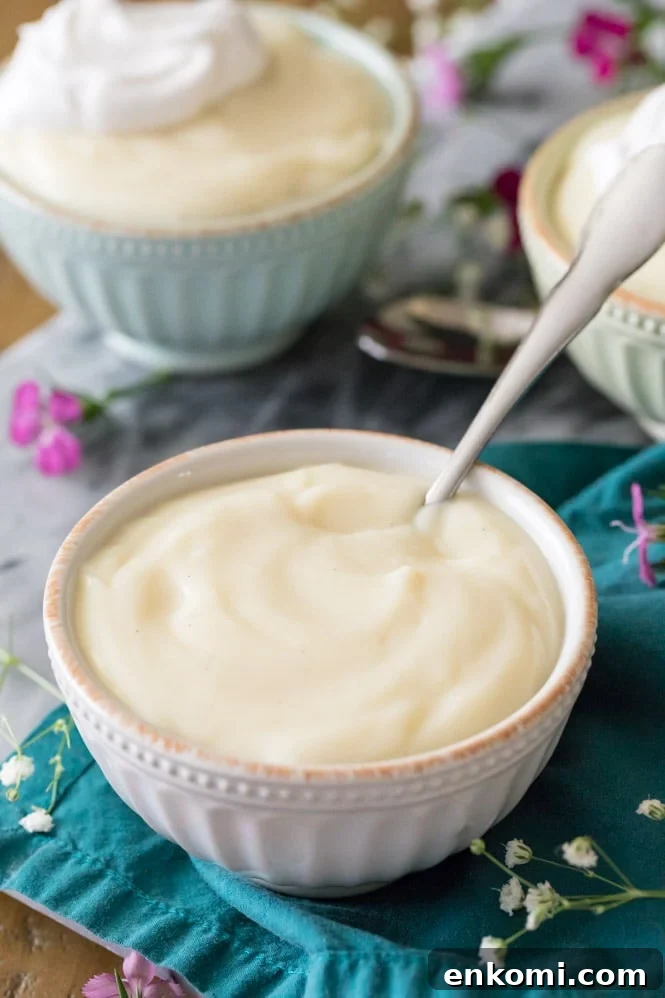
Vanilla Pudding
Homemade vanilla pudding has a depth of flavor and a creamy texture that boxed mixes can’t match. This classic recipe uses simple, pantry-friendly ingredients and straightforward technique to yield a rich, silky pudding with clean vanilla flavor. The method is forgiving, and you’ll find the small extra effort produces a notable difference in taste and texture.
This recipe produces a pudding that’s smooth, not overly firm, and perfect on its own or paired with whipped cream, berries, or a crisp cookie. You can make it with a vanilla bean for the purest flavor or with vanilla extract if you prefer. Below you’ll find ingredient details, helpful tips for success, the full ingredient list and step-by-step instructions to make this at home.
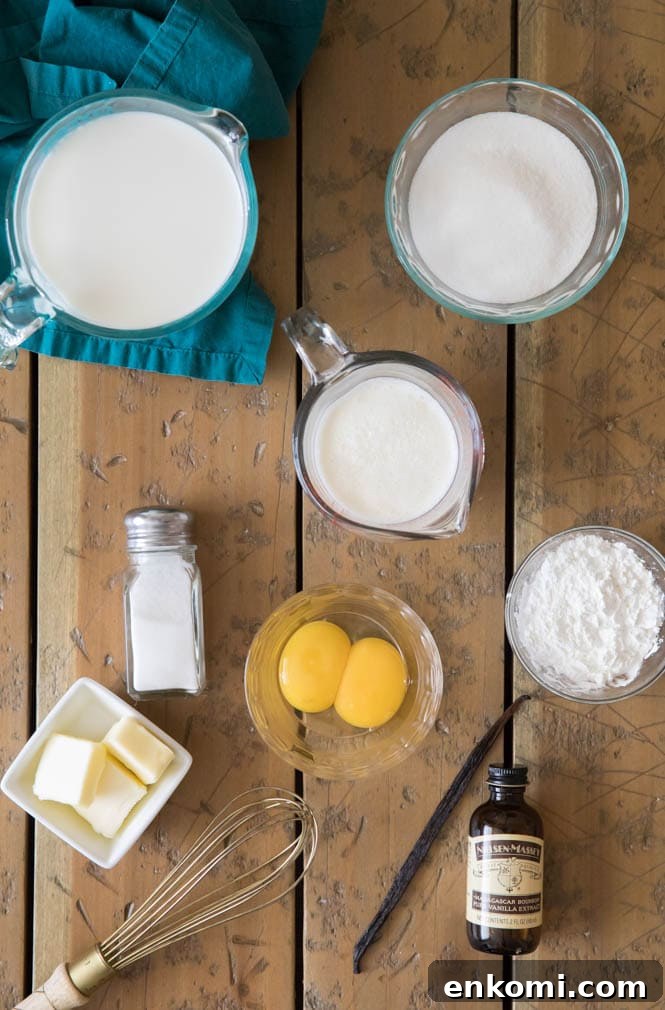
Ingredients for Vanilla Pudding
- Milk — Use whole milk for the best thickness and flavor. Low-fat or plant milks may not thicken the same way.
- Heavy cream — A bit of cream adds richness and a luxurious mouthfeel.
- Sugar — Granulated sugar dissolves during cooking and balances the vanilla.
- Egg yolks — Two egg yolks give body and silkiness without making the pudding too firm. Save the whites for another use.
- Cornstarch — Acts as the primary thickener to prevent a watery result.
- Vanilla — Use a vanilla bean for the most intense, authentic flavor. If you prefer extract, add it at the end of cooking.
- Salt — Enhances the sweetness and rounds out the flavor.
- Butter — Stirred in at the end, butter smooths and enriches the pudding.
Tips for Making Homemade Vanilla Pudding
Moderate Heat
Heat the mixture over medium or medium-low. Slow, steady heating lets the sugar dissolve properly and prevents the eggs from scrambling. Turning up the heat rarely speeds things along and often causes lumps, burning, or an unevenly thickened pudding.
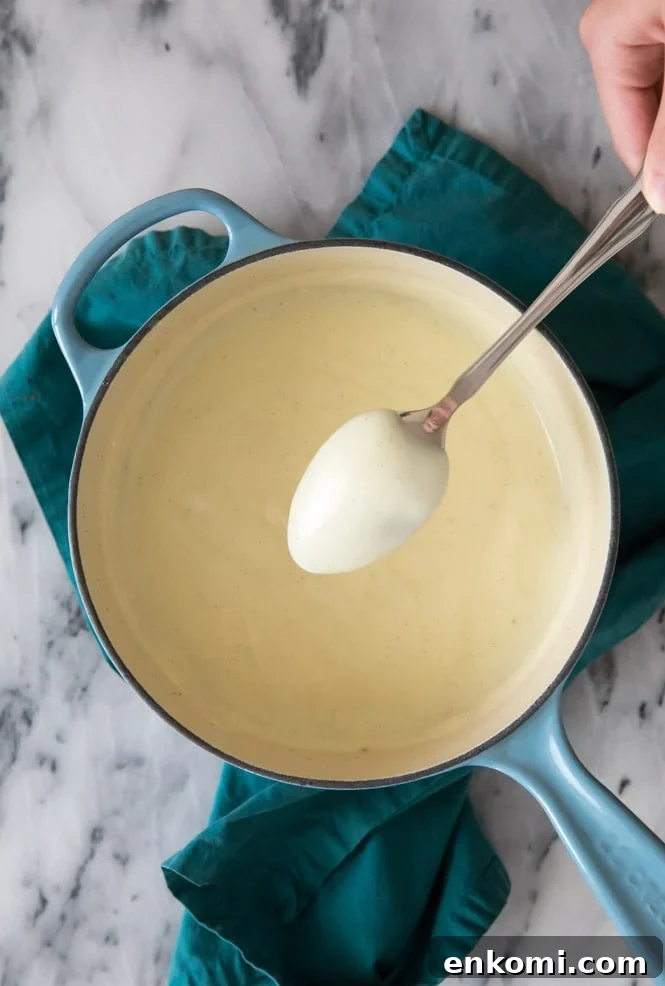
Check Consistency with the Spoon Test
Dip a clean spoon into the pudding. It should coat the back of the spoon and leave a defined line if you run your finger through it. If the mixture flows back quickly, continue cooking a bit longer until it reaches that coating consistency.
Vanilla Bean vs. Vanilla Extract
A vanilla bean yields the purest, most aromatic flavor; add the split bean early so its seeds and pod infuse the milk during cooking. If you use vanilla extract, wait and stir it in after cooking to preserve its aroma.
Strain for Smoothness
Passing the cooked pudding through a fine-mesh strainer removes any tiny bits of cooked egg or lumps, ensuring a silky final texture. It’s a quick step that improves the finished result.
If you prefer chocolate, you can adapt this same method to make a chocolate pudding using cocoa or melted chocolate in place of some of the milk and sugar.
Recipe
Vanilla Pudding
A straightforward, elegant recipe for silky homemade vanilla pudding. Simple ingredients, classic technique, and rich vanilla flavor.
Prep: 5 mins | Cook: 30 mins | Chilling: 5 hrs | Total: about 5 hrs 35 mins | Servings: 5
Ingredients
- ¾ cup (150 g) granulated sugar
- 3 Tablespoons cornstarch (cornflour)
- ¼ teaspoon salt
- 2 cups (475 ml) whole milk
- ½ cup (118 ml) heavy cream
- 2 large egg yolks
- 1 vanilla bean, split lengthwise (or 2 teaspoons vanilla extract—see notes)
- 3 Tablespoons unsalted butter, cut into pieces
Instructions
- Whisk together the sugar, cornstarch, and salt in a medium saucepan until evenly combined.
- Add the whole milk, heavy cream, egg yolks, and the split vanilla bean (if using). If you’re using vanilla extract instead, reserve it to add later. Whisk until the yolks are broken up and the mixture is smooth.
- Place the pan over medium heat and whisk frequently. Heat slowly so the sugar dissolves and the eggs warm gradually—this helps prevent lumps or cooked egg bits.
- When the mixture begins to thicken and can coat the back of a spoon, continue whisking and bring it to a gentle boil (keep the heat at medium to medium-high at most).
- Once it reaches a boil, cook while whisking constantly for 60 seconds. This ensures the cornstarch fully activates and eliminates any starchy taste. Do not leave the pan unattended to avoid scorching.
- Remove from heat. If you used a vanilla bean, fish out the pod and discard it. Add the butter a piece at a time, stirring until each piece melts and the pudding is completely smooth. If using vanilla extract, stir it in now.
- Optional but recommended: pour the pudding through a fine-mesh sieve into a heatproof bowl to catch any small lumps or cooked egg. Let the pudding cool for about 20 minutes, stirring occasionally to prevent a skin from forming.
- Press plastic wrap or parchment directly onto the surface of the pudding to prevent a skin. Cool to room temperature, then refrigerate for several hours or preferably overnight to set and chill thoroughly.
- Serve chilled. Top with whipped cream if desired.
Notes
Discard the reserved egg whites or use them to make meringues or another recipe. If substituting vanilla extract, use about 2 teaspoons and add it after cooking with the butter to preserve the flavor.
Nutrition (per serving)
Calories: 361 kcal | Carbohydrates: 40 g | Protein: 5 g | Fat: 21 g | Saturated Fat: 12 g | Cholesterol: 134 mg | Sodium: 172 mg | Sugar: 35 g
Nutrition information is an approximation and should be used as a guideline only.
Are Vanilla Pudding and Custard the Same Thing?
They are similar but not identical. Puddings are often thickened with starches such as cornstarch, yielding a silky, scoopable texture. Custards rely primarily on eggs for thickening and can be firmer and more delicate. This recipe leans toward the pudding side because cornstarch is the main thickener, while egg yolks contribute richness.
Some custards are baked, while many puddings are cooked on the stovetop; definitions vary among cooks and culinary sources. In any case, this recipe produces a luscious, creamy dessert that’s excellent on its own or as a base for pies and layered desserts.
Enjoy your homemade vanilla pudding — simple to make and infinitely satisfying.
Like this recipe? Leave a comment below to share how your pudding turned out.