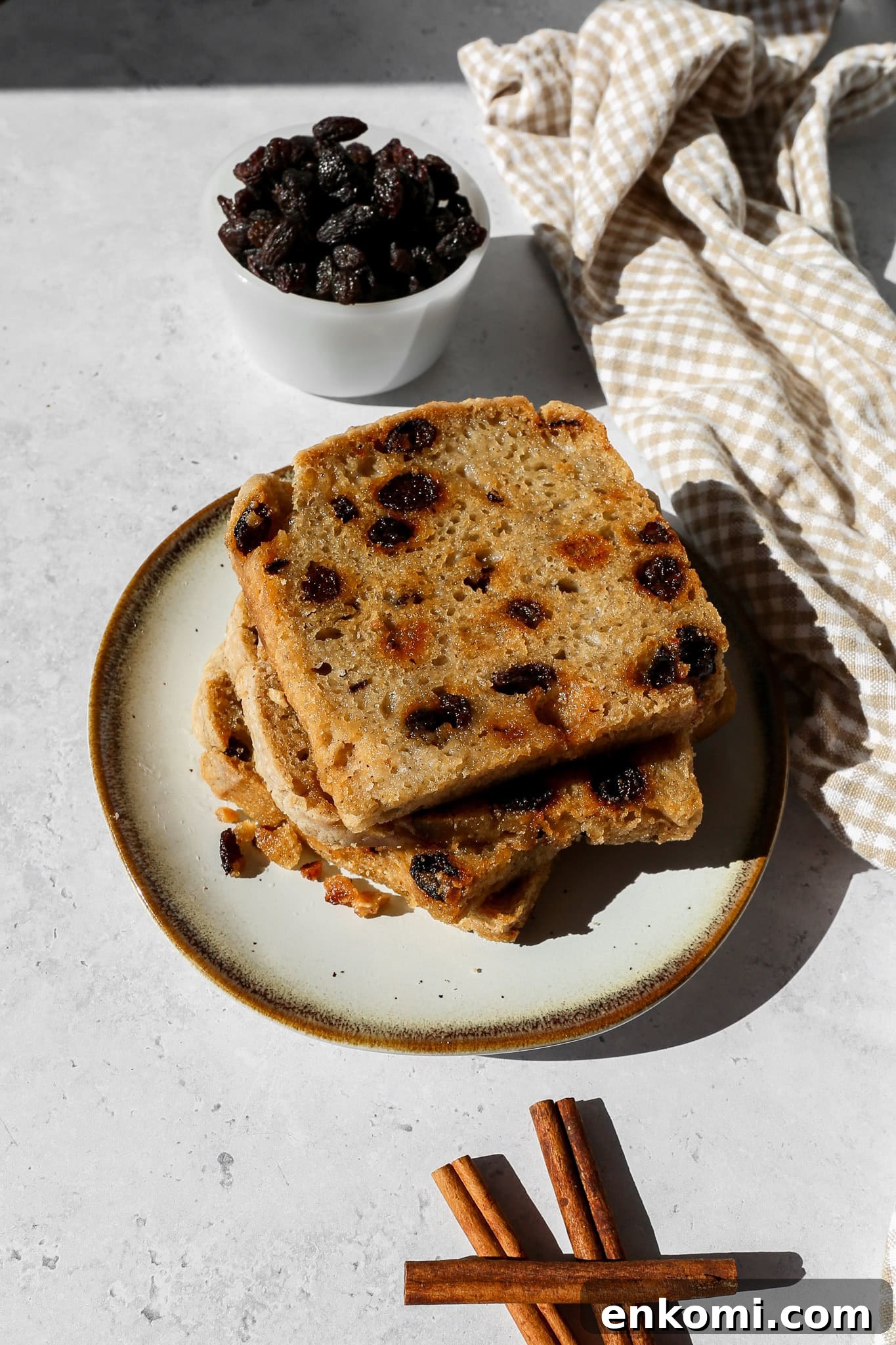
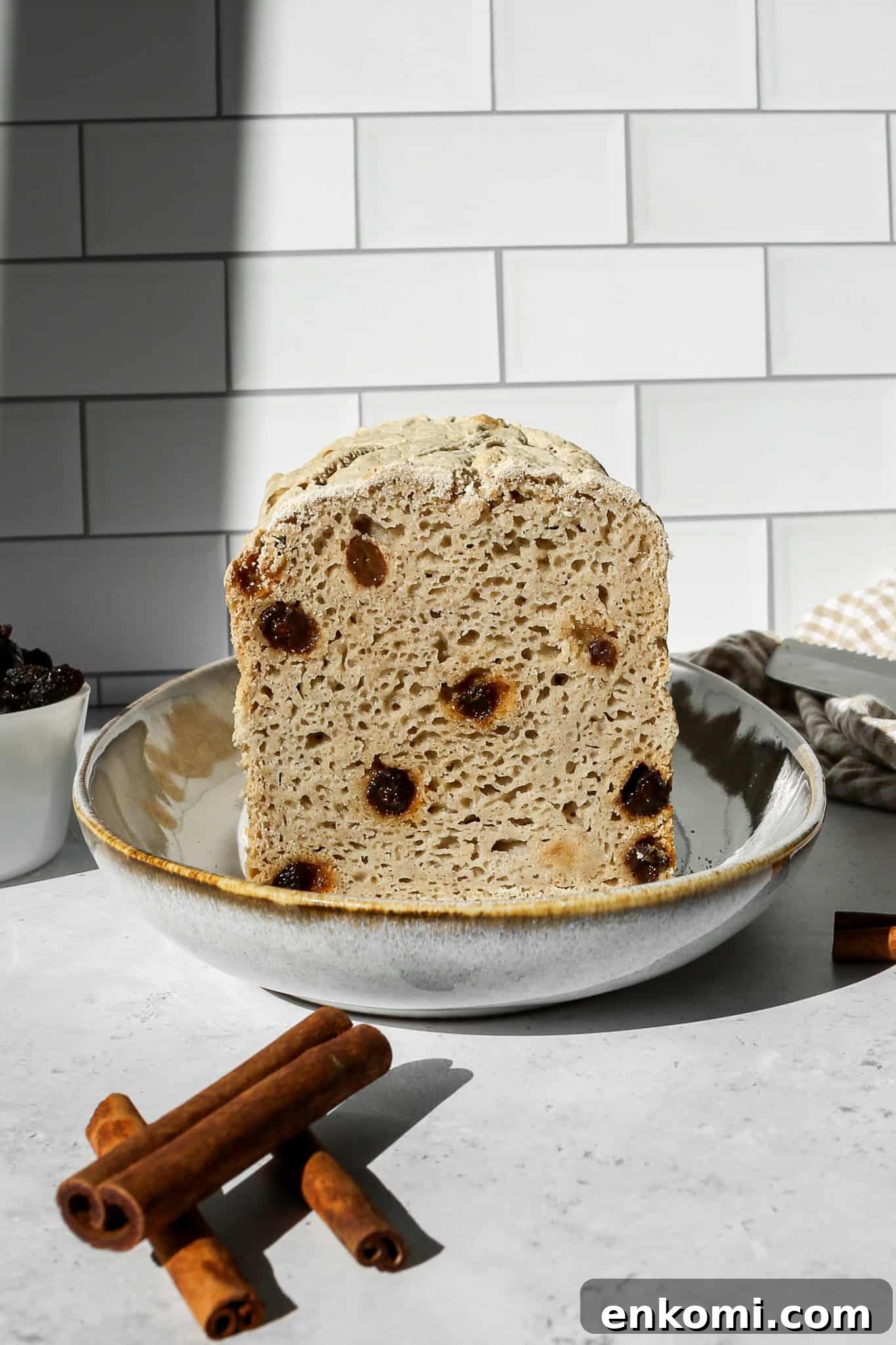
This Gluten Free Cinnamon Raisin Sourdough Bread is a warm, approachable loaf you can make in a single day. It uses gluten free sourdough starter discard and simple pantry ingredients measured in cups, so it’s easy to follow even if you prefer straightforward methods. The result is a soft, tender crumb with pockets of sweet raisins and a gentle cinnamon aroma—perfect toasted for breakfast or served with coffee or tea.
The recipe is a no-knead style, so the dough stays moist and sticky rather than firm and elastic like wheat-based doughs. That sticky texture is intentional: it helps the loaf rise and gives the finished bread a light, tender bite. This cinnamon raisin sourdough is comforting and familiar, ideal for weekend baking or whenever you want homemade bread without complex steps.
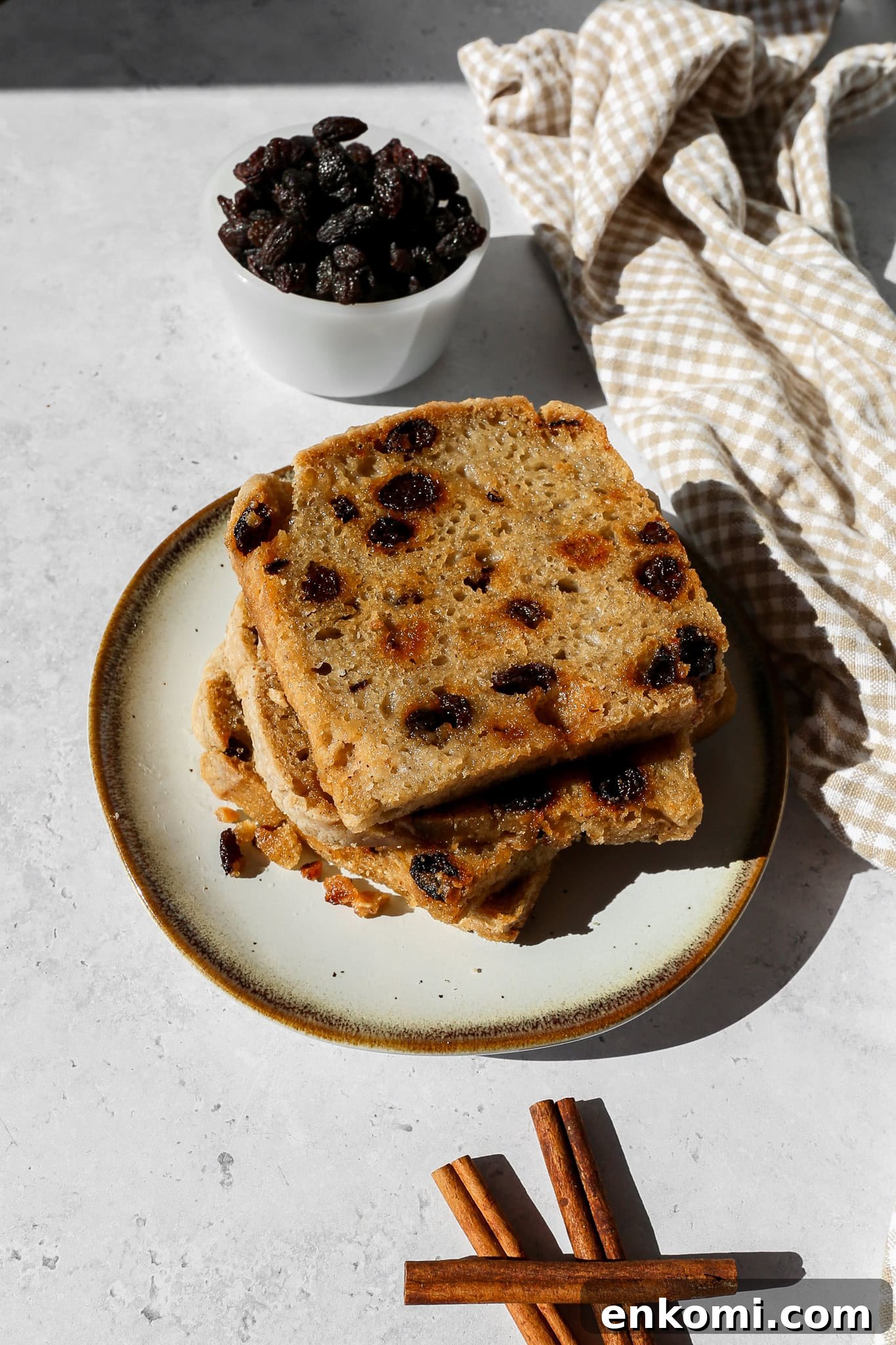
This gluten free raisin bread proves sourdough baking can be simple and delicious. It’s an excellent choice for brunch, a family breakfast, or an afternoon snack. A light toast with butter or a smear of jam highlights the cinnamon and raisin flavors, and it also makes a lovely base for French toast.
If you enjoy gluten free sourdough baking, this loaf pairs well with other recipes like sandwich bread, croutons, or a pizza crust made from a gluten free sourdough starter. Keep your starter active so you can use discard in quick, flavorful loaf recipes like this one.
Ingredients
- Sourdough Starter (discard or active starter)
- Unsalted Butter, melted
- Honey
- Milk, warmed
- Gluten Free Flour
- Potato Starch or Tapioca Flour
- Baking Powder
- Salt
- Ground Cinnamon
- Vanilla Extract
- Ground Nutmeg, pinch
- Raisins

Instructions
1. Prepare the pan: Grease a standard loaf pan with coconut oil or butter and set it aside.
2. Warm the milk: Heat the milk briefly on the stovetop or in the microwave until it’s warm to the touch—do not let it get hot.
3. Mix wet ingredients: In the bowl of a stand mixer (or a large mixing bowl if mixing by hand), combine the sourdough starter, melted butter, honey, and warm milk. Stir until combined.
4. Add dry ingredients: Add the potato starch or tapioca flour, gluten free flour blend, baking powder, salt, cinnamon, vanilla, nutmeg, and raisins. Mix just until the ingredients start to come together. Remove the bowl from the mixer and use a spatula to fold any remaining flour or raisins from the bottom into the dough.
5. Handle the dough gently: The dough will be very sticky—this is expected. Resist the urge to knead; overworking will change the texture. The sticky consistency helps the loaf rise and stay tender.
6. Proof the dough: Spoon the sticky dough into the prepared bread pan; do not press it down. Cover the pan with a plate or platter and let it rest in a warm spot for 6–8 hours. Many bakers make the dough in the evening and let it proof overnight, then bake in the morning.
7. Preheat and bake: Preheat the oven to 350°F (175°C). Bake the loaf for about 1 hour 10 minutes to 1 hour 15 minutes. The top will be lightly golden while the sides may be a shade darker; this bread is on the lighter side and won’t brown heavily on top.
8. Cool before slicing: Allow the bread to cool in the pan for at least 10 minutes, then turn it out onto a plate or platter to finish cooling. Let it cool completely before slicing to retain structure.
9. Storage: Store slices in a sealed container at room temperature for 3–4 days depending on warmth in your home. For longer storage, refrigerate for up to 5–7 days or freeze slices for extended keeping.
Top Tip
Gluten free sourdough dough behaves differently than wheat dough. Aim for a very sticky batter-like dough, avoid kneading, and simply spoon it into the pan. This approach preserves moisture and produces a tender, light loaf.
Frequently Asked Questions
No. Traditional sourdough made with wheat flour contains gluten even after fermentation. Only breads made specifically with gluten free flour and a gluten free starter are safe for those with celiac disease or gluten sensitivity.
A weak starter or low fermentation activity can prevent rise—try feeding and warming your starter before using it. Overproofing is another common issue: if the dough proofs too long, it can rise and collapse before baking. Aim for a warm proofing spot and check the dough during the 6–8 hour proof to ensure it’s rising but not deflating.