
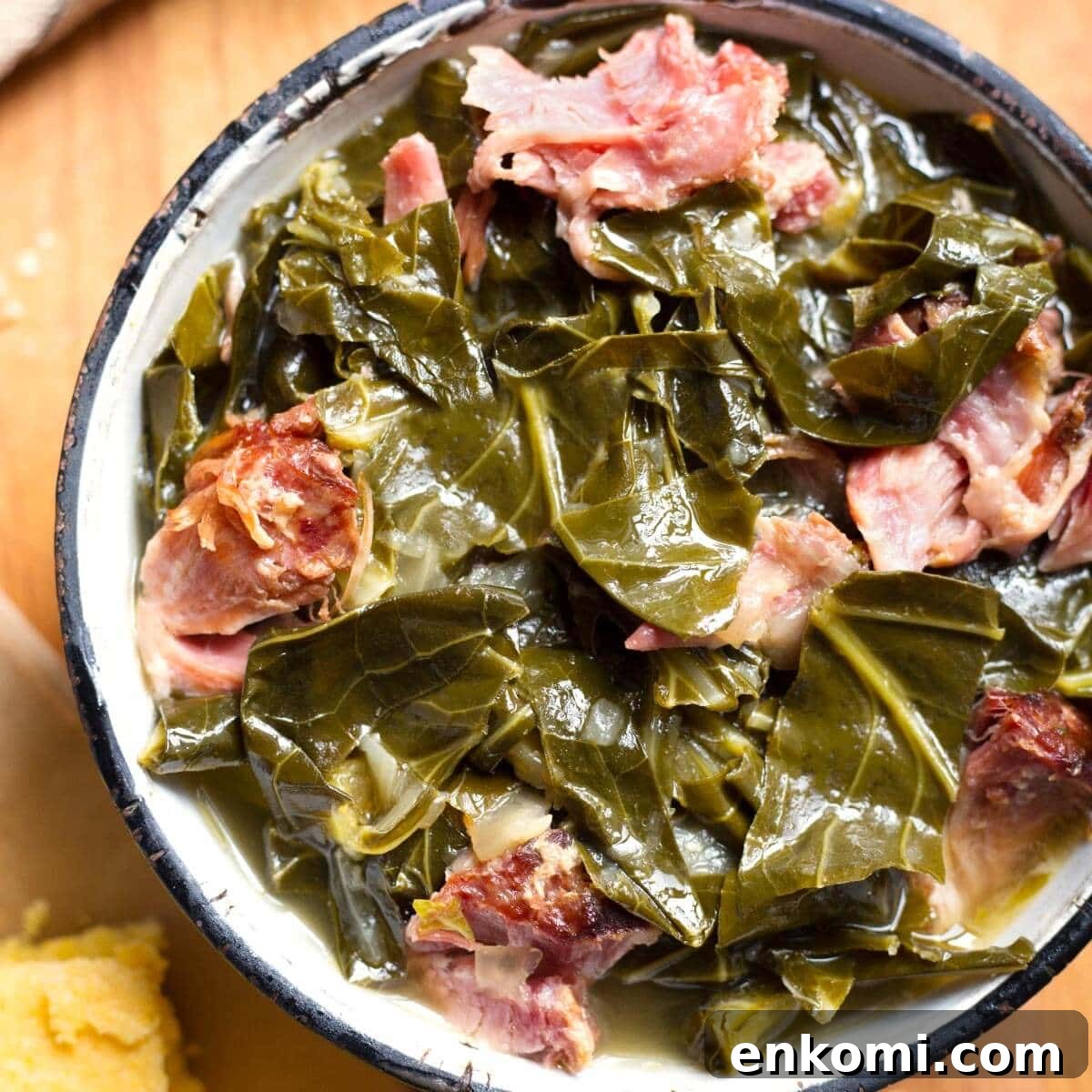
Instant Pot collard greens cooked with a ham hock and well-balanced seasonings make a hearty, nutritious comfort-food dish. What once took hours on the stove or in a Dutch oven now finishes in about an hour using a pressure cooker. If you enjoy slow-simmered greens but want to save time without losing flavor, pressure-cooked collards are worth trying.
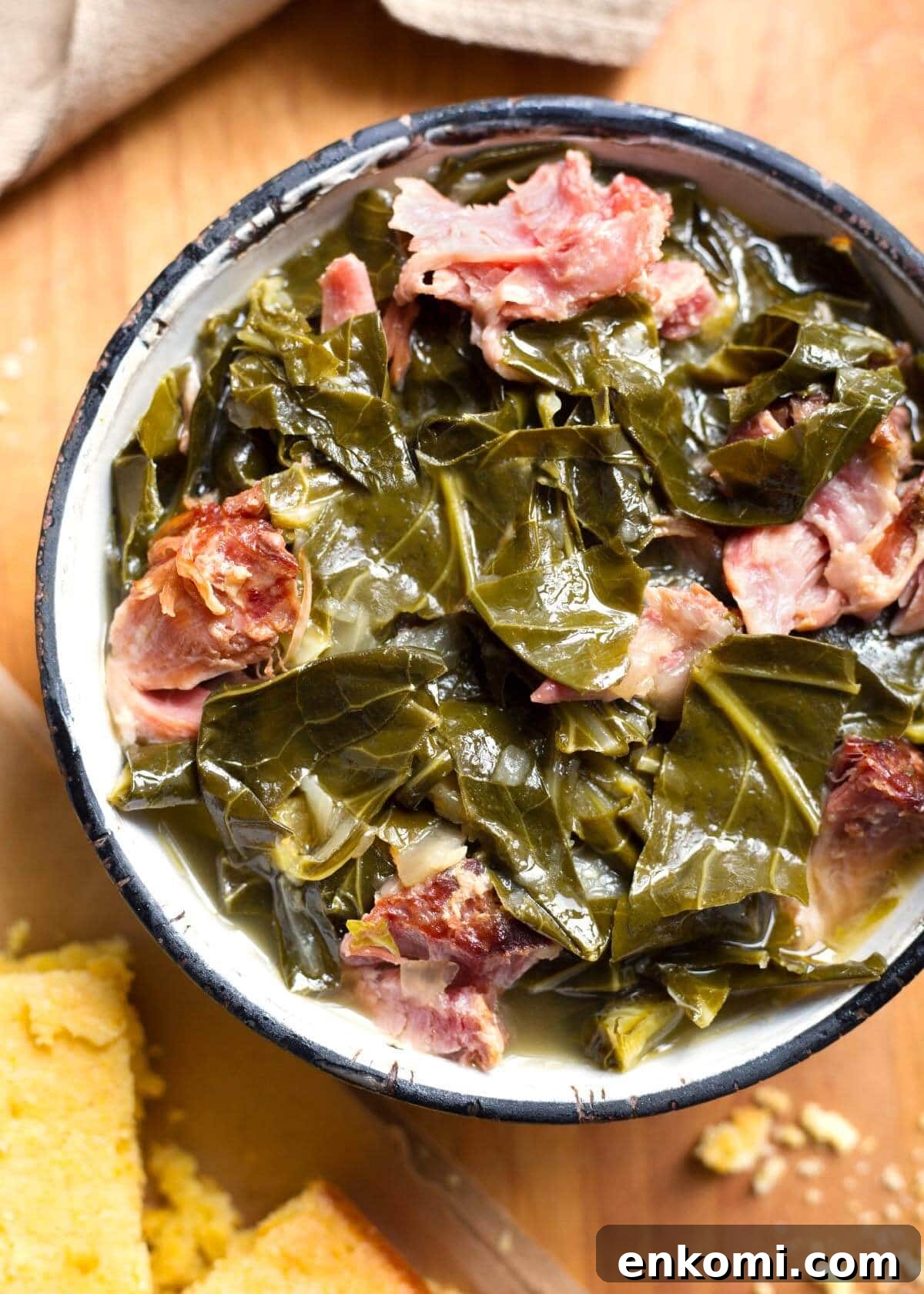
Collard Greens in the Instant Pot
Collard greens are a classic Southern side with deep, earthy flavor and a satisfying texture. Even if you don’t have Southern roots, the smoky, savory profile of collards cooked with ham or smoked turkey is universally comforting. The Instant Pot allows you to develop those rich flavors in a fraction of the time it normally takes.
About seven years ago I settled on a two-step pressure-cooking method when using a ham hock, smoked turkey leg, or other meaty, smoked bones. This method extracts maximum flavor from the meat and produces tender greens without overcooking them. The result is a pot of collards that tastes like it simmered all day, but is ready much sooner.
Why Cook the Meat First?
- Cooking the ham hock first builds depth of flavor from the smoked meat and helps tenderize it before the greens go in.
- Adding the greens after the meat has had a head start prevents overcooking them. I prefer my collards tender but not mushy, so this two-step approach preserves texture while infusing flavor.
- This method produces consistently excellent results and is now my go-to way to make Instant Pot collard greens.
There are many valid ways to prepare collard greens; this version blends tradition with the convenience of modern pressure cooking. While a long simmer does develop flavors, the Instant Pot can concentrate savory elements efficiently so that you still get a deep, satisfying pot likker with a much shorter total time investment.
Is it Okay to Use Pre-chopped Collard Greens from the Store?
Yes. Pre-washed, pre-chopped collard greens save prep time. If using packaged greens, check for pieces with large, tough ribs and remove them so the finished texture is consistent and pleasant.
Can I Use Different Meat Besides Ham Hock?
Absolutely. Choose a smoked or flavorful cut to impart richness. Smoked turkey legs or wings, pork jowls, or even thick-cut bacon will add a smoky note. Adjust cooking times slightly if you use a significantly different cut or size of meat.
Substitute for Seasoned Salt
If you don’t have a branded seasoned salt, mix regular salt with ground black pepper and a pinch of garlic powder or onion powder, and any dried herbs you like. Creole or Cajun seasonings also work well for a spicier, more aromatic profile.
Vegetarian Version
To make this vegetarian, use vegetable broth in place of chicken broth and add a little liquid smoke or smoked paprika to mimic the smoky depth provided by ham or turkey. You can also finish with a splash of soy sauce or miso for umami, if desired.
Serving Suggestions
Besides classic cornbread, collard greens pair beautifully with steamed rice, creamy grits, macaroni and cheese, potato salad, baked beans, roasted meats, or simple fried chicken. The savory pot likker is especially delicious spooned over rice or used to moisten cornbread.
Freezing and Leftovers
Collard greens freeze very well. Cool completely, transfer to airtight containers or freezer bags, and freeze. Thaw in the refrigerator overnight before reheating gently on the stove or in a covered dish in a low oven.

Instant Pot Collard Greens
By Sandy Clifton
Rich, flavorful collard greens cooked with a ham hock in the Instant Pot. A delicious, speedy alternative to a long stovetop simmer.
- Prep: 10 mins
- Cook: 1 hr 5 mins
- Natural Pressure Release: 20 mins
- Total: 1 hr 35 mins
- Servings: 5–7
Ingredients
Step One
- 1 Tablespoon olive oil
- 1 large onion, chopped
- 1 teaspoon seasoned salt
- 1/4–1/2 teaspoon crushed red pepper flakes
- 1–2 teaspoons Creole seasoning (optional)
- 4 garlic cloves, minced (optional)
- 32 oz low-sodium chicken broth
- 1 ham hock (about 1 to 1 1/2 lbs)
Step Two
- 1 lb collard greens, washed and chopped (or 1–2 bags of pre-washed chopped collards)
Instructions
Step One – Cook the Ham Hock
- Set the Instant Pot to Sauté (normal/medium). When it reaches “Hot,” add the olive oil.
- Add the chopped onion and cook, stirring occasionally, until softened.
- Stir in the seasoned salt, crushed red pepper flakes, and Creole seasoning.
- Add the garlic and cook about 30 seconds until fragrant, stirring constantly.
- Pour in the chicken broth and place the ham hock into the liquid. It does not need to be fully submerged.
- Turn off Sauté, secure the lid, and set the steam release to sealing. Select Meat/Stew (or Pressure Cook) and set the time to 35 minutes at high pressure.
- When the cycle ends, wait 10 minutes, then carefully perform a quick release for any remaining pressure and open the lid.
- If possible, gently break up or turn the ham hock to help it tenderize. You can split it in half if comfortable doing so—be cautious, as it will be hot.
Step Two – Cook the Collards
- Add the washed, chopped collard greens to the pot and press them down into the liquid so they begin to soften.
- Confirm the silicone sealing ring is properly seated, replace the lid, and set the valve to sealing again.
- Press Manual or Pressure Cook and set the time to 25 minutes at high pressure.
- When the cook cycle finishes, allow a natural release for 10 minutes, then carefully release any remaining pressure and open the lid.
- Remove the ham hock to a bowl. Use two forks to pull the meat from the bone and discard fat and bones. Reserve bones for broth if you wish.
- Shred the meat and stir it back into the collard greens.
- Serve the collards hot, along with cornbread or your preferred side, and enjoy the flavorful pot likker spooned over rice or cornbread.
Notes
This is a two-step recipe designed to maximize flavor and texture. Although it involves two pressure cycles, it remains much faster than a traditional long simmer and produces tender, deeply flavored greens.
Nutrition
Calories: 462 kcal (approximate)
Nutrition information is an estimate and should be used as a guideline only.
Additional Info
Course: Dinner
Cuisine: American