
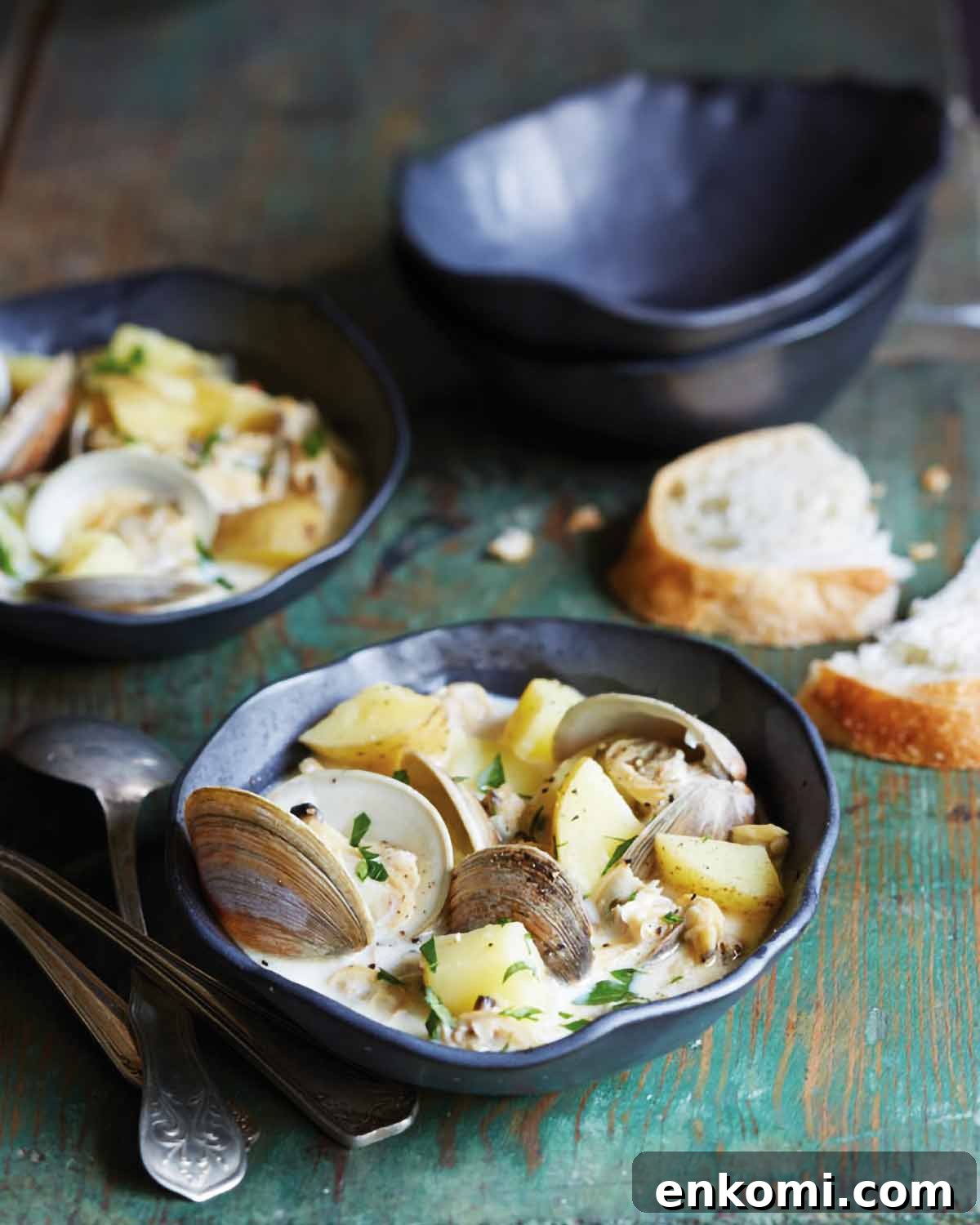
This North Carolina clam chowder highlights a light, flavorful broth that lets the clams take center stage. It’s simple to make using fresh, frozen, or canned clams, together with rendered bacon or salt pork, diced potatoes, and bottled clam juice. Follow the steps below to prepare a classic Outer Banks–style chowder at home.
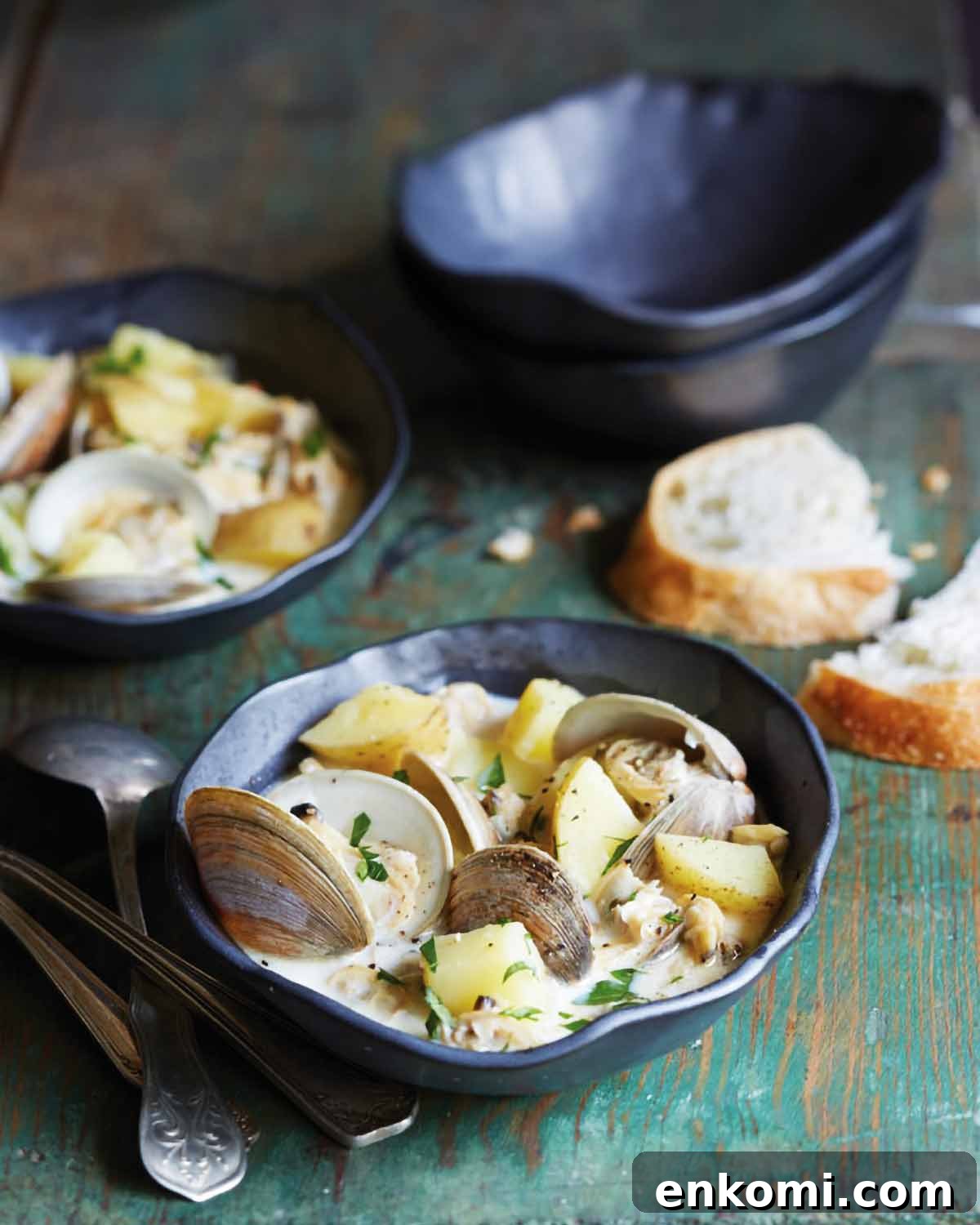
This isn’t New England chowder, and it’s not Portuguese fish chowder either. Along the Outer Banks of North Carolina you’ll find a chowder that’s closer in spirit to Rhode Island–style brothy clam soups: thin, briny, and clam-forward rather than thick and cream-heavy. As cookbook author Fred Thompson describes it, this is the kind of chowder you’ll find in a local’s kitchen—rustic, comforting, and true to the sea. —The Lodge Company
How do I make sure my clam chowder is as good as possible?
The Lodge Company shares a few essential tips to get the best results with North Carolina clam chowder:
- Timing matters: wait until the potatoes are fork-tender before adding clams in the shell—those clams cook quickly and need only a short time to finish.
- Don’t overcook shell clams: they are done when their shells open, which usually takes about 10 minutes; discard any that remain closed.
- To achieve a slightly thicker, local-style chowder, place a slice of white bread in the bottom of each bowl before ladling in the soup—the bread soaks up some broth and gives the bowl a satisfying heft.
North Carolina Clam Chowder
David Leite
Equipment
-
Large cast-iron Dutch oven or heavy-bottomed pot
Ingredients
- 1 tablespoon bacon drippings, or 1/4 pound (113 g) salt pork or bacon
- 1/2 to 1 cup chopped onion
- 3 cups bottled clam juice
- 3 cups cold water
- 1/4 teaspoon freshly ground black pepper
- 4 cups coarsely chopped frozen or canned clams
- 4 cups potatoes, scrubbed or peeled and cut into 1/2-inch (12-mm) dice
- 2 dozen small clams in the shell (such as littlenecks), scrubbed
- Milk, half-and-half, light cream, or heavy cream, to taste (optional)
- 1 teaspoon salt (optional)
- 8 slices white bread (optional)
- Chopped flat-leaf parsley leaves, for garnish
- Oyster crackers or saltines (optional)
Instructions
-
If using bacon drippings, heat them in a Dutch oven or large skillet over medium heat. If using salt pork or bacon, cook until crisp in the pot, remove the meat for another use, and leave the rendered fat behind. You should have about 1 tablespoon drippings; a little more or less is fine.
-
Add the chopped onion and cook, stirring occasionally, until tender but not browned, about 5 minutes. Pour in the clam juice and water, add the black pepper, and bring to a boil. Stir in the chopped clams (if using canned clams, include the can liquid), then reduce the heat to low and simmer gently, uncovered, until the chowder clams are tender and the flavors meld, about 1 hour.
-
Add the diced potatoes, increase the heat to medium, and simmer until the potatoes are just barely fork-tender, about 10 minutes.
-
Add the scrubbed clams in the shell, cover the pot, and cook 10 minutes more, or until the potatoes are tender throughout and the shells open. Discard any clams that remain closed.
-
If desired, stir in a splash to 2 cups of milk, half-and-half, or cream and warm for a few minutes. Taste and, if needed, adjust with salt. For a local touch, place a slice of white bread in the bottom of each large shallow bowl before ladling in the chowder. Garnish with chopped parsley and serve with oyster crackers or saltines, if you like.
Adapted From
Lodge Cast Iron Nation
Nutrition
Carbohydrates: 30 g
Protein: 6 g
Fat: 2 g
Sodium: 636 mg
Nutrition information is an estimate and should be used as a guideline.
Recipe Testers’ Reviews
This recipe passed Leite’s Culinaria’s testing process and earned favorable feedback from multiple home cooks. Their notes reflect personal tweaks and experiences that highlight the chowder’s strengths: a light, clam-forward broth, plenty of clams in each spoonful, and flexible options for dairy or dairy-free versions.

Gail Rueckl
Gail appreciated the lighter style compared with heavy New England chowders. She used salt pork that rendered just enough fat for flavor, combined bottled clam juice with water, and added two cups of heavy cream to slightly thicken the broth. The result was rich, clam-filled, and perfect for a chilly day.

Sita Krishnaswamy
Sita made a dairy-free version using canned clams and their liquid plus clam juice and water. She emphasizes tasting the broth before adding salt, because canned clams can add saltiness. She also recommends adding the fresh shell clams only after the potatoes are nearly tender to avoid overcooking.

Adrienne Lee
Adrienne praised the abundance of clams and used bacon drippings saved from previous cooking. She combined clam juice and water to reach the desired liquid and followed the timing for potatoes and clams to get perfect texture. She substituted mini melba toasts when oyster crackers weren’t available.

Robert Castagna
Robert enjoyed the clams accented by salt pork and noted the recipe’s adaptability—use mussels or oysters if you prefer. He likened the broth to French à la nage but appreciated the addition of potatoes here.