
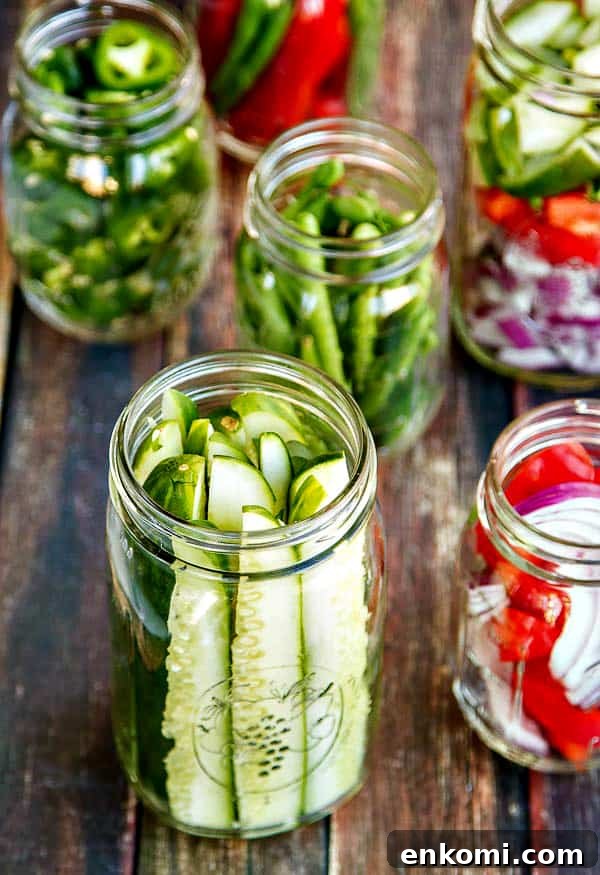
Refrigerator pickles are incredibly simple – no sterilizing jars required. Try green beans, cauliflower, bell peppers, jalapeños or onions, too!
Refrigerator pickles, also called quick pickles, are one of the easiest and most satisfying preserves to make at home. They’re tangy, crisp, and typically far more flavorful than most store-bought options. Because they’re stored in the refrigerator, there’s no need for canning or sterilizing jars—just fresh vegetables, a bright brine, and a little patience.
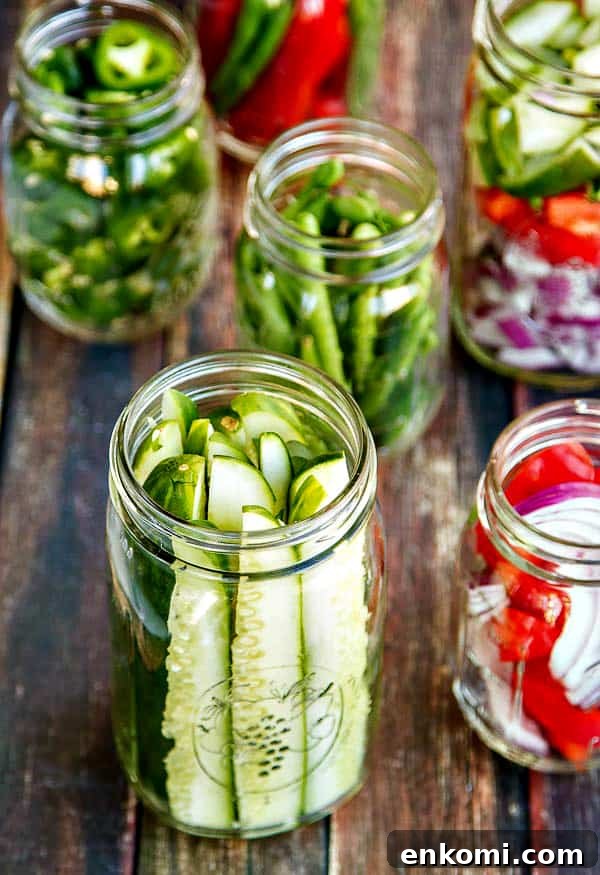
Best Cucumbers for Pickling
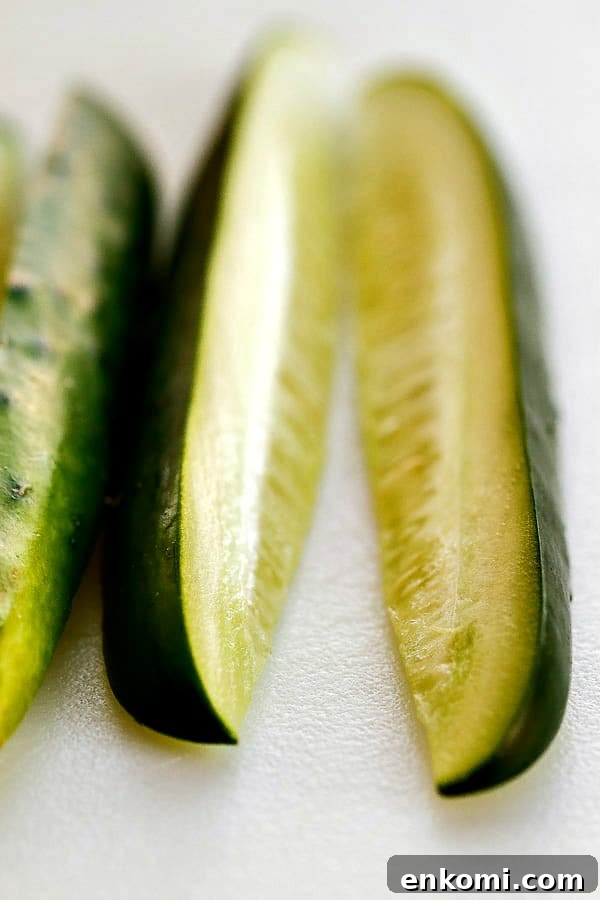
For the best texture and flavor, choose pickling cucumbers with thin skins so the brine can penetrate, and a firm, dry interior to keep them crunchy. Shorter, stockier varieties work well for whole or speared pickles. Boston, National, Bush, and Kirby cucumbers are excellent choices. Cultivars vary in sweetness, saltiness, and pungency, so pick one that suits the flavor profile you prefer.
Common Types of Pickles
- Dill Pickles
- Kosher Dill Pickles
- Sweet Pickles (for example, Bread-and-Butter or candied pickles)
- Gherkin Pickles
- Cinnamon Pickles
- Lime Pickle
- Hungarian Pickles
Homemade Pickle Ingredients
This straightforward recipe uses eight simple ingredients to make crisp, tangy pickles that work well as snacks, condiments, or a bright side for sandwiches and salads.
- Pickling cucumbers: Choose fresh, short, and stocky cucumbers such as Boston, National, Bush, or Kirby.
- Apple cider vinegar: Offers a mellow, fruity acidity that pairs well with spices.
- Water: Dilutes the vinegar to make a balanced brine.
- Mustard seeds: Provide a sharp, slightly pungent note.
- Black peppercorns: Whole peppercorns add peppery warmth without overpowering the brine.
- Granulated sugar: Balances acidity and creates a touch of sweetness.
- Kosher salt: Use kosher salt in place of pickling salt; it seasons the brine effectively.
- Bay leaf: Adds a subtle herbal layer of flavor.
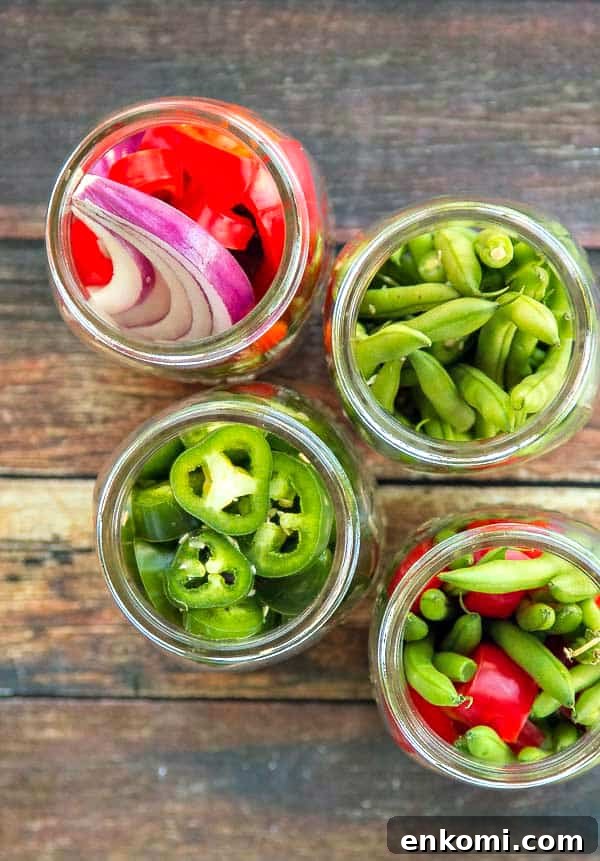
Quick pickles aren’t limited to cucumbers. Try the same brine with green beans, bell peppers, red onions, cauliflower, carrots, or jalapeños. You can also combine vegetables—e.g., green beans with carrots and jalapeños, or bell peppers with onions—and add crushed garlic or fresh dill to some jars for variety.
(Scroll down for a printable recipe card and full instructions.)
How to Make Refrigerator Pickles
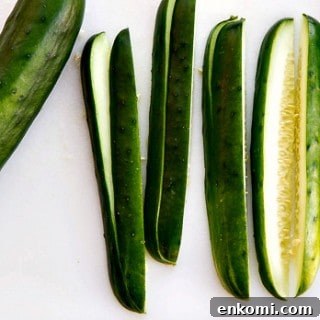
- Prepare the cucumbers: Wash, trim, and slice cucumbers to your preferred shape—whole, halved, spears, or coins. For whole or large halves, prick the skin a few times so the brine can penetrate.
- Pack the jars: Tightly pack the prepared cucumbers (or other vegetables) into clean jars, leaving a little headspace at the top.
- Make the brine: In a saucepan, combine apple cider vinegar, water, mustard seeds, black peppercorns, sugar, kosher salt, and bay leaf. Bring the mixture to a rolling boil, stirring until the sugar and salt dissolve.
- Fill and cool: Pour the hot brine over the vegetables, filling the jars to the top. Let jars cool to room temperature, then seal and transfer to the refrigerator.
- Rest: Allow the pickles to chill for at least two days for noticeable flavor and 5–7 days for best results. Thinner slices will pickle more quickly; whole cucumbers will take longer to reach full flavor.
Refrigerator Pickles Tips & Variations
- Keep the base brine simple—vinegar, water, sugar, salt, mustard seed, and peppercorns—or adjust spices to taste. Fresh dill, garlic, coriander seed, or red pepper flakes all make great variations.
- The main difference between a standard dill and a kosher dill is garlic: kosher dills typically include garlic along with dill and other seasonings.
- Adjust the sugar to move between tangy and sweet pickles; more sugar yields a sweeter pickle.
- Because these are refrigerator pickles, you don’t need to sterilize jars or process them in a water bath.
- Pickle juice can be used as a tangy drink or mixer and is sometimes used by athletes for cramp relief and rehydration.
How Long Do Pickling Cucumbers Last?
Refrigerator pickles will keep in the refrigerator for one to two weeks at their best, though many recipes note they remain good for up to a month. Fresh cucumbers stored unprepared will last around two weeks when kept cool (about 55°F / 13°C).
Easy Refrigerator Pickles
24 Spears
10 minutes
10 minutes
This easy homemade pickle recipe is quick to make and perfect for an everyday snack or a flavorful sandwich topping.
Ingredients
- 2 ½ cups apple cider vinegar
- 1 ½ cups water
- 1 tablespoon mustard seeds
- 1 teaspoon whole black peppercorns
- ⅓ cup sugar
- ¼ cup kosher salt
- 1 bay leaf
Instructions
- Clean, trim, and cut cucumbers as desired: whole, halves, spears, or coins.
- P ack the prepared cucumbers firmly into mason jars and set aside.
- Combine all brine ingredients (vinegar, water, mustard seeds, peppercorns, sugar, salt, and bay leaf) in a saucepan over high heat.
- Bring the brine to a rolling boil, stirring until the sugar and salt dissolve.
- Pour the hot brine over the vegetables, filling the jars to the top. Let cool to room temperature, seal, then refrigerate.
- Pickles will be ready after a few days and reach peak flavor after about a week. Store refrigerated.
Notes
Use stainless steel, glass, ceramic, or Teflon cookware for acidic brines—avoid reactive metals like aluminum, copper, or cast iron, which can impart off flavors. For larger cucumbers, prick the skin so the brine can penetrate. It typically takes three to four cucumbers to fill a pint (16 oz) jar. This brine also works well with bell peppers, red onions, carrots, cauliflower, and green beans.
Nutrition Information:
Yield: 12
Serving Size: 1
Amount Per Serving:
Calories: 64
Total Fat: 1g
Saturated Fat: 0g
Trans Fat: 0g
Unsaturated Fat: 0g
Cholesterol: 0mg
Sodium: 1276mg
Carbohydrates: 12g
Fiber: 2g
Sugar: 8g
Protein: 2g
This data was provided and calculated by Nutritionix.
What are Cukes?
“Cukes” is an informal term for cucumbers. Most people and grocery stores label them as cucumbers, but “cukes” is a common shorthand in recipes and conversation.
Health Benefits of Pickled Cucumbers
Cucumbers are low in calories and contain antioxidants and fiber, which support digestion. Some athletes use pickle juice for temporary relief from muscle cramps, though effects can vary. Be aware that sweet pickles contain added sugar and therefore more calories than dill or sour varieties.
Try these snack recipes next:
- Beet-Pickled Deviled Eggs
- Pickled Green Tomatoes
- Bacon-Wrapped Pickles (Pickle Fries)
- Healthy Poached Pears
- Ranch Oyster Crackers