
I love shopping at Target, and it’s not just for clothes or home goods. I buy a large portion of my groceries there, even though our store isn’t labeled a SuperTarget. The food section is substantial, and everyday prices on many items often beat what I can find at my usual grocery store. I comparison-shop my favorite products so I can buy them at the lowest possible price.
While doing that shopping, I sometimes notice odd pricing discrepancies like the examples below.
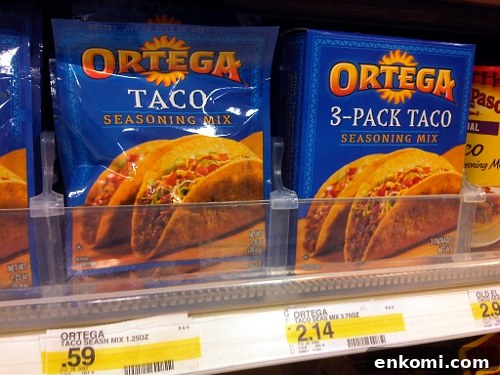
Ortega taco seasoning single packets are priced at $0.59 each, while a three-pack of the same seasoning costs $2.14. Notice anything odd?
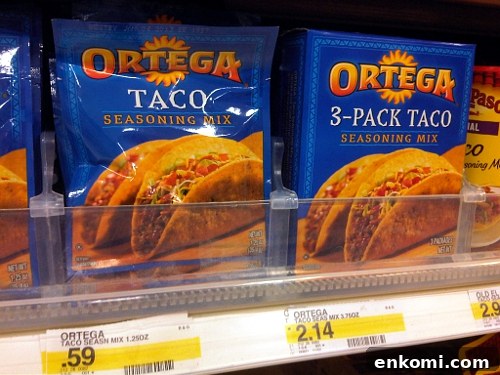
If you bought three single packets instead of the three-pack, the total would be $1.77. That’s a $0.37 savings by NOT choosing what you’d expect to be the cheaper bulk option.
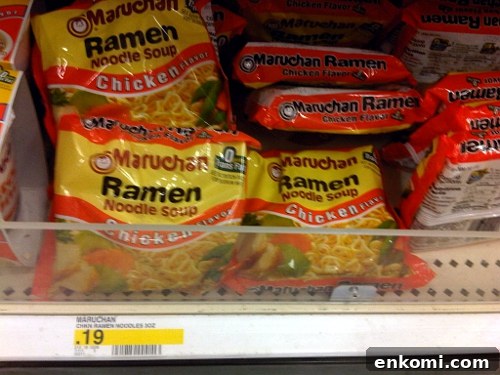
I saw the same pattern when my husband picked up some ramen. A single package is $0.19.
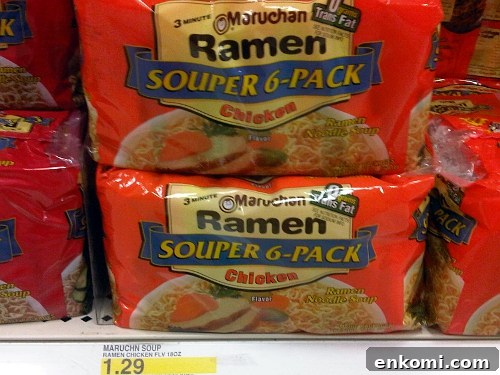
A six-pack of the identical product is priced at $1.29. Buying six single packages would cost $1.14 versus $1.29 for the multi-pack—a $0.15 savings. Almost enough to buy an extra package of ramen!
I’m not trying to single out Target—this happens at many stores. For example, I rarely buy the largest jar of peanut butter because the per-ounce cost of a smaller jar is often lower; the larger sizes don’t go on sale as frequently, and I have limited cupboard space, so smaller sizes are more convenient.
So why do these pricing quirks occur?
Many consumers expect that buying in larger quantities or bigger sizes will always be cheaper per unit. That’s a reasonable assumption, but it isn’t always true unless a product happens to be on sale. In the cases above, the single items were priced lower per unit than the multi-packs. Even accounting for extra packaging used to bundle items, the price gap can be surprising.
One possible explanation is that the retailer or manufacturer temporarily lowered the price on singles and didn’t adjust the multi-pack price. It may not be intentional, but it does raise a question: how many shoppers, not paying close attention, end up paying more by choosing the multi-pack they assume is the better deal?
Have you noticed similar pricing oddities where you shop?