
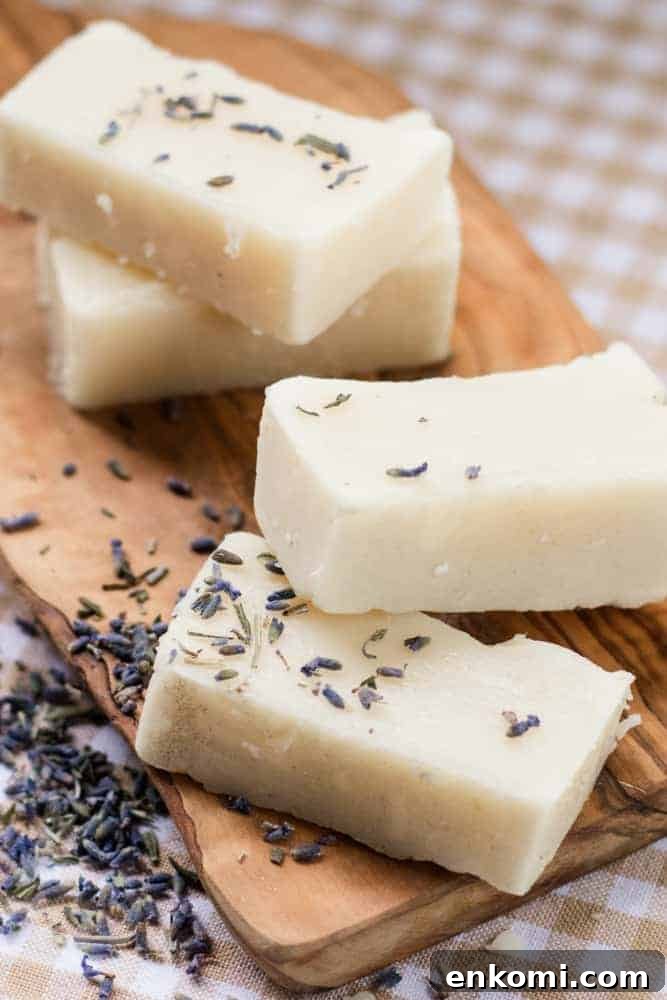
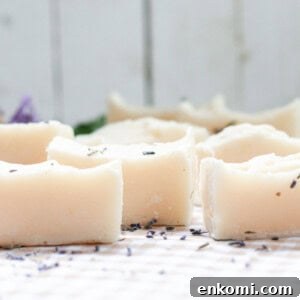
This homemade baby soap bar is formulated for delicate skin using natural, nourishing ingredients. With mango butter, cocoa butter, coconut oil, and jojoba oil, this cold-process soap produces a gentle, creamy lather that’s ideal for everyday use on sensitive skin.
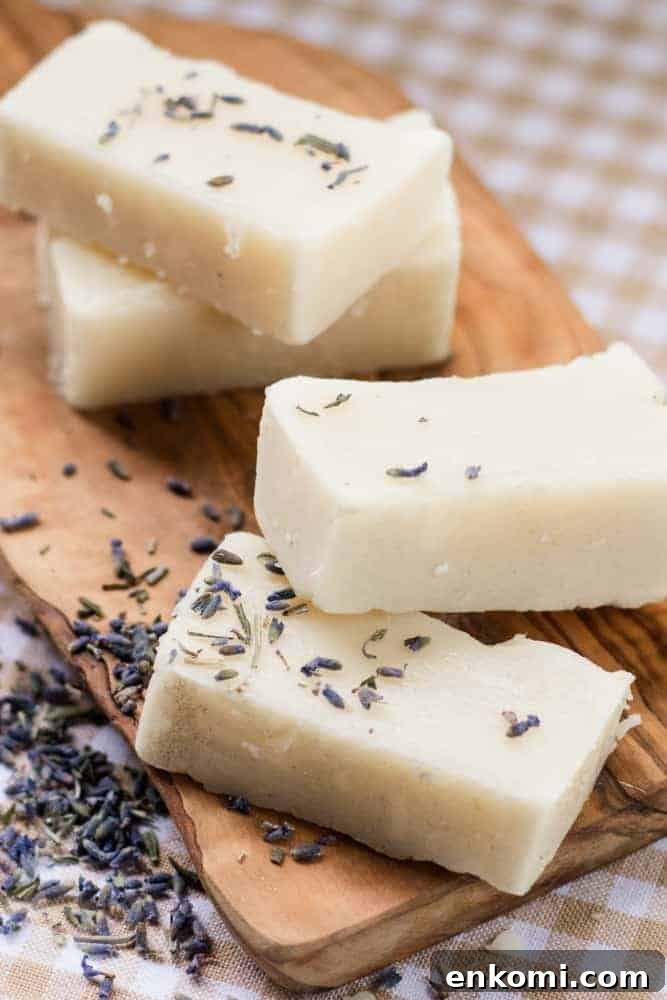
Soap making is more approachable than many people think. I began with melt-and-pour bases because lye felt intimidating, but once I learned the safe steps for cold-process soap, I found the process straightforward and rewarding. Cold-process soap uses a fat or oil combined with lye and a liquid to trigger saponification, transforming the ingredients into a stable, safe bar.
This baby soap recipe focuses on mild, moisturizing ingredients and is lightly scented with pure lavender essential oil for a soothing, natural aroma. It cleanses without stripping the skin, leaving it soft and smooth.
How to Make the Best Homemade Baby Soap Bar?
To make cold-process soap you need three basic components: lye, a liquid (usually water), and fats or oils. The choice of oils and butters determines the bar’s characteristics—hardness, lather, and conditioning. This recipe uses a blend chosen for gentle cleansing and moisturizing, appropriate for newborn and sensitive skin.
Baby Soap Ingredients
- Mango Butter: Extracted from the mango seed, mango butter is similar to shea and cocoa butter. It has a smooth, non-greasy texture and helps lock in moisture, making it excellent for baby-care formulations.
- Cocoa Butter: Cocoa butter adds firmness and a velvety feel to the bar. It helps the soap keep its shape and contributes to a creamy lather.
- Coconut Oil: Coconut oil produces a rich, bubbly lather and offers mild cleansing properties. In moderation it helps balance cleansing and moisturization.
- Jojoba Oil: A lightweight, fast-absorbing carrier oil that leaves skin soft without greasiness. It supports skin conditioning in delicate formulations.
- Lavender Essential Oil: Lavender is a gentle, popular scent choice for baby products. Use a pure, high-quality lavender essential oil and add sparingly.
Essential Oil Variations
- Roman chamomile
- Frankincense
- Rose
- Jasmine
- Copaiba
What You Need to Make Cold-Process Soap Bar
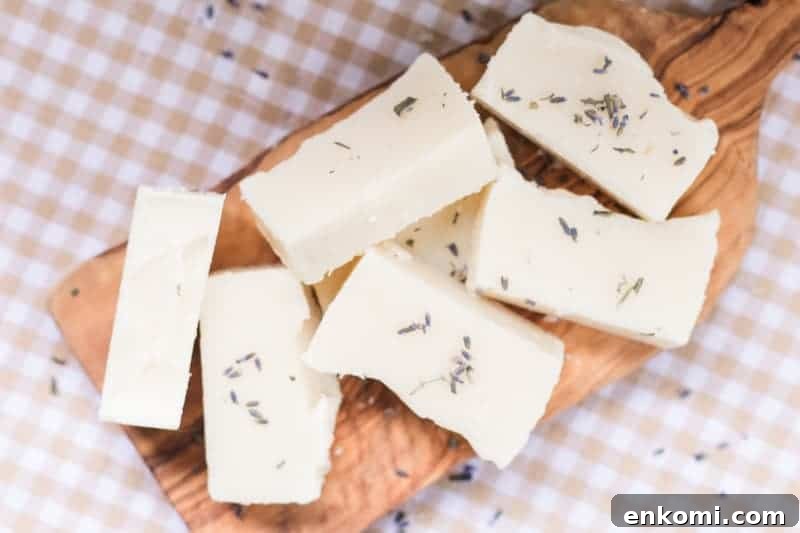
- Soap mold
- Immersion blender
- Digital scale
- Glass bowl or other heat-resistant container
- Gloves
- Eye protection (full-cover goggles recommended)
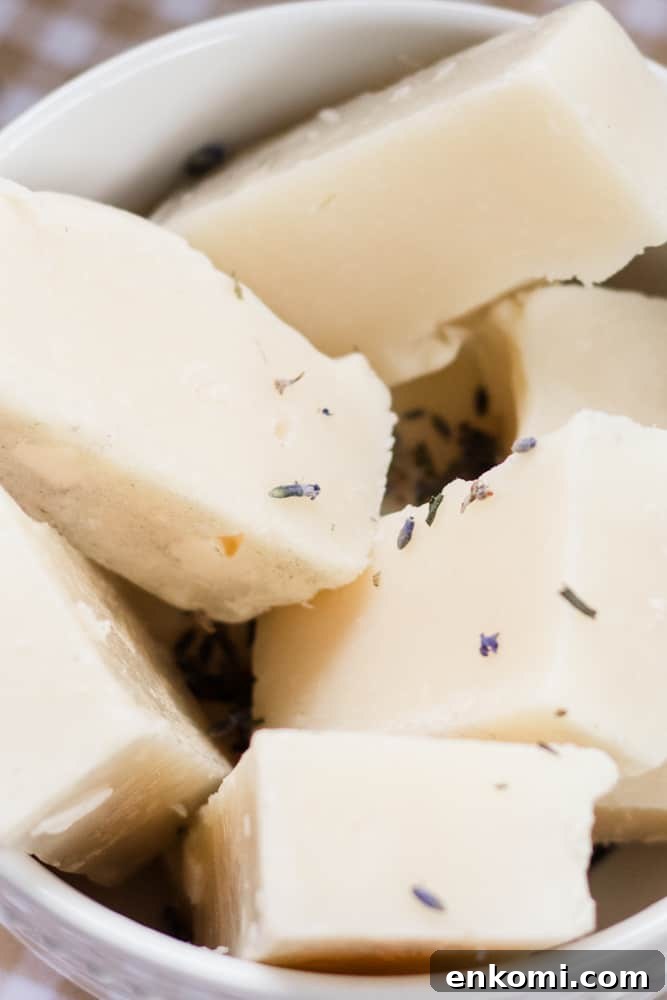
Natural Baby Soap Recipe
I used a soap calculator to determine the precise measurements for this formulation. If you modify oils or proportions, recalculate lye and water amounts to ensure proper saponification. Accurate measurements are essential for safe, reliable soap.
Safety note: Always work in a well-ventilated area and wear safety goggles, a mask, long sleeves, and rubber gloves when handling lye. Follow safe handling steps carefully; lye can cause severe irritation if it contacts skin or eyes.
- Weigh the water on a digital scale and pour it into a heat-resistant container that can withstand rapid temperature changes.
- Weigh the lye separately. Slowly add the lye to the water a little at a time, stirring to dissolve fully before adding more. Expect the mixture to heat due to the chemical reaction.
- Weigh the mango butter, cocoa butter, coconut oil, and jojoba oil. Melt them together in a medium saucepan over medium heat, then remove from heat once fully liquefied.
- Allow the oils to cool to around 100°F (approx. 38°C). When at temperature, slowly add the lye solution to the oils and blend with an immersion blender. Blend until you reach a light trace—the point when drips from the blender leave a brief trail or pool on the surface.
- Add the lavender essential oil and briefly blend to incorporate.
- Pour the batter into your soap mold. Silicone molds require no lining; other molds may need parchment or release paper.
- Let the soap firm in the mold for at least 24 hours and up to 72 hours. Unmold and allow the bars to cure in a cool, dry place for 5–6 weeks before use. Proper curing improves hardness and mildness.
Expert Tips
- Always add lye to water—not water to lye—to avoid a violent reaction.
- Work in a well-ventilated area, and keep children and pets away from your workspace while handling lye.
- Add lye gradually to the water and stir until fully dissolved to control the reaction safely.
How to Use Natural Baby Soap
Use this baby soap bar as you would any gentle soap, avoiding the eyes. It works well for both hair and body. Allow a few moments of lather contact to help cleanse, then rinse thoroughly with warm water.
More gentle soap ideas
- Tallow soap
- Goat milk soap bars
- Melt and pour soap bars
- Hot process aloe bars
Gentle Baby Soap Bar Recipe
Laura Ascher
Equipment
- Soap mold
- Immersion blender
- Digital scale
- Glass bowl or heat-resistant container
- Gloves
- Eye protection (goggles recommended)
Ingredients
- 8 ounces mango butter
- 4 ounces cocoa butter
- 4 ounces jojoba oil
- 2 ounces coconut oil
- 10 drops lavender essential oil
- 2.16 ounces lye
- 4.84 ounces water
Instructions
- Weigh the water and pour it into a heat-resistant container.
- Measure the lye and slowly add it to the water, stirring and letting it dissolve. Set aside to cool.
- Melt the mango butter, cocoa butter, coconut oil, and jojoba oil together over medium heat.
- Remove from heat and allow oils to cool to about 100°F.
- Add the lye solution to the oils and blend with an immersion blender until light trace is reached.
- Stir in the lavender essential oil and blend briefly to combine.
- Pour into molds and let firm for 24–72 hours, then unmold.
- Cure the bars for 5–6 weeks before use for best results.
Notes
Always add lye to water—never add water to lye. Use a tall mixing bowl when blending to prevent splashes. Keep dedicated tools for soap making to avoid cross-contamination with kitchen items. Work in a well-ventilated area and keep children and pets away while handling lye. Wear goggles, a mask, and gloves when working with lye.
This recipe is for home use and informational purposes; test and research as needed before making adjustments.