
*This page contains affiliate links
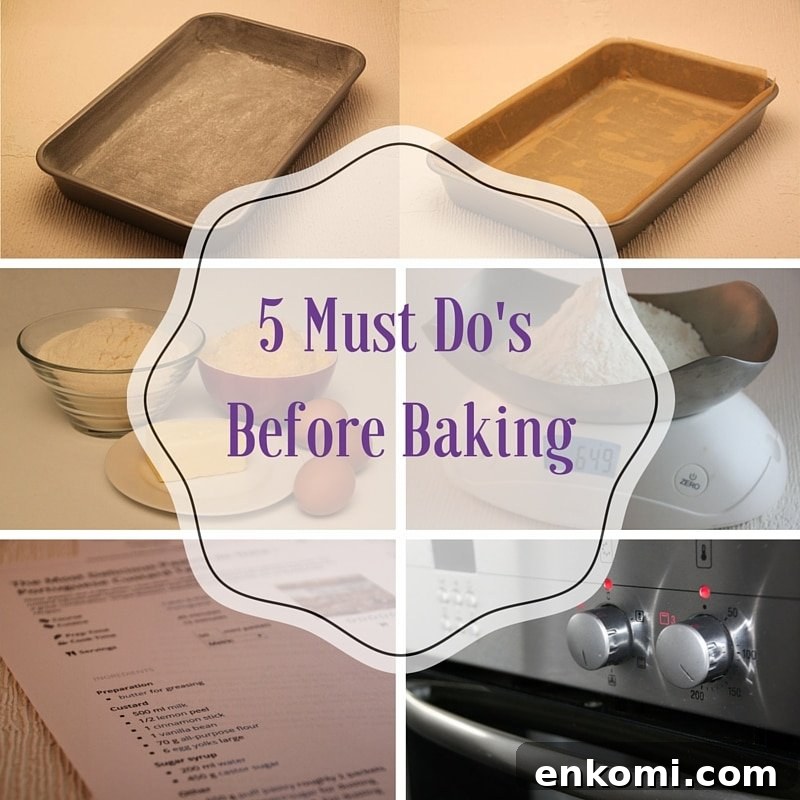
Successful baking begins long before the oven goes on. A little preparation makes a big difference in the outcome of your cakes, cookies and other baked goods. Below are five practical steps to follow before you start mixing ingredients so your baking turns out light, even and delicious.
1. Read the recipe
Always read the entire recipe from start to finish before you begin. Make sure you understand each step and collect all the equipment and ingredients required. Reading ahead prevents surprises—missing tools or unexpected steps—that can interrupt the process once you’ve already started.
2. Bring ingredients to room temperature
Unless the recipe specifies otherwise, bring butter, eggs and dairy to room temperature before mixing. Room-temperature ingredients blend together more smoothly and form a stable emulsion that traps air. That trapped air expands during baking, helping cakes and other batters rise and become tender. Cold ingredients are harder to combine evenly and can result in a denser texture.
3. Measure ingredients accurately
Baking is a precise science, so accurate measurement matters. For best and most consistent results use a kitchen scale. Scales provide exact weights that eliminate the variability of cup measurements. If you must use cups, measure dry ingredients carefully: fluff flour with a spoon, scoop it gently into the cup, then level off the top with the back of a knife. Avoid packing flour into the cup, which adds too much and can dry out your batter.
4. Preheat the oven and know its behavior
Always preheat the oven before you begin mixing or assembling your batter so it is at the correct temperature when your bake goes in. Ovens can vary widely, so consider using an oven thermometer to check for accurate temperature. A thermometer helps you identify calibration issues and avoid over- or under-baking.
5. Choose and prepare the correct pan
Use the pan size specified in the recipe. Baked goods expand during baking; a pan that’s too small can cause overflow while a pan that’s too large can change baking time and texture. Prepare the pan before pouring in batter: use a baking spray or grease it with butter, then dust with flour and tap out the excess. Make sure the bottom and all sides are evenly coated to prevent sticking.
Follow these five simple tips—read the recipe, use room-temperature ingredients, measure precisely, preheat and understand your oven, and prepare the right pan—and you’ll be well on your way to reliably fluffy, well-baked results.