
Published: August 6, 2023 · Updated: September 26, 2025 by Cindy Gibbs
Have you ever wondered when and how to blind-bake or par-bake a pie shell? This guide removes the guesswork and answers common questions about preparing pie shells so your pies come out perfectly every time.
The holidays are coming, and making pies with your own homemade crust is a wonderful way to celebrate. If you’re unsure whether to par-bake (partially bake) or blind-bake (fully pre-bake) a pie shell, this article explains the differences and gives practical tips so your crusts are never soggy or underbaked.
Blind baking and par-baking are terms that can confuse novice bakers. Understanding what they mean and when to use each technique will improve your pie results.
Par-baking versus blind baking
Par-baking (partial baking) means baking the pie crust only partway. The shell is returned to the oven with the filling so the crust finishes baking while the filling cooks.
Blind baking (pre-baking) means baking the pie shell completely empty until it becomes a fully baked crust. This method is used for fillings that are cooked on the stovetop or chilled, like cream or refrigerator pies.
Docking & pie weights
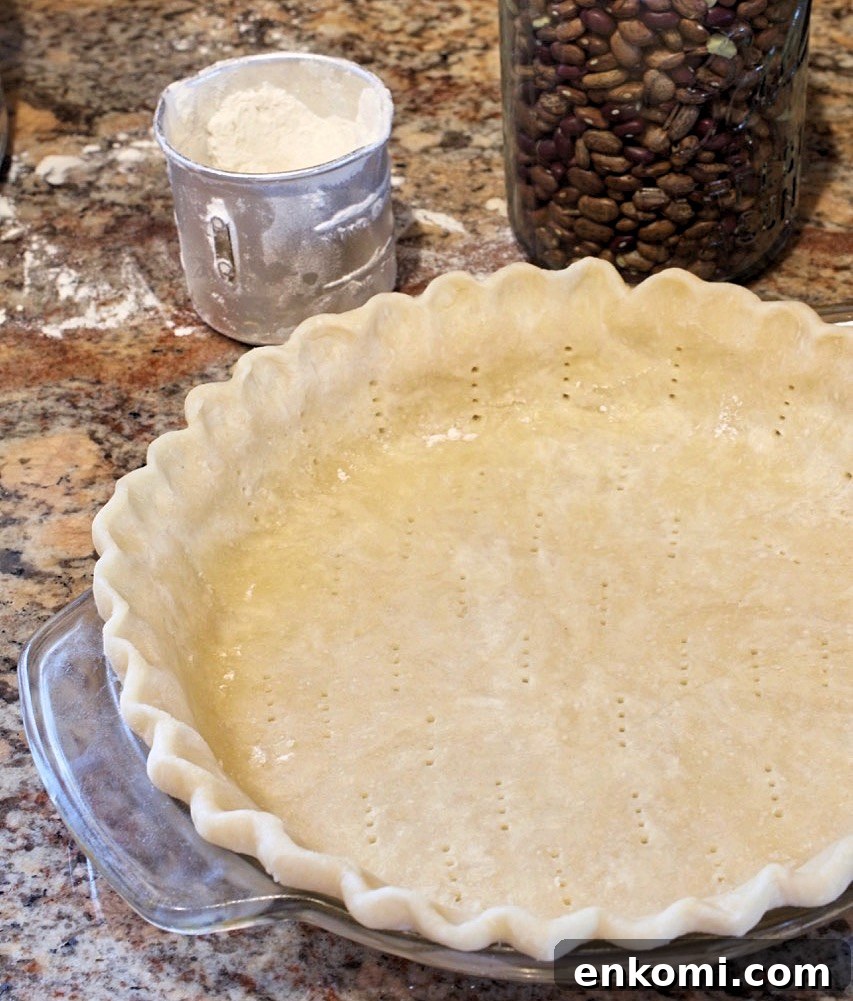
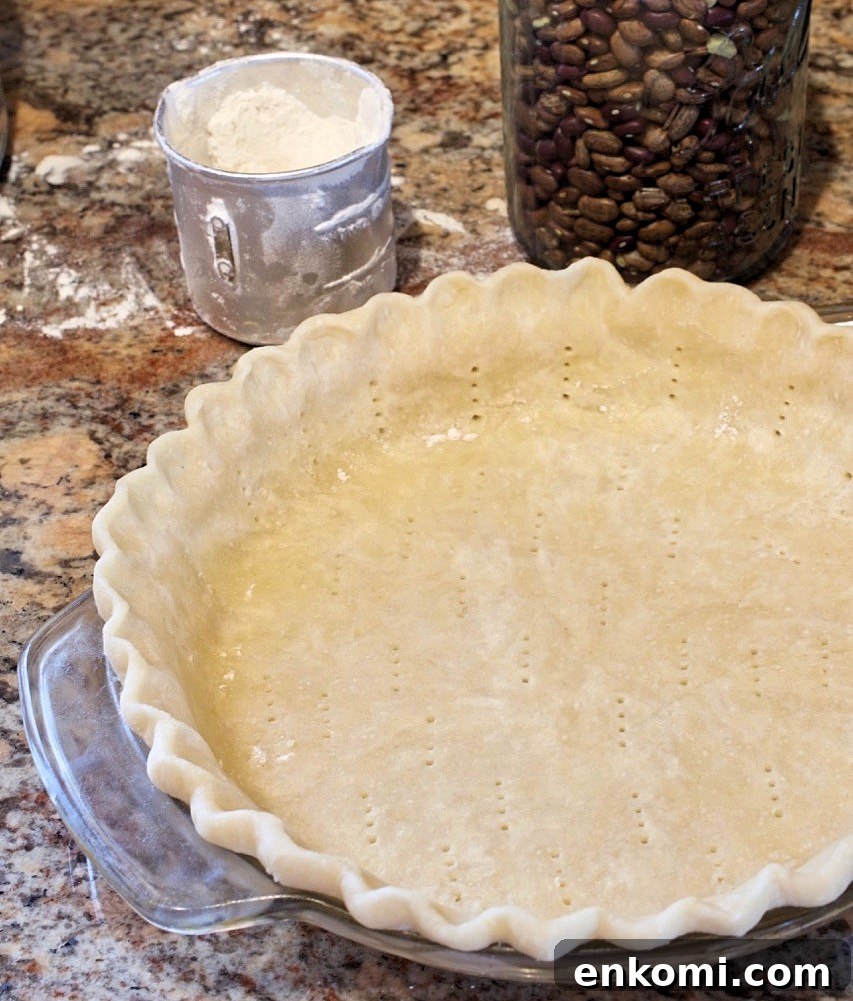
Docking is pricking the bottom and sides of the pie dough with a fork to prevent air pockets and puffing during baking. It’s a simple but effective step whether or not you use weights.
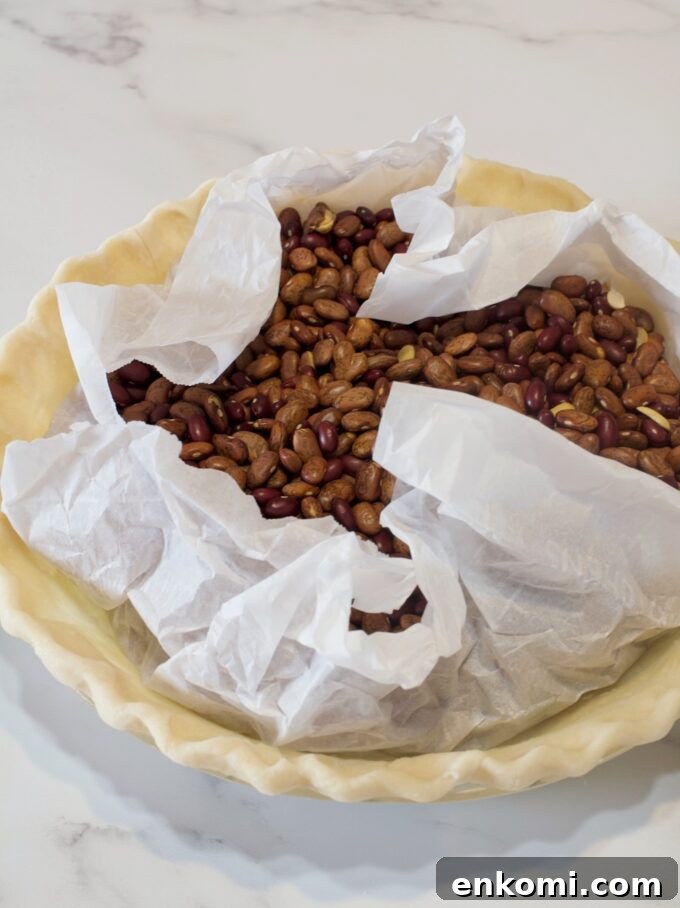
Pie weights—ceramic beads, dried beans, or rice—hold the crust flat while it bakes so it doesn’t shrink or form bubbles. Reusable dried beans or lentils work well and are economical.
An alternative method
Another easy technique is to set a second pie dish of the same size inside the filled pie dish. This weights the crust evenly without using beans or ceramic weights. Dock the dough as usual before inverting the second dish.
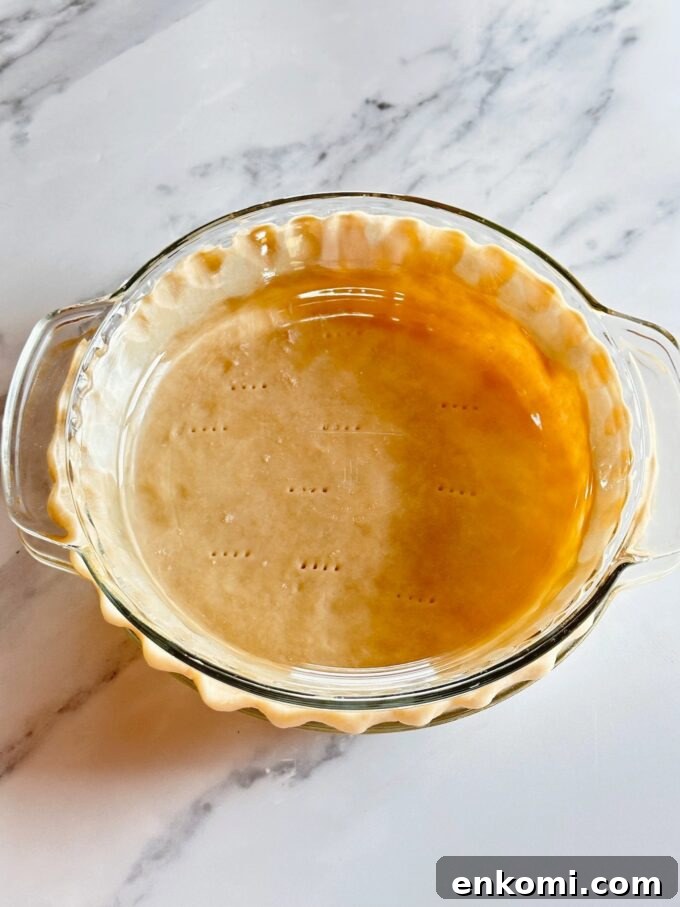
Pie crust vs. pie shell
Many sources use “pie crust” and “pie shell” interchangeably, which can be confusing. A pie shell refers to raw dough that has been rolled out and placed in a pie dish. Once that shell is baked, it becomes a pie crust. In short: shell = raw in dish; crust = baked.
When to par-bake a pie shell
Par-baking is useful when the filling cooks faster than the crust can bake through. Partially pre-baking the bottom prevents a soggy center. The image below shows a partially baked shell—edges are just beginning to color and the bottom has lost its raw appearance but is not fully baked.
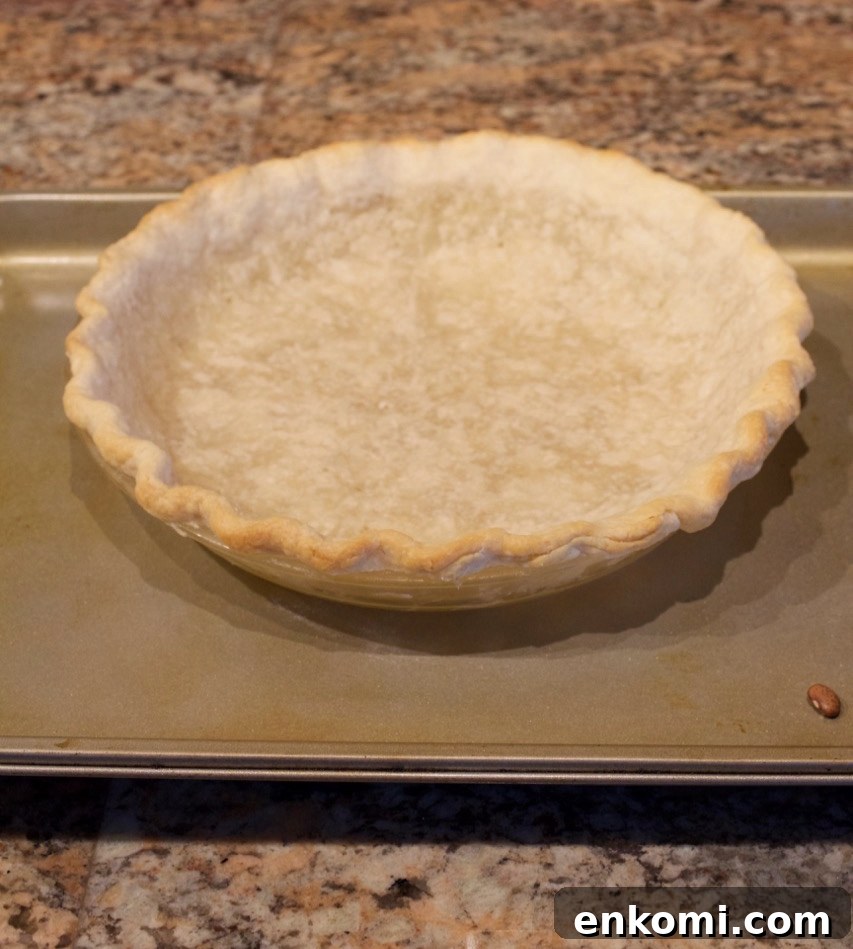
Pies such as pumpkin, custard, chess, and pecan—especially when baked in shallow dishes—often need a partially pre-baked shell so the filling and bottom crust finish at the same time. You can also choose to fully bake the shell first; if the edges brown too much once filled and baked again, shield them with foil.
When to fully pre-bake (blind bake)
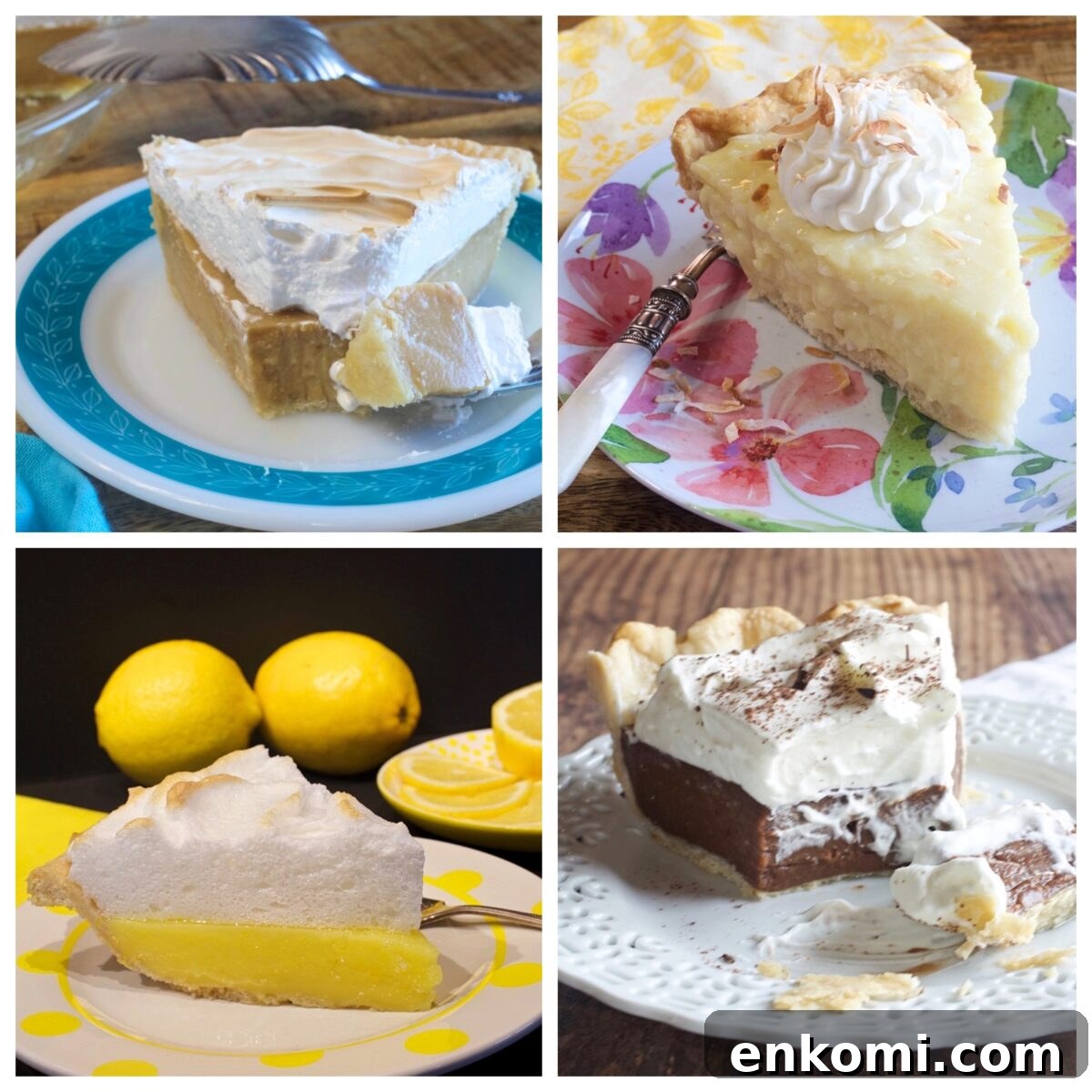
Blind baking is necessary for pies with fillings that aren’t baked in the oven, like cream pies or refrigerator pies. The filling is cooked on the stovetop or chilled and then poured into the fully baked shell.
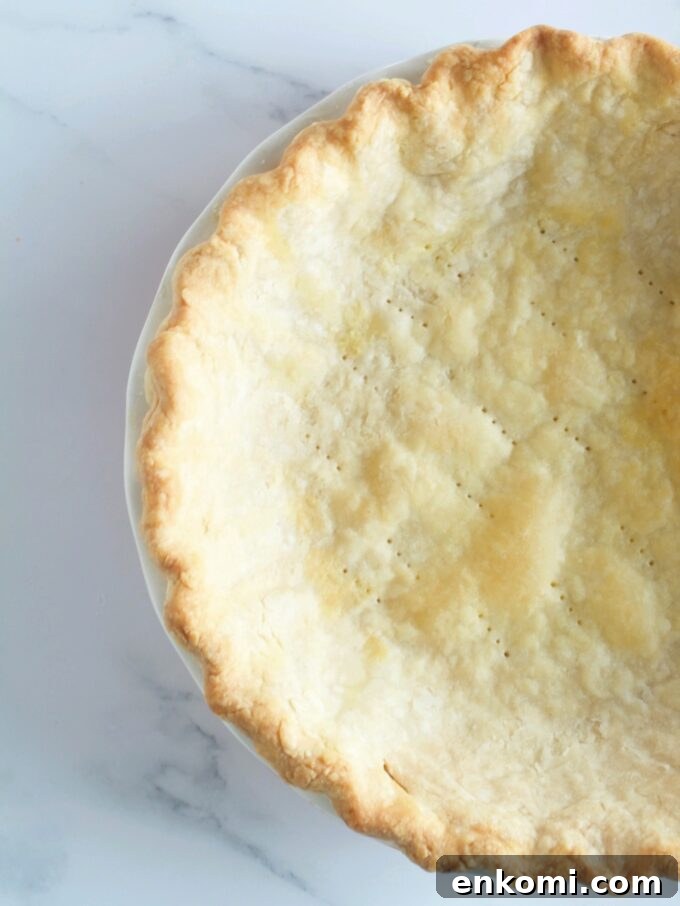
For these pies I prefer a thin, flaky bottom crust, rolled to about 1/8-inch thickness. A thinner crust bakes evenly and keeps the pie light.
Tips for a perfect blind-baked (pre-baked) pie crust
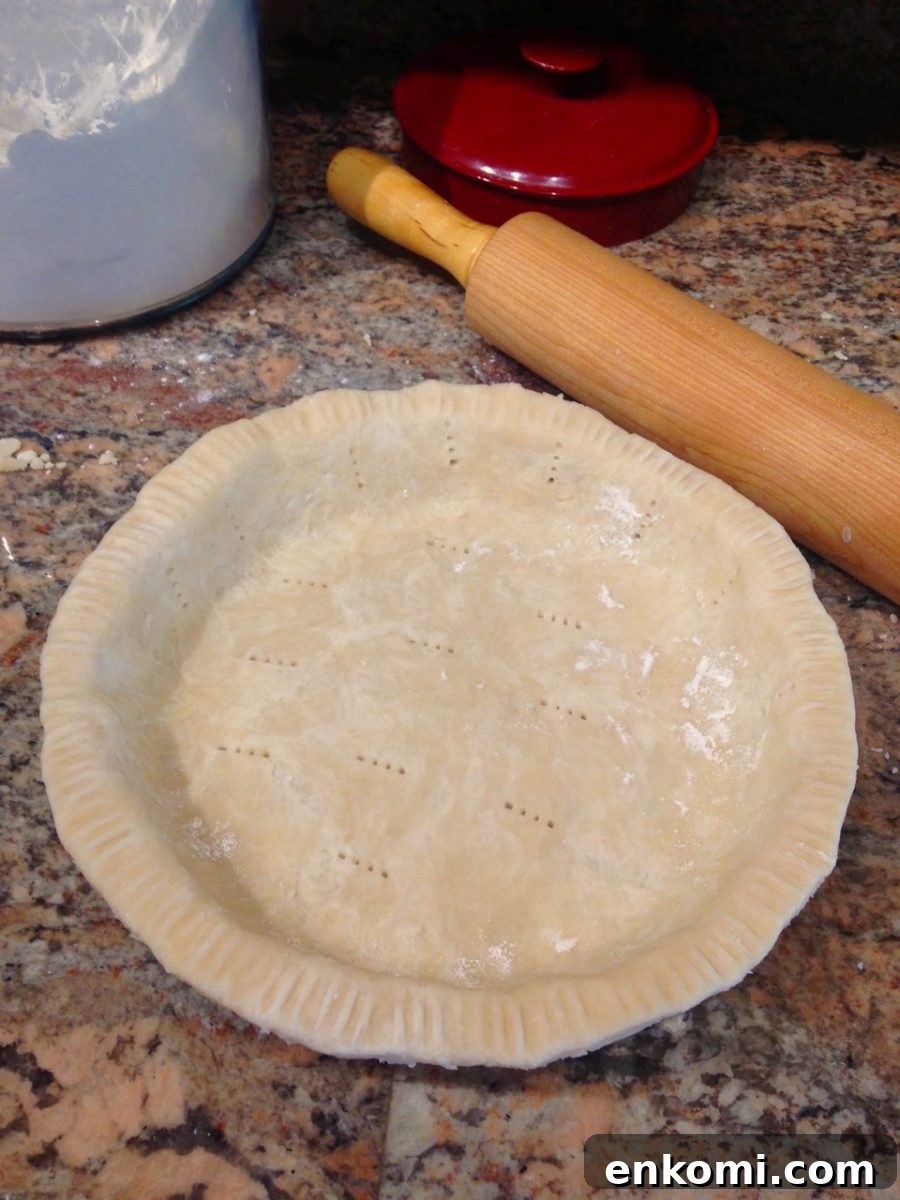
- Choose a reliable pie dough recipe. If you need one, Aunt Elsie’s Flaky Pie Crust is a favorite for a double crust; you can freeze half for later.
- Read the pie recipe to confirm whether it calls for partial or full pre-baking.
- Make dough, form it into a disc, and chill for about 30 minutes to relax the gluten. Roll out, place in the dish, trim edges, and flute or fork the rim.
- Do not stretch the dough into the pan—stretching causes shrinking during baking.
- Dock the bottom and sides with a fork to prevent puffing. Even if using weights, docking adds extra security against bubbles.
- Let the assembled shell rest: 5 minutes at room temperature; if using butter, chill 15 minutes; if using shortening, freeze 20 minutes to firm the fat.
- Line the shell with parchment or foil. Crumpling then smoothing parchment helps it conform to the pan.
- Fill the lined shell with pie weights—ceramic weights or dried beans/lentils. Dried beans are reusable and economical.
- Preheat the oven to 400°F (about 200°C). The high heat quickly sets the edges before they can collapse. Bake the shell on a cookie sheet or preheated pizza stone on the lowest rack. Par-baking typically takes 12–15 minutes; fully baking usually requires an additional 7–8 minutes or until the bottom is dry and the edges are golden.
- For a fully baked shell that will hold a no-bake filling, brush the cooled bottom with lightly beaten egg white and return to the oven briefly (about 45 seconds) to set it. This creates a moisture barrier that helps prevent sogginess.
- Using a preheated pizza stone promotes an evenly browned bottom crust. Preheat the stone with the oven and bake the shell directly on it for best results.
When pre-baking is not necessary
Double-crusted pies, like most fruit pies, usually don’t require par- or blind-baking since both top and bottom crusts bake together.
Tips for fruit pies
- Bake fruit pies on a cookie sheet placed on the lowest oven rack to catch drips and promote even bottom browning.
- Glass pie dishes help with even heating and better browning.
- Placing the pie on a preheated pizza stone can further improve bottom crust color and texture.
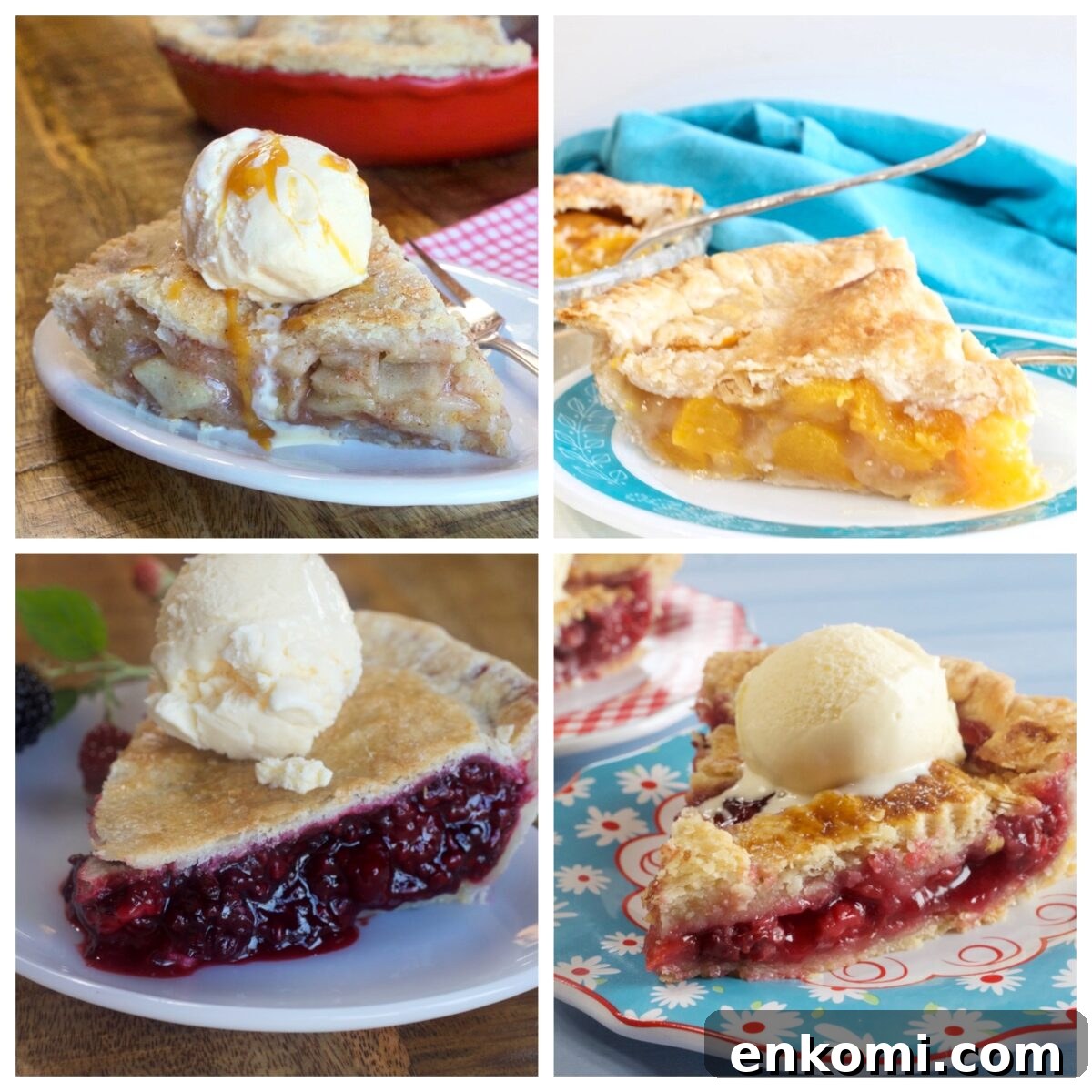
For finishing touches, consider a pie crust wash to give your crust a beautiful color and shine.
More helpful posts: How To Braid A Pie Crust, How To Lattice A Pie Crust, and Aunt Elsie’s Flaky Pie Crust.
Happy baking! 🙂